
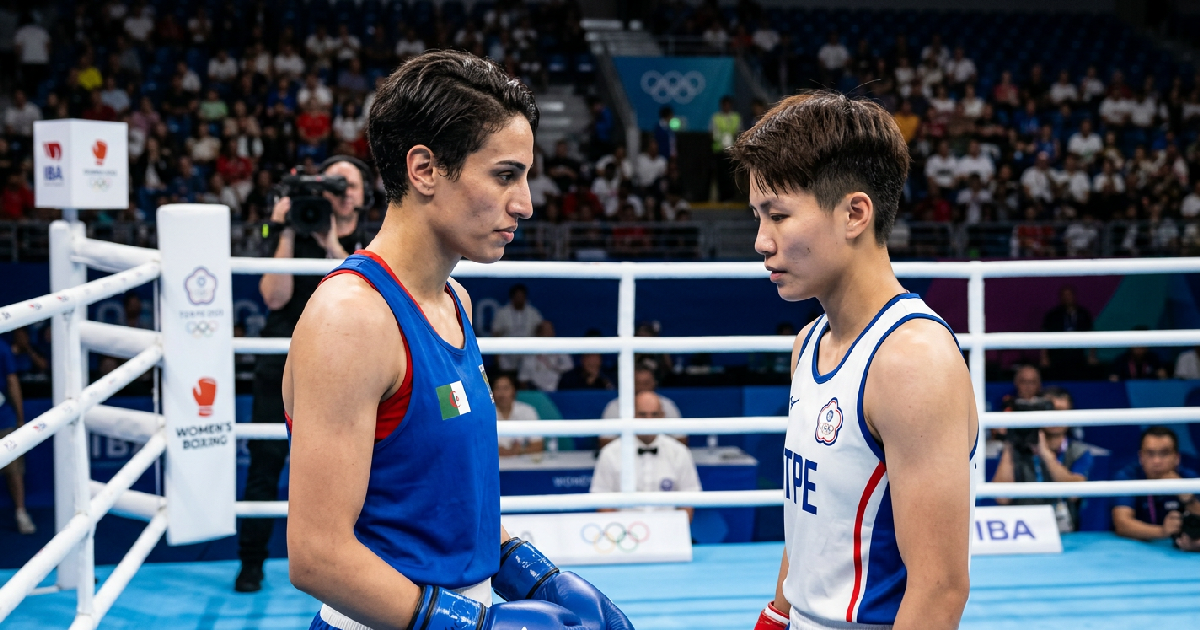
The Olympic boxing ring has become the center of a geopolitical and scientific firestorm. While the 2024 Paris Games have concluded, the fallout regarding gender eligibility continues to reshape the landscape of women’s combat sports. At the heart of the dispute are Imane Khelif and Lin Yu-ting, two gold medalists who found themselves thrust into a global debate over biological standards and the governance of international amateur boxing.
This isn’t a simple dispute over rules. It is a collision between two governing bodies with fundamentally different philosophies: the International Olympic Committee (IOC) and the International Boxing Association (IBA). The friction between these organizations transformed a sporting event into a proxy war over identity, fairness, and safety.
Origins of the Eligibility Dispute
The controversy traces back to the 2023 World Championships in New Delhi. The IBA, led by Umar Kremlev, disqualified Khelif and Lin mid-tournament, alleging they failed “unspecified” gender eligibility tests. The IBA claimed these tests proved the athletes had “competitive advantages over other female competitors.” However, the specifics of these tests—whether they measured testosterone levels, chromosomes, or other markers—were never transparently released to the public or the athletes’ camps.
When the IOC took over the management of Olympic boxing for Paris 2024, they discarded the IBA’s findings. The IOC’s stance was clear: the athletes were born female, raised as women, and have passports identifying them as women. For the Olympic governing body, those factors were sufficient for entry. This disconnect created a vacuum where speculation and vitriol thrived.
The Clash of Governance and Science
The primary issue for boxing fans and analysts isn’t just about the two fighters; it’s about the lack of a standardized protocol. The IBA has been permanently banned by the IOC due to governance and financial transparency issues. Because of this rift, there is no single “supreme court” of boxing to settle medical disputes.
Critics of the IOC’s decision argue that boxing carries a higher “duty of care” than sports like swimming or track. In combat sports, a biological advantage doesn’t just mean a faster time; it can mean physical injury to an opponent. Conversely, supporters of Khelif and Lin point to their careers prior to 2023, noting that both women had suffered several losses in the ring against female competition, contradicting the narrative of “unstoppable” biological dominance.
Impact on the Athletes and the Sport
The human cost of this controversy became evident in Paris. Khelif, in particular, faced a barrage of online abuse after her round-of-16 opponent, Angela Carini, retired just 46 seconds into their bout. The image of Carini in tears sparked a wildfire of misinformation on social media, with high-profile figures weighing in without knowing the medical specifics of the case.
Despite the noise, both Khelif and Lin displayed remarkable composure, eventually winning gold in their respective weight classes. Their victories were celebrated in their home nations of Algeria and Taiwan as triumphs against international bullying, but the debate in the Western boxing world remains deeply fractured.
The Path to Los Angeles 2028
As we look toward the 2028 Games in Los Angeles, boxing’s inclusion on the program is not guaranteed. The IOC has stated that a new international federation must be established to replace the disgraced IBA. World Boxing, a breakaway organization, is currently vying for that role.
Whichever body takes the reins will have to codify a clear, scientifically backed policy on gender eligibility that balances inclusivity with athlete safety. Until then, the shadow of the Paris controversy will continue to loomed over every major women’s tournament.
Olympic Boxing Gender Eligibility FAQ
Did the athletes fail a testosterone test?
No. The IBA explicitly stated that the tests utilized were not testosterone examinations. While they alluded to “chromosome” tests, the exact methodology and results remain confidential and have been heavily criticized by the IOC for lack of due process.
Are Imane Khelif and Lin Yu-ting transgender?
No. Both athletes were born female and have always competed as women. There is no evidence or claim from any official body suggesting they have undergone gender reassignment. The dispute centers on DSD (Differences in Sexual Development), though this has not been medically confirmed by the athletes.
Why does the IOC refuse to use the IBA data?
The IOC does not recognize the IBA as a legitimate governing body due to long-standing issues with corruption and financial mismanagement. They viewed the 2023 disqualifications as arbitrary and politically motivated, choosing instead to stick to the entry requirements used in previous Olympic cycles.