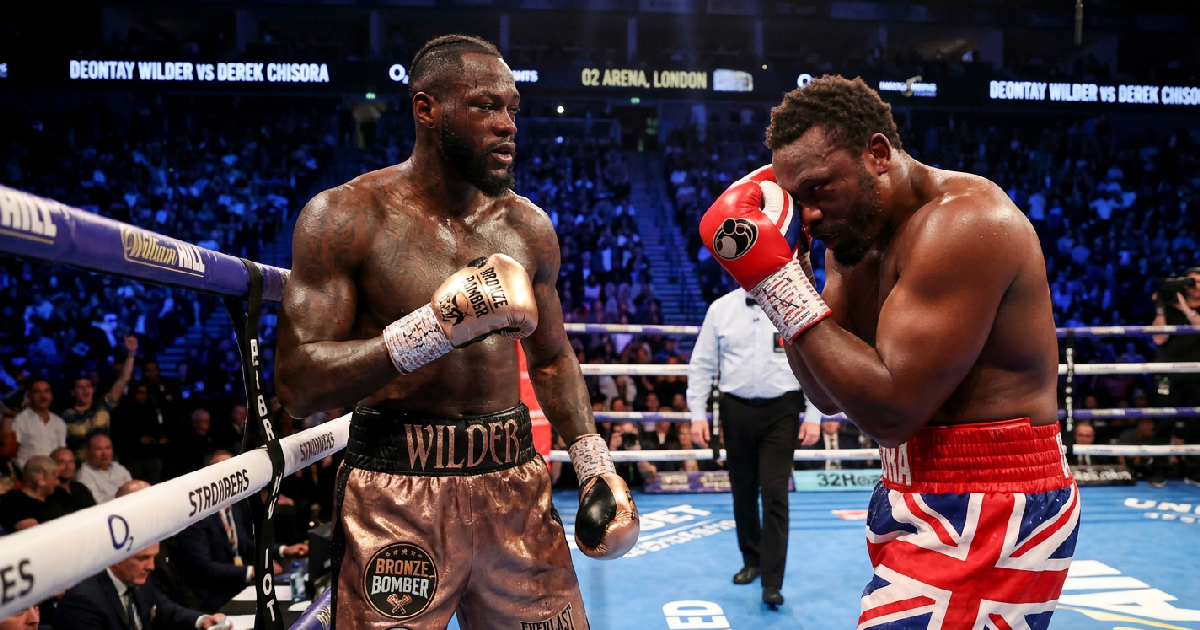
Derek Chisora’s long evening at the office finally came to an end in the early hours of Sunday morning, but it wasn’t the fairytale exit the London veteran had promised. In a grueling encounter that tested the durability of both men, Deontay Wilder secured a narrow victory, likely closing the book on one of the most unpredictable careers in modern British heavyweight history.
The O2 Arena, long a second home for “Del Boy,” was vibrating with the kind of atmosphere only Chisora can generate. Yet, beneath the raucous support, there was a sense of finality. This was billed as the swansong, the 48th and final walk for a man who has shared the ring with everyone from Vitali Klitschko to Tyson Fury. For long stretches, it looked like he might actually pull off one last heist against the hardest hitter in the division.
A Battle of Old Guards in Greenwich
The fight began with the expected tension. Wilder, looking leaner than in his recent outings, seemed hesitant to let his right hand go, perhaps wary of the looping overhand shots Chisora has perfected over two decades. Chisora, meanwhile, did what he has always done: he tucked his chin, rolled his shoulders, and trudged forward into the fire.
In the middle rounds, the Londoner’s relentless pressure appeared to be draining the American. Wilder was forced to fight off the back foot, his movements occasionally looking stiff as he tried to find the range for his signature straight right. The crowd sensed an upset as Chisora landed a series of body shots that visibly bothered the former WBC champion. But as is so often the case with Deontay Wilder, the equalizer was always just a heartbeat away.
The turning point arrived late in the ninth. Just as Chisora seemed to be pulling away on the scorecards with his high volume and suffocating work rate, Wilder landed a sharp counter that momentarily buzzed the veteran. It wasn’t the spectacular one-punch knockout many expected, but it shifted the momentum back toward the visitor.
The Final Bell for Del Boy
As the championship rounds unfolded, the pace slowed to a crawl. Both men were operating on instinct and pride. Chisora refused to go down, absorbing shots that would have finished lesser heavyweights, while Wilder did just enough to catch the eyes of the judges with cleaner, more impactful single strikes.
When the final bell rang, the silence in the arena was telling. It was a close fight, one that could have gone either way depending on whether you preferred Chisora’s aggression or Wilder’s precision. Ultimately, the scorecards favored the American by the narrowest of margins, leaving Chisora to soak in a standing ovation that felt more like a “thank you” than a “goodbye.”
Chisora has spent years defying logic, winning fights he was supposed to lose and hanging around long after critics urged him to retire. This performance showed that even at the very end, he remains a handful for the elite. However, the emotional post-fight scenes suggested that this truly was the end of the road. There are no more trilogies to settle, no more gates to keep. Derek Chisora leaves the ring as a man who squeezed every last drop of potential from his career.
What Lies Ahead for Wilder and the Heavyweight Division
For Deontay Wilder, the victory is a much-needed reprieve. After recent setbacks, he needed to prove he could still negotiate twelve rounds against a live opponent. He wasn’t at his Vintage “Bronze Bomber” best, but he showed a level of maturity and patience that was often missing in his younger years. The question now is whether he seeks one last run at a world title or if he, too, is looking toward the exit door.
The heavyweight landscape remains crowded, but the result in London clears the path for the next generation. As the sun sets on the era of Chisora, the division moves on, forever changed by the presence of a man who fought everyone, anywhere, at any time.
Boxing FAQ
Is Derek Chisora definitely retiring after the Wilder fight?
While Chisora has hinted at retirement numerous times, the buildup to the Wilder fight was centered entirely on it being his final walk. Given the emotional reception and his age, it is widely expected that he will now hang up the gloves for good.
How did the judges score the Wilder vs Chisora fight?
The bout was a majority decision. While the exact scores were tight, the consensus was that Wilder’s cleaner power punching in the final three rounds outweighed Chisora’s higher activity in the early and middle portions of the contest.
What is next for Deontay Wilder?
Wilder remains a major draw in the heavyweight division. Rumors persist regarding potential matchups with other top-tier heavyweights later this year, though his camp has yet to confirm a specific opponent as they evaluate his performance against Chisora.