
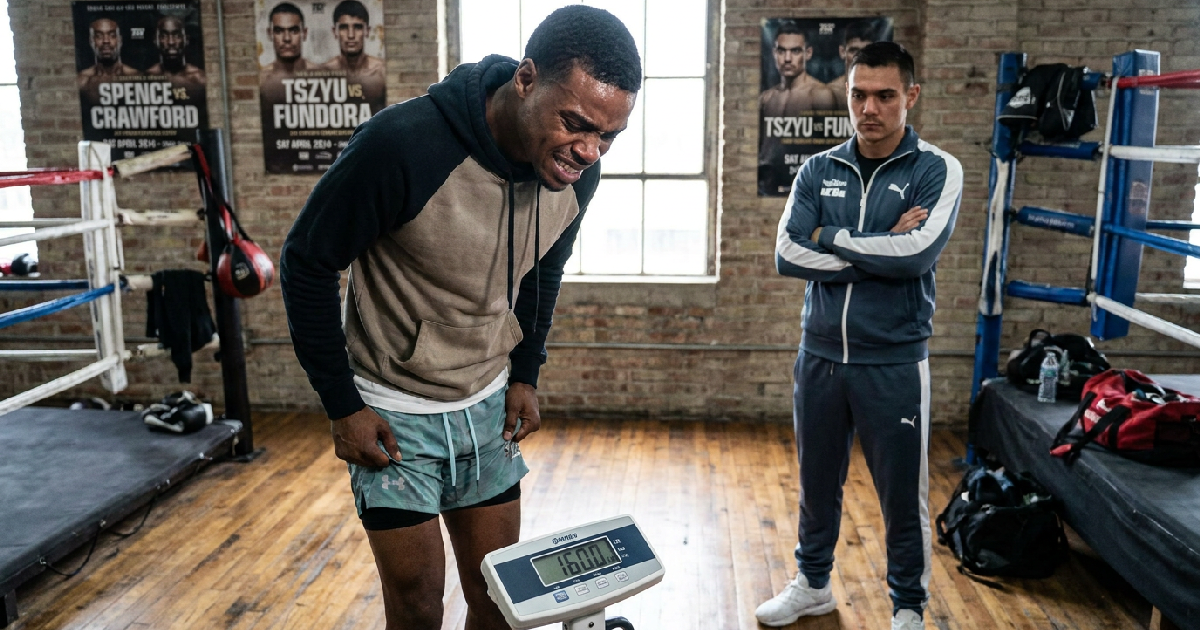
Errol Spence Jr.’s middleweight return on July 26, 2026, against Tim Tszyu will be at the full 160-pound limit, impacting the Errol Spence weight discussion. ‘s highly anticipated return to the ring against Tim Tszyu on July 26, 2026, will now take place at the full middleweight limit of 160 pounds.
This significant adjustment, confirmed by Tszyu’s trainer Jeff Fenech on Wednesday, marks the second weight concession granted to Spence’s team ahead of their clash at Sydney Olympic Park, Australia. The shift reignites questions about Spence’s long-standing struggles to make lower weight classes.
The evolving weight class for Spence vs. Tszyu
This latest change follows previous admissions from Errol Spence Jr. himself, where he stated his body could no longer handle the rigorous demands of the welterweight division. His comments, made to Premier Boxing Champions, now lend considerable context to his camp’s persistent efforts to increase the fight weight. It’s a move that places the former unified welterweight champion in uncharted territory for his comeback bout.
For Tim Tszyu, the Australian professional boxer who held the WBO super-welterweight title from 2023 to 2024, the fight at 160 pounds represents the heaviest weight of his professional career. His team initially sought a 154-pound junior middleweight limit, agreeing first to a 158-pound catchweight before this final increase.
This puts an interesting dynamic on the July 26 event, billed as one of Australia’s biggest fight cards.
The journey to the agreed 160-pound middleweight limit has been a notable part of the pre-fight negotiations. Originally, Tim Tszyu’s side aimed for their preferred 154-pound junior middleweight division, where he had campaigned successfully. Intense discussions then saw them compromise, agreeing to a 158-pound catchweight to accommodate Errol Spence Jr.’s team.
But less than two weeks before fight night, Errol Spence Jr.’s camp pressed for yet another increase, successfully pushing the bout to the full middleweight maximum. This second concession underscores the urgency on Spence’s side to fight at a heavier weight. It’s an unusual development so close to such a high-profile contest.
Errol Spence Jr.’s past weight admissions
The recent weight adjustments echo Errol Spence Jr.’s own candid remarks about his declining ability to make welterweight. He told Premier Boxing Champions earlier this year that he found himself “too old to get to 47.” Spence explained that his body was no longer cooperating after years of “sucking down to that weight” for fights.
He also expressed a belief that 154 or 158 pounds felt “more of my natural weight.” At those weights, Spence claimed to feel “a lot stronger, a lot faster, and just a lot there mentally.” These statements now serve as a backdrop to his camp’s insistence on the 160-pound limit for the Tim Tszyu bout.
Spence’s last fight, a ninth-round technical knockout loss to Terence Crawford for the undisputed welterweight championship in July 2023, saw him weigh in at 147 pounds. That was his last contest before a three-year layoff. The move to middleweight suggests a permanent shift for the 36-year-old American boxer, away from the division where he built his formidable reputation as a unified champion.
A long layoff adds to the challenge
Errol Spence Jr. hasn’t fought competitively for three years, a significant period in any boxer’s career. This lengthy absence from the ring, which followed a serious car crash in 2019 and a detached retina injury in 2021, adds another layer of complexity to his comeback. Stepping straight into a middleweight contest against a naturally bigger opponent like Tim Tszyu presents a unique set of challenges.
The extended break means Spence has had ample time for his body to mature further, potentially making welterweight cuts even more arduous. Fighting at 160 pounds could be a strategic move to mitigate the physical toll of weight cutting and allow him to perform at his best. But it also means adapting to a new weight class against a proven contender.
Tim Tszyu’s stance and concessions
Tim Tszyu, the hard-hitting Australian, has shown a pragmatic approach throughout the negotiations, despite the repeated changes. His trainer, Jeff Fenech, confirmed the latest increase to 160 pounds with a degree of bemusement. “They’re wanting to go up two pounds, want the fight at 160,” Fenech told Fox Sports Australia, noting the late request.
When questioned about whether Errol Spence Jr. might be struggling with his weight, Fenech offered a cryptic remark: “Who knows? But by July 26 we’re hoping Spence will be battling to get up.” This suggests a tactical readiness from Tszyu’s camp to exploit any potential issues Spence might face.
Tszyu himself has voiced confidence, telling Fox Sports Australia, “I took Sebastian Fundora on roughly a week’s notice, so you think I’m worried about a couple of pounds? No, I go for it.” He also mused on Spence’s motivations, suggesting the American might be “trying to convince himself he has a competitive edge.”
This hints at the psychological warfare often at play in high-stakes boxing. Regardless of the reason, Tszyu has agreed to fight at his career-heaviest weight, a testament to his confidence and desire for this marquee matchup.
Implications for Errol Spence Jr.’s middleweight future
This move to the 160-pound limit isn’t just about the Tim Tszyu fight; it could signal a long-term shift for Errol Spence Jr. away from the welterweight division that defined his early career. Competing at middleweight opens up a new set of opponents and championship opportunities, but also means adapting his fighting style to potentially larger and stronger contenders.
Spence’s decision aligns with observations from boxing legends. Floyd Mayweather Jr., for instance, previously suggested Spence shouldn’t fight at 147 or 154 pounds. Mayweather told FightHype that he believed Spence “should be fighting at 160 lbs or 168 lbs.” This endorsement from a highly successful former multi-division champion adds weight to the strategic reasoning behind Spence’s move.
However, the transition isn’t without risk. Errol Spence Jr. built his reputation on his dominance at welterweight. Stepping up a division, especially after a significant layoff and against a formidable opponent like Tszyu, will be a true test of his adaptability and whether his power and speed translate effectively. It’s a calculated gamble that could either revitalize his career or expose new vulnerabilities.
The broader trend of catchweights in boxing
The dynamic between Errol Spence Jr. and Tim Tszyu highlights a growing trend in professional boxing: the increased use of catchweights. While these pre-agreed limits can facilitate lucrative superfights between fighters from different weight classes, they also raise questions about fairness and competitive balance. Tszyu’s repeated concessions to Spence’s team underscore this point.
Critics argue that catchweights can sometimes benefit the more established or powerful fighter, who can dictate terms that might disadvantage their opponent. In this case, Spence, coming off a long layoff and openly admitting weight struggles, has successfully negotiated upward. This negotiation power dynamic is a recurring theme in major boxing events, often shaping the narrative before a single punch is thrown.
For fans, it means a fight that might not perfectly align with traditional weight class structures, potentially blurring the lines between divisions. But it also means seeing elite talents face off, even if it requires bending the rules a little. The July 26 showdown will offer a clear example of how these negotiated weights play out in practice.