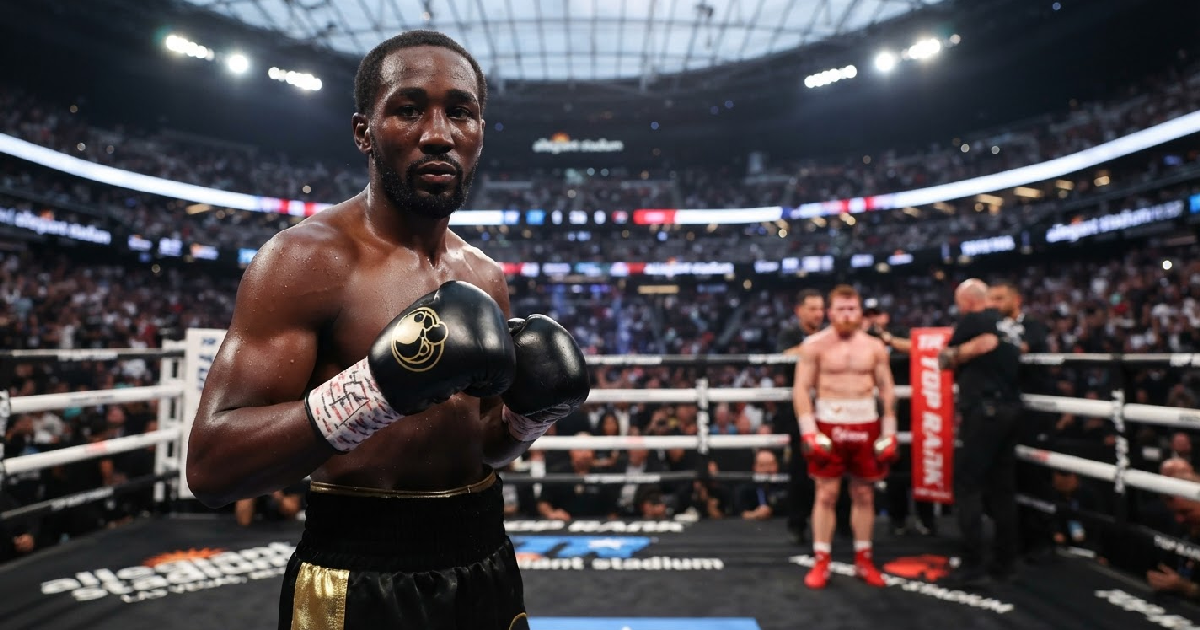
Former four-division undisputed champion Terence Crawford has shed new light on why a highly anticipated rematch with Canelo Alvarez never materialized. Crawford confirmed there was no contractual rematch clause in their initial agreement, and critically, no direct approach from Alvarez’s team for a second fight.
This revelation from Crawford, who defeated Alvarez on September 13, 2025, cuts through months of speculation about a potential second bout.
Crawford’s firm stance: no clause, no contact
The first bout, a blockbuster event that saw Crawford claim a unanimous decision victory, left many fans hoping for a sequel. But Crawford’s recent comments lay bare the commercial realities and negotiation specifics that prevented the two boxing titans from meeting again. It appears the opportunity for a Terence Crawford rematch simply wasn’t formally presented or contractually obligated.
Terence Crawford has been unequivocal about the lack of formal discussions for a second encounter with Saul ‘Canelo’ Alvarez. Speaking on The Breakfast Club Power 105.1 FM, Crawford stated, “Canelo, that was off the table. There was no rematch clause.” This directly refutes any lingering rumors of an impending second fight, effectively closing that chapter.
He further clarified that “nobody from Canelo’s side ever approached him about a second fight” following their initial clash. Crawford’s comments suggest the onus was squarely on Alvarez’s camp to initiate proceedings if they truly desired a second bout. However, those efforts were notably absent.
The absence of a rematch clause is a significant detail in high-stakes boxing matches. Such clauses are standard practice, often designed to protect a promoter’s investment and guarantee an immediate follow-up. Its omission here speaks volumes about the original deal’s structure.
Addressing “internet bullshit” claims
Crawford also directly addressed widespread reports suggesting Canelo’s team had extended an offer for a rematch. He dismissed these claims as “all internet bullshit” and “a lie,” according to his statements. This direct rebuttal highlights the often-unreliable nature of boxing speculation and online chatter.
His insistence on a lack of genuine contact indicates a clear disconnect between public perception and the reality of private boxing negotiations. Crawford maintains he would have honored a clause had it existed, emphasizing his integrity in contractual agreements and his commitment to his word.
Canelo’s perspective: frustration and physical issues
While Crawford insists on the absence of a rematch clause and any outreach, Saul ‘Canelo’ Alvarez, the undisputed super middleweight champion, has openly voiced his frustration. He told The Ring’s Rick Reeno on the “Mr. Verzace Podcast” that he was “of course upset he retired before we could have a rematch.” Alvarez firmly believes a second fight is necessary.
Alvarez attributed his performance in the initial clash to unexpected physical issues. He claimed, “My body didn’t respond the way I really wanted,” and went on to mention having “cramps in my legs.” These explanations, while offering a reason for his perceived underperformance, also underscore his desire for another chance in the ring.
Despite his criticisms, Alvarez did acknowledge Crawford’s skill, stating, “Crawford deserves all the credit.” However, he quickly pivoted to his belief that “for him to deserve all of the credit, he needs to give me a rematch, obviously.” This sentiment reveals a fighter who feels he performed below his capabilities and seeks an opportunity to rectify the outcome.
Alvarez’s continued drive in boxing
Even with Crawford seemingly out of the picture following his retirement, Canelo Alvarez continues to pursue top challenges. He remains active and focused on high-profile bouts within the super middleweight division. His desire to “run it back” with Crawford, as expressed to The Ring, indicates his ongoing commitment to the sport.
This relentless pursuit underscores Alvarez’s competitive fire. Although his quest for a rematch with Crawford now seems futile, his focus remains on maintaining his undisputed status and engaging in compelling fights for the fans. His actions suggest he is far from done with boxing at the elite level.
The historic first encounter at Allegiant Stadium
The initial superfight between Terence Crawford and Saul ‘Canelo’ Alvarez on September 13, 2025, was a landmark event for Canelo Alvarez boxing. Staged at the impressive Allegiant Stadium in Paradise, Nevada, the bout saw both elite athletes weigh in at 167+1⁄2 pounds (76 kg). Crawford ultimately emerged victorious, securing a commanding 12-round unanimous decision.
The judges’ scorecards read 116–112, 115–113, and 115–113, illustrating a competitive contest but a clear win for Crawford. This was more than just a fight; it was a unification spectacle. On the line were the WBA (Super), WBC, IBF, WBO, The Ring, and TBRB undisputed super middleweight titles, adding immense historical weight to the outcome.
Impact on pound-for-pound discussions
Crawford’s triumph over Alvarez had significant implications for pound-for-pound rankings, solidifying his status as one of boxing’s truly elite. Defeating a fighter of Canelo’s stature, especially to become undisputed in yet another weight class, is a rare feat. It showcased Crawford’s ability to adapt and dominate across multiple divisions.
This victory was widely considered a crowning achievement for Crawford. For Alvarez, it marked a rare defeat, prompting introspection and a strong desire for redemption. The fight demonstrated the shifting dynamics at the very top of professional boxing, with Crawford proving his versatility and power against a bigger, established champion.
Crawford’s retirement: a legacy decision
Terence Crawford’s decision to retire in December 2025, just months after his historic win over Alvarez, wasn’t solely a reaction to that specific fight. He explained his choice stemmed from a comprehensive assessment of the entire boxing landscape. He simply no longer saw another matchup that would significantly enhance his already formidable legacy in the way he envisioned.
His original ambition was distinct: to move back down from 168 pounds to 160 pounds. There, he aimed to challenge for an undisputed middleweight championship, seeking to become undisputed in an unprecedented number of divisions. This pursuit of what he termed a “historical legacy fight” ultimately didn’t materialize as the middleweight title picture changed, leaving him without his desired target.
“I’m into making history, making legacy fights,” Crawford said, articulating his driving motivation. “This guy come from 135 to 168, then come back down to 160, be undisputed again. But yeah, it didn’t play out like that.” His words underscore a deep-seated focus on groundbreaking achievements rather than immediate rematches.
A champion’s exit on his own terms
Crawford’s retirement marks a significant moment, allowing a champion to exit the sport on his own terms and at the pinnacle of his career. Unlike many fighters who linger too long, Crawford chose to depart after securing arguably his greatest victory. This strategic decision aligns with his stated goal of focusing on legacy achievements.
This move sets a precedent for how elite boxers might view their careers, prioritizing historical significance over simply accumulating more fights. It’s a testament to Crawford’s self-awareness and control over his professional narrative. He ensured his final act was one of triumph and purpose, rather than merely extending his career.
Implications for boxing’s elite landscape
The definitive absence of a rematch between Crawford and Alvarez leaves a notable void at the top of boxing. Fans had eagerly anticipated a second showdown, especially given the competitive nature of their first encounter. Crawford’s firm stance, rooted in the lack of a rematch clause and subsequent outreach, effectively closes this chapter for good.
For Saul ‘Canelo’ Alvarez, this means moving forward without the opportunity to avenge one of his most significant career losses. Despite his continued activity and a strong desire to “run it back” with Crawford, that path now appears definitively blocked. The boxing world often sees champions desperate to rectify perceived injustices or avenge defeats.
Crawford’s retirement also redefines the immediate future of the super middleweight division. While Alvarez remains the undisputed champion, the potential for a fresh challenge from a returning Crawford is now gone. This could lead to new contenders emerging or Alvarez seeking other legacy-defining fights. The dynamics at the top of the sport will undoubtedly shift.
Ultimately, the saga of the non-rematch underscores the complexities of modern boxing negotiations. It highlights how quickly opportunities can vanish without clear contractual stipulations or proactive communication between camps. While the fans wanted more, the fighters’ priorities, legal agreements, and career trajectories dictated a different outcome for these two elite athletes.