
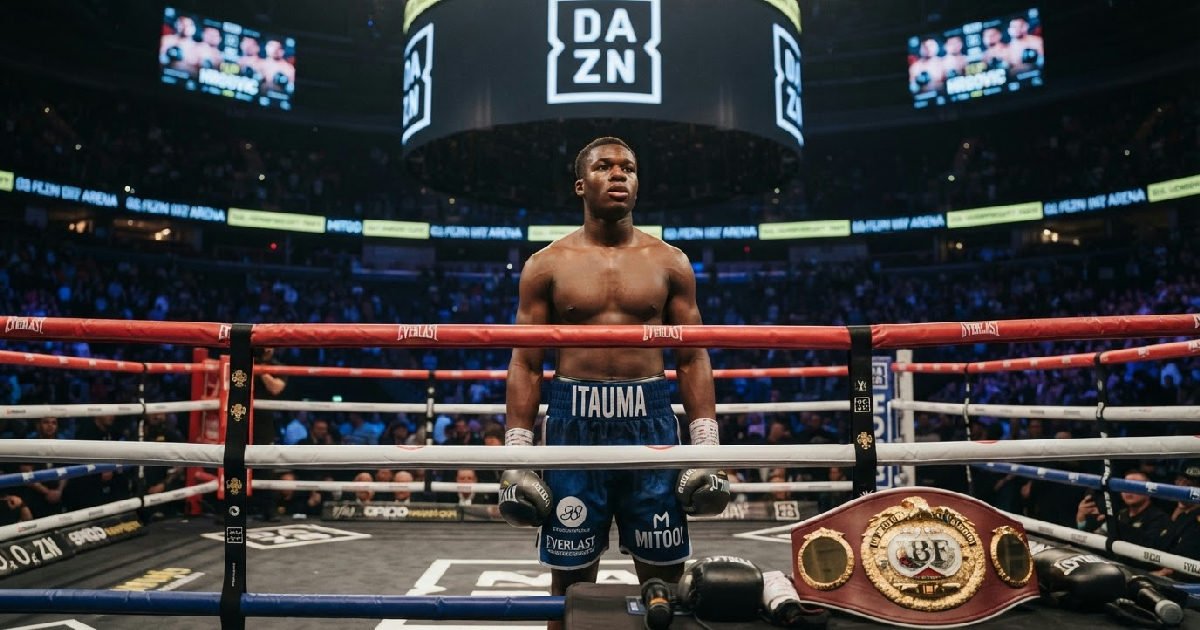
British heavyweight Moses Itauma is set to face Filip Hrgovic for the vacant IBF heavyweight title on August 29 at London’s O2 Arena. However, the decision to broadcast this pivotal bout on DAZN pay-per-view has ignited a debate within boxing circles. Many critics argue that placing the 21-year-old prospect behind a Moses Itauma paywall at such an early stage could hinder his crucial career development.
The premium pricing, set at £24.99 in the UK and $59.99 in the United States, is seen by some as premature for a fighter still building his mainstream appeal. This strategy prioritises immediate revenue over the broad exposure Itauma needs to cultivate a substantial fanbase, a cornerstone of long-term stardom in professional boxing.
Moses Itauma Paywall Sparks Debate for Rising Heavyweight
The core of the criticism revolves around the balance between financial gain and fighter development. Promoters appear to be positioning Itauma as a star attraction before he has fully earned that status with the wider public. This approach risks limiting the number of potential fans who will witness his progress at a critical juncture.
For a fighter with Moses Itauma’s potential, widespread visibility is paramount as he transitions from a decorated amateur to a professional headliner. Building a genuine connection with fans often requires accessible fights that allow viewers to follow his journey organically.
This strategy could inadvertently alienate fans who might be unwilling to invest in a pay-per-view for a boxer they do not yet feel a strong connection with. The long-term costs in terms of reduced audience engagement might ultimately overshadow any short-term financial gains.
Thin undercard adds to price concerns
Adding to the disquiet is the perceived weakness of the supporting card for the Itauma-Hrgovic main event. Beyond the intriguing matchup between Sam Noakes and former WBO lightweight champion Denys Berinchyk, the undercard offers limited drawing power to entice undecided buyers.
Bouts such as Constantin Ursu versus Ben Vaughan, Aloys Junior taking on Mike Perez, and Guido Vianello against Moses Jolly are standard fare for regular boxing events. They do not typically provide the star power or public interest usually associated with a premium broadcast.
This means that Itauma and Hrgovic are left to carry the entire financial weight of the card. A more robust undercard could have justified the pay-per-view price tag and offered additional reasons for fans to tune in.
Itauma’s impressive amateur pedigree and professional trajectory
Moses Itauma entered the professional boxing scene with considerable hype, thanks to an outstanding amateur career. Born in Slovakia in 2004, he moved to the UK at age four and began boxing at nine, quickly compiling an unbeaten amateur record of 24 wins.
His amateur accolades are extensive and include gold medals at the Schools, Juniors, Youth European, and Heavyweight Youth World Championships. Itauma was widely considered one of the most decorated British amateur heavyweights of his generation, earmarking him for future success.
This strong foundation suggested a potentially rapid ascent through the professional ranks. However, traditional boxing wisdom often advocates for a period of widely televised, accessible fights to translate amateur acclaim into broad professional appeal and mainstream recognition.
His swift move to a vacant IBF title shot at just 21 years old underscores his immense talent and his promoters’ confidence. Yet, the accompanying paywall introduces a significant barrier to achieving widespread public engagement, which is crucial for building a lasting legacy.
Lessons from past British heavyweight stars’ rise to fame
The career trajectories of previous British heavyweight stars offer a compelling counterpoint to Itauma’s current path. Anthony Joshua, for instance, became a household name because millions of British viewers watched his early professional fights on accessible television platforms.
This consistent, broad exposure allowed fans to intimately follow his development from an Olympic gold medallist to a world champion. That sustained visibility cultivated a loyal fanbase willing to pay for his major fights once he reached superstar status.
Itauma’s current journey, largely hidden behind a premium paywall, denies him this organic build-up of public goodwill. It reflects a business model that seemingly prioritises immediate financial returns over the gradual, essential process of cultivating a deeply engaged audience for the long term.
The concern is that while an IBF title is undeniably prestigious, it doesn’t automatically guarantee star power or widespread public recognition. Without the bedrock of accessible viewing, even a championship belt might not translate into significant box office success or broad cultural impact.
Evolving economics of boxing broadcasting and fighter exposure
The decision to place promising fighters like Itauma behind paywalls is indicative of broader shifts in boxing broadcasting economics. Streaming services and promoters are increasingly focused on maximising revenue from individual events, accelerating the move away from traditional subscription or free-to-air models towards pay-per-view.
While this approach can generate substantial income for already established superstars, its application to developing prospects remains contentious. It essentially presumes a pre-existing demand that, for a 21-year-old like Itauma, may not yet be robust enough to justify the price point for a broad audience. Fans looking for an exciting packed boxing schedule might find themselves priced out of this particular event.
Furthermore, this model places immense pressure on the fighter to deliver spectacular, memorable performances every time they step into the ring. Each fight becomes a significant financial outlay for viewers, adding an extra layer of scrutiny to their development and potentially impacting their natural progression.
The challenge for promoters is to find a sustainable balance between maximising financial viability and fostering long-term career growth and star development. For Itauma, the August 29 fight represents a critical juncture, not only for his in-ring performance but also for the strategic presentation of his career to the global boxing community.
Impact on fighter brand and marketability
A fighter’s brand is constructed not solely on victories but equally on visibility, personality, and relatability. Fans form connections with athletes whose journeys they can witness and whose personalities they come to understand. Pay-per-view models can significantly restrict this initial, crucial connection.
Marketability is intrinsically linked to public awareness. If fewer people have the opportunity to watch Itauma compete, fewer will engage in discussions about him, seek out his interviews, or become emotionally invested in his burgeoning narrative. This inevitably places a ceiling on his potential reach and influence within the sport.
Cultivating a true boxing superstar demands sustained public engagement over time. Denying a highly touted prospect early, accessible exposure could lead to a situation where, even if Itauma achieves dominant championship status, he might struggle to command the same level of mainstream attention or generate comparable gate receipts as other emerging British talents who enjoyed a more public apprenticeship.
Outlook: A calculated risk with long-term implications
The upcoming bout against Filip Hrgovic is undeniably a monumental step up for Moses Itauma, offering him a premature chance at a world title. However, the pay-per-view model surrounding this event transforms it into a significant gamble beyond the confines of the boxing ring.
Promoters are banking heavily on Itauma’s raw talent directly translating into pay-per-view buys, even without the extensive foundation of public goodwill that typically precedes such demands. The August 29 event will serve as a crucial test not only of Itauma’s formidable boxing skills but also of this controversial business strategy.
The actual number of viewers who tune in to watch Itauma take this pivotal step will be as significant as the fight’s outcome itself. The long-term health and trajectory of his promising career may ultimately depend more on successfully cultivating a broad, loyal viewership than on the immediate revenue generated from this single premium broadcast.