Roy Jones Jr. names Jorge Castro as the opponent with the most formidable chin he ever faced in their 1992 bout. recently pinpointed Argentinian fighter Jorge Castro as the opponent who displayed the most formidable chin he ever encountered in the ring.
The former pound-for-pound king stated unequivocally that Castro absorbed “everything, including the kitchen sink,” he threw during their 1992 bout, yet “still just kept coming.”
This candid revelation, shared during a “Best I Faced” interview with BoxRec, offers a fresh perspective on Jones’s illustrious career. It highlights a less-celebrated opponent from his early days, underscoring a fighter’s raw durability over flashier skills. Such an admission from a pugilist known for his devastating power speaks volumes about Castro’s resilience.
Why Roy Jones Jr. Names Jorge Castro
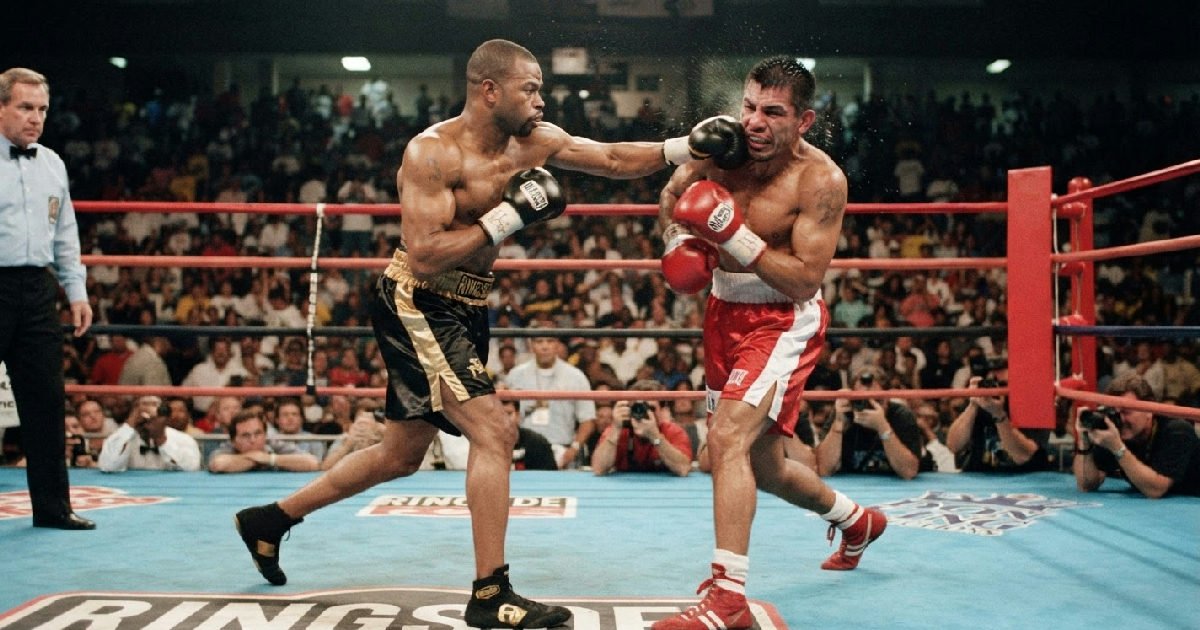
The encounter between Roy Jones Jr. and Jorge Castro took place in June 1992 at the Civic Center in Pensacola. It was only Jones’s 18th professional fight, a period when he was rapidly establishing himself as a rising force in the sport. Jones ultimately outpointed Castro, securing a victory on the scorecards.
But the memory of Castro’s iron will clearly stuck with Jones for decades. His explicit quote, “Jorge Castro by far. You could hit him with the kitchen sink and he kept coming. I hit him with everything including the kitchen sink and still just kept coming,” paints a vivid picture of a fighter refusing to yield.
It’s a testament to the Argentinian’s legendary toughness. This declaration came as part of a “Best I Faced” interview published by BoxRec on January 12, 2021.
Castro’s career after that fight proved his mettle was no fluke. He went on to capture the WBA world middleweight title in 1994, holding the belt for a year. During that reign, he successfully defended his crown four times.
His reputation as a durable champion was solidified before Shinji Takehara eventually dethroned him in Japan. This achievement highlighted his consistent performance at the elite level.
This enduring toughness resonates with other tales from the sport, like when George Foreman named Ron Lyle as his toughest opponent, not Muhammad Ali. These anecdotes often shed light on the unsung heroes of boxing durability.
Beyond the Chin: Jones’s Other Notable Opponents
Jones’s “Best I Faced” interview extended beyond just the toughest chin, providing a comprehensive look at the distinct attributes of several other formidable foes. These insights offer a deeper understanding of the challenges even a dominant fighter like Jones faced throughout his Hall of Fame career.
When asked about the “smartest” opponent, Jones named Bernard Hopkins, acknowledging Hopkins’s “real good ring IQ.” He noted Hopkins’s ability to adapt and improve after their first encounter, demonstrating a strategic depth that made him exceptionally challenging.
Merqui Sosa earned the distinction of being the “strongest” fighter Jones faced. Jones described Sosa as “a very powerful guy” who proved difficult to move or push back, even for Jones’s considerable strength. This physical challenge stood out in his memory.
The “best jab” according to Jones belonged to Virgil Hill. He characterised Hill’s jab as deceptively potent, calling it the “hardest punch he threw” and praising its quickness. Such a precise and effective jab could disrupt even Jones’s unparalleled rhythm.
James Toney was cited for having the “best defense,” with Jones recalling Toney’s elusiveness. His hip movement and shoulder roll made him extraordinarily difficult to hit cleanly, forcing Jones to work harder than usual to land his shots against a master of evasion.
The pair’s 1994 clash for the IBF Super Middleweight Championship saw Jones win by unanimous decision, landing 285 of 614 punches compared to Toney’s 157 of 451. Jones also knocked Toney down in the third round with a left hook, a rare occurrence for the defensively sound Toney.
Vinny Pazienza possessed the “fastest hands,” according to Jones. While Pazienza lacked the power of some other opponents due to coming from lighter weight classes, his hand speed presented a unique challenge.
Jones thoroughly dominated Pazienza in their June 1995 IBF Super Middleweight title fight, winning by TKO in the sixth round after knocking him down three times. This showcased Jones’s ability to capitalize on even a brief opening.
Finally, Rollin Williams was recognized for his “best foot movement.” Jones candidly admitted it took him five rounds just to land a clean punch on Williams, highlighting the frustration and tactical adjustments required to corner such a mobile adversary.
Roy Jones Jr.’s Illustrious Career and Punching Power
Roy Jones Jr.’s career, which spanned from his professional debut in 1989 until his final retirement in 2023, is one of the most celebrated in boxing history. He secured world titles in an astounding four weight classes: middleweight, super middleweight, light heavyweight, and heavyweight.
This multi-divisional success cemented his legacy as a generational talent. His consistent performance at the highest level set him apart from many contemporaries.
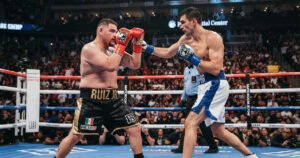
His ascent included dominant victories over an array of top-tier opponents, including the aforementioned James Toney and Bernard Hopkins. Jones’s ability to move up to heavyweight in 2003 and dethrone WBA world champion John Ruiz remains one of the most remarkable feats in modern boxing.
This move showcased his extraordinary skill and willingness to take risks. Such a challenge underscored his confidence and ambition in the sport.
Given this background, Jones’s comments about Castro’s chin are particularly striking. Jones was known for his explosive power and surgical precision, often rendering opponents helpless with combinations that seemed to defy physics.
His TKO victory over Vinny Pazienza, where he landed 173 of 308 punches (56%) compared to Pazienza’s 45 of 110 (41%), exemplifies his offensive prowess. This statistical dominance highlights his effectiveness.
In another demonstration of his power, Jones defeated Glenn Thomas by TKO in August 1992, dropping him with a left hook in the eighth round. This fight, only his 19th professional bout, showcased the destructive capability that would define much of his career.
To face such power and still “keep coming” as Castro did, truly speaks to an unparalleled level of toughness. It underscores a rare resilience in a fighter.
Jones’s legacy isn’t just about wins; it’s about how he won, often dominating opponents with a blend of speed, power, and defensive wizardry.
That he still singles out Castro for his chin, nearly three decades after their fight, offers a unique window into the sheer impact some opponents leave on even the greatest fighters.
The Enduring Significance of a Boxer’s Chin
In the brutal theatre of professional boxing, a fighter’s “chin” — their ability to withstand punishment without being knocked out or severely dazed — is often as revered as their punching power or footwork.
Jorge Castro’s capacity to absorb Roy Jones Jr.’s hardest shots places him in an elite tier of boxing toughmen, even if he wasn’t always in the main spotlight. This unique resilience commands respect.
A strong chin can dictate the flow of a fight, turn the tide of momentum, and even determine a boxer’s career trajectory. Fighters who possess this innate durability often frustrate power punchers.
They force opponents to exhaust themselves and sometimes lead to unexpected outcomes. Castro’s performance against Jones, where he endured a sustained assault, serves as a classic example of this phenomenon.
This attribute is particularly critical when facing a generational talent like Jones, whose hand speed and knockout power were legendary. For a fighter to withstand such an onslaught and still remain on their feet, engaging throughout the fight, speaks to a psychological fortitude that matches the physical resilience.
It embodies the spirit of a true pugilist. Such mental and physical toughness is highly valued in the sport.
The reverence Jones holds for Castro’s chin highlights the respect boxers often have for an opponent’s ability to take a punch. It’s a core tenet of the sport, sometimes valued even more than technical brilliance in assessing a fighter’s heart.
This kind of raw toughness makes for memorable contests, creating legends not just out of victors, but also out of those who simply refuse to be beaten down. Their resilience is often celebrated.
Reflecting on such memorable displays of resilience, it reminds us of other legends who knew how to absorb a shot, much like when Derek Chisora discussed his toughest opponents, often citing those who could stand up to his own heavy hands.
The Lasting Impact of an Unyielding Foe
Roy Jones Jr.’s recent comments about Jorge Castro don’t just highlight Castro’s extraordinary durability; they also offer a fascinating psychological insight into one of boxing’s all-time greats.
For a fighter of Jones’s caliber, who dominated multiple weight classes and rarely found himself truly tested, such a specific memory underscores the profound impression Castro made. It speaks to Castro’s unique impact.
It’s not every day that a legend points to an opponent from an early, less-publicised fight as having a quality that surpassed all others. This selectivity suggests that Castro’s iron chin wasn’t merely impressive; it was truly unique in Jones’s vast professional experience.
This enduring anecdote also adds another layer to the story of both Jones and Castro. For Jones, it showcases his humility and genuine respect for an opponent’s fundamental toughness.
For Castro, it serves as a powerful testament to his unyielding spirit, ensuring his name remains etched in boxing lore for a characteristic that many top fighters only dream of possessing. It defines his place in history.
In a sport often defined by knockouts and dominant performances, the ability to simply stay on one’s feet against overwhelming power holds a special kind of prestige.
Castro’s resilience against one of the sport’s most dynamic punchers is a narrative that continues to resonate, long after the final bell. It’s a quality that defines an era for many fans.
These kinds of acknowledgements from boxing legends provide valuable context, much like when Tony Bellew named David Haye as the hardest puncher he ever faced, showing how specific attributes leave an indelible mark on a fighter’s memory.