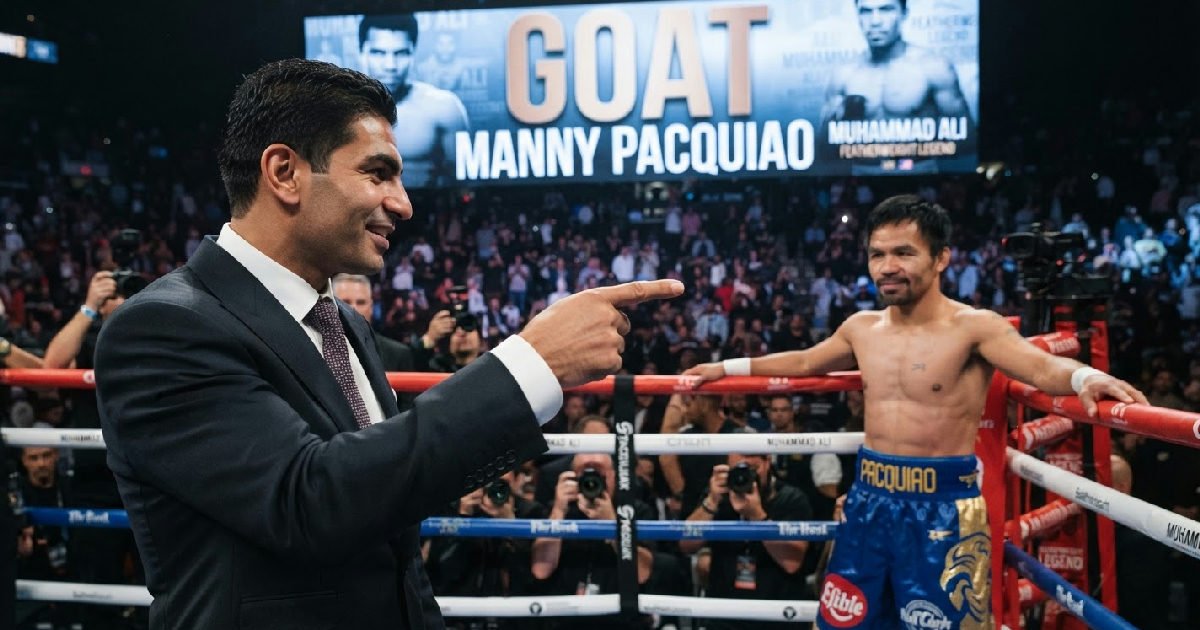
In a definitive statement, British boxing icon Prince Naseem Hamed has named Manny Pacquiao as the “ultimate GOAT” in boxing, marking a notable evolution in his assessment of the sport’s greatest ever fighter. The former featherweight champion highlighted Pacquiao’s unprecedented achievement of securing eight world titles across different weight classes as the primary factor behind his choice, an accomplishment Hamed described as “unheard of.”
Hamed’s recent declaration signals a shift from his prior stance, having previously identified Muhammad Ali as the “Ultimate Goat” during a “Goat, Great, or Good” challenge for BBC Sport. This evolving perspective from a fighter as influential as “Prince Naz” adds a compelling layer to boxing’s perennial debate over its pantheon of greats.
Prince Naseem Hamed’s evolving perspective on Manny Pacquiao
Hamed’s recent comments firmly place Manny Pacquiao at the summit of boxing royalty, a position he articulated with profound admiration. “Pacquiao changed our game, changed my sport. I love Manny Pacquiao,” Hamed stated, underscoring the Filipino legend’s transformative impact.
He added, “There’s nobody really in my game that can say that what he did they’ve done. Eight world titles at different weights, it’s unheard of, he’s on another planet.”
This unequivocal endorsement for Pacquiao comes after years of public pronouncements from Hamed regarding boxing’s greatest. Earlier in his career, the Sheffield native had reportedly predicted he would eventually be remembered as a greater fighter than Muhammad Ali.
The ongoing debate over such declarations, and their potential impact, can be seen in other predictions for specific fights within the sport. Later, in a BBC Sport segment, he unequivocally named Ali as the “ultimate goat,” repeating the phrase for emphasis.
The journey of Hamed’s opinion reflects the subjective and often changing nature of the GOAT discussion within boxing.
The sheer statistical anomaly of Pacquiao’s career stands out, even to a seasoned champion like Hamed. Winning world titles in eight distinct weight divisions is a feat that remains unmatched, transcending eras and showcasing an adaptability and sustained excellence that few, if any, boxers have ever displayed.
The Enduring Legacy of “PacMan”
Manny Pacquiao’s career is a testament to extraordinary talent and relentless dedication. His ability to compete at the highest level across such a vast range of weight classes – from flyweight to light middleweight – is a unique chapter in boxing history. This remarkable versatility isn’t merely about accumulating belts, but about consistently defeating elite competition as he ascended through the divisions.
“PacMan” carved out a legacy defined by thrilling, action-packed fights and an indomitable spirit. Beyond his technical prowess, Pacquiao’s humility and inspiring backstory resonated deeply with fans worldwide, transforming him into a global icon. He became not just a boxer, but a cultural phenomenon, especially in his native Philippines, where his fights brought the nation to a standstill.
Pacquiao’s impressive run included significant victories over some of the sport’s biggest names, solidifying his status as a multi-divisional force. His sustained presence at the top, coupled with his unparalleled achievements, makes Hamed’s recent assessment understandable, reflecting a genuine appreciation for a truly unique competitor. Such singular achievements are rare in a sport often governed by specific regulations, sometimes requiring exceptions from governing bodies.
“Prince Naz”: A Look Back at a Flamboyant Career
Born Naseem Hamed, “Prince Naz” burst onto the boxing scene in the 1990s, quickly becoming one of the most polarizing yet electrifying figures in the sport. His unconventional, switch-hitting style, combined with explosive power and dazzling footwork, made him a must-watch attraction. He brought an undeniable charisma, often entering the ring on elaborate props, and his confidence, which some deemed arrogance, captivated millions.
Hamed revitalized the featherweight division, transforming it into a pay-per-view draw with his thrilling performances. He secured the WBO, IBF, and WBC titles during his dominant reign, dispatching opponents with a flair rarely seen before. Fans either adored his trash-talking antics or found them off-putting, but no one could deny his ability to generate buzz and deliver excitement inside the ropes.
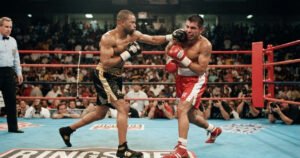
His professional record from 1992 to 2002 saw him amass an impressive run, almost entirely undefeated. However, in 2001, Hamed faced his toughest test and suffered his first career defeat at the hands of Mexican legend Marco Antonio Barrera. Barrera’s tactical brilliance out-thought and out-fought the dynamic Hamed, handing him the sole blemish on his record.
Following the Barrera loss, “Prince Naz” fought only once more, securing a decision win over European champion Manuel Calvo. An estimated 11 million fans tuned into Sky Sports for what would prove to be his career finale. Hamed retired at just 28 years old, citing persistent hand injuries, leaving behind a memorable, albeit relatively short, legacy of featherweight dominance and showmanship.
Ali’s Enduring Claim to GOAT Status
While Hamed’s current focus is on Pacquiao, his previous acknowledgment of Muhammad Ali as the “ultimate goat” speaks to the undeniable impact and enduring reverence for “The Greatest.” Ali’s influence stretched far beyond the boxing ring, making him a global cultural icon. His blend of athletic prowess, lyrical wit, and principled activism cemented his place in history.
Ali remains the only three-time lineal heavyweight champion in boxing history, a monumental achievement in the sport’s most glamorous division. His legendary victories over Sonny Liston, Joe Frazier, and George Foreman are not merely wins; they are epoch-defining moments that transcended sport, shaping public discourse and capturing the imagination of generations. These fights are perpetually recounted, analyzed, and celebrated, reinforcing his mythical status.
The GOAT debate in boxing, as in any sport, is inherently subjective, often weighing different criteria. Is it the number of titles, the quality of opposition, cultural impact, or sustained dominance? Ali’s case often rests on a combination of these factors, particularly his unprecedented achievements in the heavyweight division and his profound social significance.
The evolving opinions of figures like Prince Naseem Hamed only serve to fuel this ongoing, passionate discussion, reflecting the sport’s dynamic nature and its constant search for definitive greatness. The potential for compelling matchups continues to drive interest, with discussions often centered on potential boxing matches that capture public attention.
The Unending Debate
Prince Naseem Hamed’s latest pronouncement, elevating Manny Pacquiao to the “ultimate GOAT” position, reignites one of boxing’s most cherished and contentious discussions. His personal journey through the debate, from claiming his own future superiority to acknowledging Ali, and now crowning Pacquiao, illustrates the dynamic nature of how greatness is perceived and re-evaluated over time.
Ultimately, such declarations are personal tributes, reflecting an individual’s criteria for greatness. For Hamed, Pacquiao’s unprecedented eight-division world titles represent a pinnacle of achievement unmatched by any other. This new perspective from a boxing luminary like “Prince Naz” will undoubtedly add further fuel to the passionate arguments among fans and pundits alike, ensuring the “greatest of all time” debate continues to captivate the boxing world.