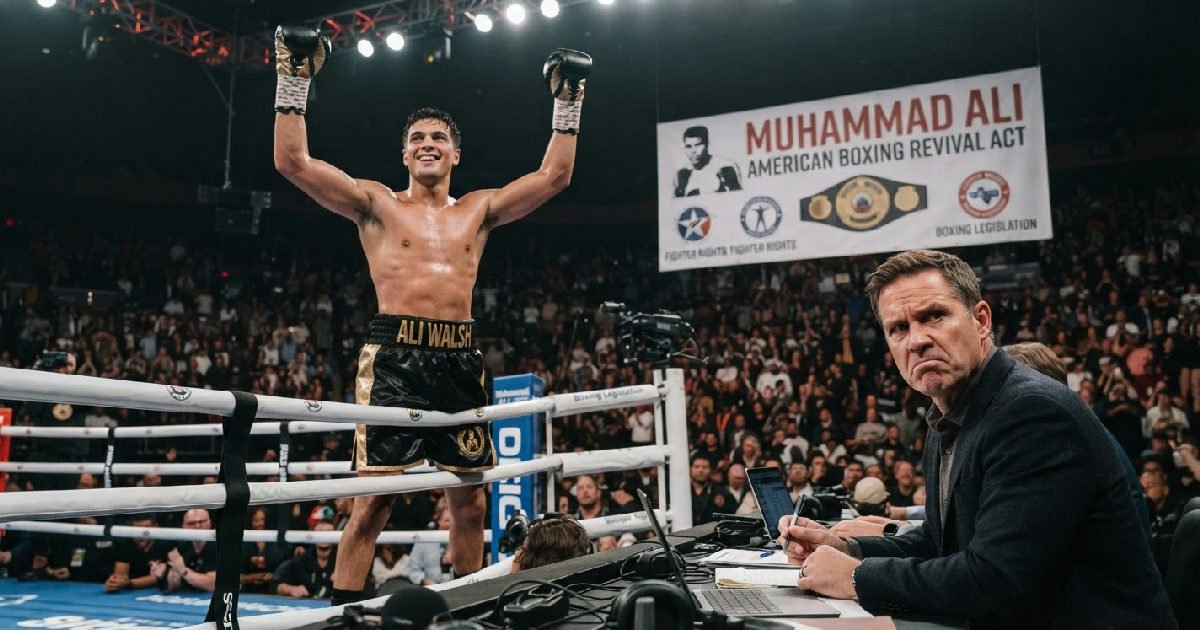
Prominent boxing journalist Chris Mannix sharply criticized professional boxer Nico Ali Walsh on September 16, 2026, for endorsing the revised Muhammad Ali American Boxing Revival Act. Mannix’s public denouncement came the same day the Senate Commerce Committee advanced the controversial bill in Washington D.C.
Mannix contends the updated legislation preserves a significant threat to fighter welfare, potentially allowing a closed league to monopolize athletes without collective bargaining over revenue. He slammed the use of Muhammad Ali’s grandson as a “prop” for a bill he believes primarily benefits a single promoter.
The Revised Boxing Bill Ignites Debate
The core of Mannix’s objection centers on the bill’s provision for Unified Boxing Organizations (UBOs). These entities would gain the power to sign fighters, stage bouts, manage rankings, and issue championship belts, effectively merging promotional and regulatory roles under one roof. Critics argue this model departs sharply from decades of customary divisions in the sport.
Many in the boxing community fear this concentration of control could undermine the sport’s competitive landscape. The long-standing fragmented structure, while often messy, traditionally allowed for various promoters to bid for talent, driving up fighter purses. A centralized system risks stifling this crucial dynamic, affecting upcoming boxing events and fighter earnings.
Nico Ali Walsh’s Shift in Stance
Nico Ali Walsh, the grandson of boxing icon Muhammad Ali, initially opposed the legislation vehemently. He testified against an earlier draft of the Muhammad Ali American Boxing Revival Act before the U.S. Senate Commerce, Science, and Transportation Committee on April 22, 2026.
Walsh had argued that the original Ali Act, enacted on May 26, 2000, was designed to prevent conflicts of interest by separating fighter control from market control. He warned that UBOs could create a monopolistic system akin to the UFC, stating the bill “should not have my grandfather’s name on it” if passed in its original form.
However, Walsh reversed his position after lawmakers incorporated several amendments. On September 10, 2026, he sent a letter endorsing the revised S. 5188, acknowledging he was “proud many of the changes he fought for are now in the bill.” Senator Ted Cruz of Texas, chairman of the Senate Commerce Committee, credited Walsh’s support with securing these vital amendments.
Key Provisions of the Muhammad Ali American Boxing Revival Act
The revised Muhammad Ali American Boxing Revival Act includes several significant provisions aimed at modernizing boxing and enhancing fighter protections. These amendments were instrumental in securing Nico Ali Walsh’s endorsement.
- Unified Boxing Organizations (UBOs): Allows for the creation of UBOs that can organize fights, rank fighters, and award titles, operating similarly to a traditional sports league.
- Contract Terms: Initial UBO deals cannot exceed three years for a fighter’s first promotional agreement. Subsequent deals are capped at six years, providing a structured progression for athletes.
- Negotiation Window: Boxers are granted a 90-day negotiating window before their agreements expire, offering a path to free agency and competitive offers.
- Wage Floor: Establishes a national minimum payment of $200 per round for all professional boxers, offering modest financial support to preliminary fighters.
- Health and Safety: Mandates that UBOs provide medical care and support services. This includes enhanced medical standards like annual brain MRIs or neurological exams for fighters under 40, and MRIs plus MRAs and stress tests for those over 40, alongside EKGs, physicals, and blood work. It also requires $50,000 in medical coverage for injuries sustained during a bout and an extra physician and ambulance at every UBO event.
- Transparency and Integrity: Requires transparent ranking systems, a “firewall” between promoters/UBOs and fighter managers to prevent conflicts of interest, and financial disclosure requirements for UBOs. The bill also includes a third-party anti-doping program and strict anti-betting rules.
Mannix’s Concerns: Monopolization and Fighter Pay
Despite the outlined amendments, Chris Mannix argues that the fundamental threat of centralized control persists. He fears that a premier UBO, armed with exclusive broadcast distribution and proprietary titles, could effectively neutralize outside competition. This could leave boxers with limited leverage, even with free agency provisions.
The comparison to the Ultimate Fighting Championship (UFC) model is a significant point of contention. UFC competitors reportedly capture less than 20 percent of event revenue, a stark contrast to top boxers who, in the current system, often command a much larger share. This disparity stems from the absence of a collective bargaining agreement for UFC fighters.
Major league team sports also operate under centralized systems, but their athletes benefit from powerful labor unions that negotiate wages and revenue splits. The current Senate bill offers no similar collective voice for boxers, a critical omission in Mannix’s view.
The $200 per round wage floor, while helpful for preliminary fighters, offers little protection for contenders whose earning power hinges on competitive promotional offers. This legislation could reshape notable boxing careers.
The Future of Boxing Regulation
The debate surrounding the Muhammad Ali American Boxing Revival Act underscores boxing’s ongoing challenge to balance commercial interests with fighter welfare. The original Ali Act of 2000 sought to protect fighters from exploitative contracts. Critics of the new bill believe it risks undoing some of those protections.
Mannix’s concern is that Senator Ted Cruz can now utilize the revered Ali name to legitimize a framework that could lead to unprecedented corporate oversight of boxing. The outcome of this legislative push will likely reshape the sport’s structure, influencing how fighters are managed, compensated, and protected in the years ahead.
This highlights deeper questions about fair practices and athlete representation, especially given the bill’s lack of a collective bargaining mechanism for boxers.