
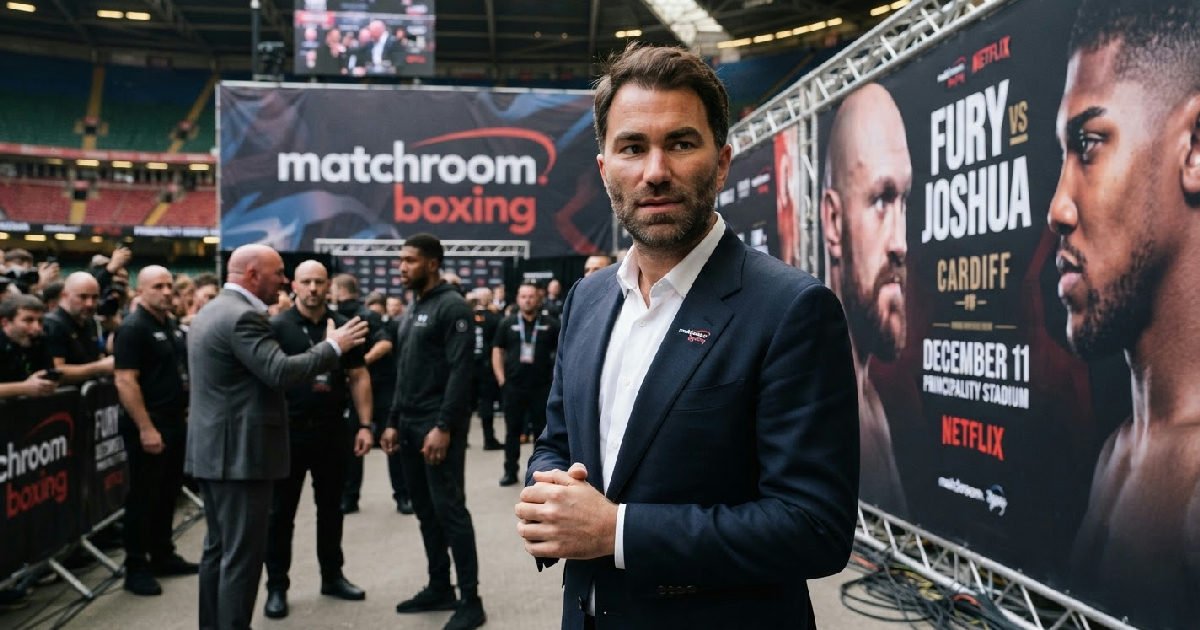
The highly anticipated heavyweight boxing match between Tyson Fury and Anthony Joshua is officially set for December 11, 2026, at Principality Stadium in Cardiff, Wales. However, the confirmation arrives amid a renewed promotional conflict.
Anthony Joshua’s long-time promoter, Eddie Hearn of Matchroom Boxing, immediately challenged the involvement of UFC chief Dana White as a co-promoter, a detail announced by global streaming giant Netflix, which will broadcast the event.
Promotional dispute around the Anthony Joshua fight flares anew
Hearn’s objection stems from contractual agreements that he insists preclude White’s participation. This latest twist highlights the intricate and often contentious world of major boxing promotions, even as fans breathe a sigh of relief that the long-awaited showdown is finally on the calendar.
Netflix’s official announcement declared that “The Ring and Dana White will collaborate to promote the monumental event.” This statement directly contradicts Eddie Hearn’s firm stance, who has consistently maintained that White cannot be involved. Hearn told The Independent that his original position remains unchanged, emphasizing that existing contracts must be honored.
“We expect the contracts to be honoured and unless we decide otherwise, Dana White cannot be involved in the fight,” Hearn stated, drawing a line in the sand. This challenge suggests that despite the fight’s official confirmation, significant behind-the-scenes negotiations and potential legal wrangling might still be underway regarding its promotional structure.
The involvement of Tyson Fury, Anthony Joshua and their respective teams has always been fraught.
Dana White, for his part, celebrated the fight’s confirmation. He issued a statement noting the decade-long clamor for the heavyweight clash and the combined 66 wins and 52 knockouts between the two fighters. White’s apparent inclusion via Netflix’s announcement suggests a complex power play in the rapidly evolving boxing landscape.
White previously accused Hearn of deliberately complicating negotiations, stating, “I’ve never seen a person who’s supposedly supposed to be the event’s promoter do so much damage to his own fight.” This sentiment underscores the deep-seated rivalry and distrust between the promotional figures involved, transcending mere business disagreements.
The Role of Zuffa Boxing
Dana White’s venture into boxing through Zuffa Boxing has been a contentious point for traditional promoters. His involvement in such a high-profile fight could be seen as a significant disruption to the established order. Hearn’s resistance isn’t just about a single clause; it reflects broader concerns about control and revenue sharing in marquee boxing events.
The current dispute follows months of negotiations and past attempts to stage this fight, all often mired in similar promotional squabbles. It indicates that securing the fighters’ agreement is only one part of the battle; aligning the myriad commercial and promotional interests remains a formidable challenge.
Venue Battle Settled in UK’s Favor
Before the promotional conflict around Dana White, a significant hurdle involved the fight’s location. Saudi Arabia’s Sela and Netflix initially pushed for the bout to be staged in the United States, specifically Madison Square Garden in New York. Their aim was to optimize viewership for an American prime-time audience, considering Netflix’s global reach.
However, Eddie Hearn and Anthony Joshua’s camp stood firm, insisting that their original contract stipulated the fight must take place on UK soil. This insistence eventually prevailed, leading to the confirmation of Principality Stadium in Cardiff as the venue. Hearn explicitly noted, “If we hadn’t put that in the contract, [the fight would have moved to New York].”
The UK venue also meant avoiding the heavier US tax burden on fighters, a crucial factor for their earnings. Turki Alalshikh, the Saudi boxing chief, later confirmed the UK location, stating, “Fury Vs Joshua will be coming to the UK, as I promised British boxing fans. The time for talking is over…”
Impact of UK Venue on Global Audience
While a win for British fans, the UK location presents logistical challenges for Netflix’s global broadcast strategy. To accommodate prime-time viewing in the crucial American market, the ring walk is anticipated to be around 1 AM UK time. This late start caters to evening hours on America’s East Coast, impacting the live experience for European attendees.
Netflix, with over 325 million members globally, is treating this as a massive viewership event, streaming the fight at no additional cost. This approach signifies a potential shift in how major boxing events are distributed, moving away from traditional pay-per-view models towards subscription-based platforms. Such moves reshape the economic models of the sport.
A Decade of Heavyweight Rivalry and Delays
The journey to this Tyson Fury versus Anthony Joshua fight has been a protracted saga, spanning over four years since Fury first publicly challenged Joshua on September 5, 2022. Joshua accepted the challenge the very next day, on September 6, 2022.
Initial negotiations were fraught with difficulties, including Fury’s self-imposed deadline on September 23, 2022, for Joshua to sign a contract, which subsequently passed without resolution.
The fight was reportedly “signed, sealed, delivered” by Eddie Hearn on Instagram by April 27, 2026, with Turki Alalshikh corroborating the news. Yet, subsequent disputes over venue and promotional involvement continued to delay official announcements. These recurring issues have repeatedly tested the patience of boxing fans who have craved this matchup for years.
Both fighters have kept busy with warm-up bouts. Tyson Fury recently outpointed Arslanbek Makhmudov, while Anthony Joshua stopped Kristian Prenga. These victories maintained their respective high profiles and kept the momentum for this blockbuster event alive, despite the consistent behind-the-scenes turbulence.
Fighter Records and Stakes
As of April 2026, Tyson Fury boasts a professional record of 35-1-1 with 24 knockouts, though other sources indicate slightly different figures, such as 36-2 with 25 KOs. Anthony Joshua holds a record of 28-4 with 25 knockouts, also with minor variations in reported figures (30-4). Their combined record stands at an impressive 66 wins and 52 knockouts, underscoring the calibre of this generational clash.
The winner of this bout is poised to secure a significant place in heavyweight boxing history. This fight isn’t just about titles or purses, estimated to be close to $200 million; it’s about establishing supremacy in a division that has long been dominated by a select few. The stakes couldn’t be higher for both men as they look to cement their legacies.
The New Boxing Landscape
The involvement of Netflix and Saudi Arabian entities like Sela signifies a broader transformation within boxing’s promotional landscape. Traditional boxing promoters now navigate a complex ecosystem where streaming giants and sovereign wealth funds wield considerable influence. This shift can bring unprecedented financial backing and global reach, but also new demands and power struggles.
Turki Alalshikh, a central figure in Riyadh Season’s boxing programming, has been instrumental in funding and facilitating major fights. His statement, “For 15 years no one has been able to make this fight… Back in April, I said that any announcement would come from me,” highlights the new players’ ability to cut through traditional impasses. Assessing boxing threats and opportunities in this environment is complex.
The move towards global streaming platforms like Netflix represents a departure from traditional pay-per-view models. While potentially increasing accessibility for a vast audience, it also reconfigures revenue streams for promoters and fighters. The clash between established promotional figures like Hearn and newer entrants like White, backed by streaming platforms, is likely to be a recurring theme in the sport’s future.
Shifting Power Dynamics for Promoters
Promoters historically held significant control over fighter careers and event staging. However, the emergence of entities like Netflix and Saudi wealth funds introduces new powerful actors. These new players can bypass traditional promotional hierarchies, offering fighters and fans opportunities that were previously unattainable.
This dynamic creates friction, as evidenced by Hearn’s adamant stance against White’s involvement. It’s a battle for influence and control over the sport’s biggest events and their financial windfalls. The eventual outcome of this specific dispute could set precedents for future collaborations and promotional structures within boxing.
Looking Ahead to the Cardiff Clash
With the fight now officially confirmed for December 11, the focus will soon shift from boardroom battles to the training camp. Tyson Fury and Anthony Joshua are scheduled to meet face-to-face on September 30 in London for a launch press conference, marking the beginning of the traditional fight promotion cycle.
This press conference will offer the first direct confrontation between the two heavyweights since the fight’s official sealing. It’s an opportunity for both men to begin the psychological warfare that often precedes such monumental bouts, further building anticipation among their respective fan bases.
Despite the ongoing promotional friction, the fight remains one of the most significant in recent boxing history. Fans have eagerly awaited this clash for years, and the spectacle of two of the era’s biggest heavyweights finally meeting in the ring promises a thrilling night.
All eyes will be on Cardiff in December as the world watches to see who emerges victorious and what further developments unfold in the promotional saga. Even in other divisions, such as Canelo Alvarez’s potential fights, promotional complexities often arise.