
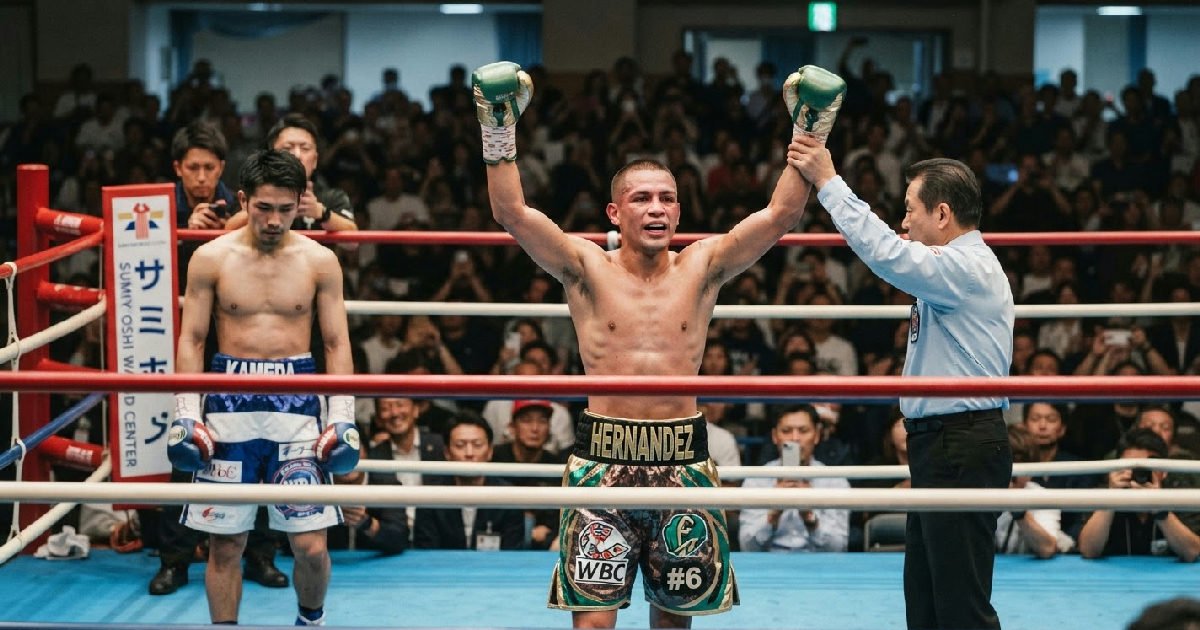
Sebastian Hernandez secured a pivotal split decision victory over Kyonosuke Kameda on 2026-09-23, positioning himself more firmly within the featherweight division. The high-stakes contest unfolded at the Sumiyoshi Ward Center in Osaka, Japan, with Hernandez prevailing after a competitive ten-round battle.
The Mexican fighter, Sebastian Hernandez, who entered the bout ranked WBC #6 in the featherweight division by BoxRec, and previously #7 as a super bantamweight, overcame Kyonosuke Kameda. Kameda, for his part, held WBA #7 and IBF #15 featherweight rankings.
Sebastian Hernandez’s Battle in Osaka: A Gritty Encounter
This result has significant implications for both men’s careers as they vie for world title opportunities, much like the strategic planning seen when fighters assess boxing threat from top contenders.
The fight, headlining 3150FIGHT 11, delivered on its promise of intense action from the opening bell. Kyonosuke Kameda, fighting on home soil, initiated the bout with focused bodywork and consistent movement, attempting to control the tempo early on.
However, Sebastian Hernandez steadily applied pressure as the rounds progressed, landing straight shots with increasing frequency. The fight evolved into a scrappy affair through the middle rounds, characterized by a frantic pace that saw both combatants slipping and falling on the canvas at various points.
Judges’ Scorecards Spark Debate
Despite the close nature of many exchanges, the official scorecards ultimately favored Hernandez. Two judges scored the contest 98-92 and 97-93 in his favor, indicating a clear advantage in their eyes.
A third judge, however, saw the fight differently, submitting a 96-94 card for Kameda. This split decision underscored the competitive and at times ambiguous nature of the ten-round featherweight clash, leaving some room for discussion among boxing enthusiasts.
Pre-Fight Stakes and Fighter Profiles
The bout was a significant crossroads for both Sebastian Hernandez and Kyonosuke Kameda, as each fighter looked to elevate their standing in the featherweight ranks. Their respective world rankings added an extra layer of urgency to the proceedings.
Both combatants had confidently predicted a knockout finish during the weigh-ins, held successfully the day prior at the Japan Boxing Commission (JBC) office in Osaka. This bold pre-fight talk set the stage for the aggressive exchanges that followed.
Sebastian Hernandez’s Momentum Builds
At 25 years old, Sebastian Hernandez entered the ring with a professional record of 21 wins, 1 loss, and 19 knockouts. The orthodox-stance fighter was eager to rebound from his previous outing, a unanimous decision loss to Junto Nakatani in December of last year.
That prior defeat, however, showcased Hernandez’s resilience, as he pushed the Japanese star to the limit with two judges scoring the contest 115-113. His activity heading into the Kameda fight saw him average 11 rounds per fight over his last two outings, demonstrating his endurance and readiness for a tough contest.
Kyonosuke Kameda’s Family Legacy
Kyonosuke Kameda, 27, brought a record of 16 wins, 5 losses, and 2 draws, with 9 knockouts, to the contest. He made his professional debut in 2018, almost three years before Hernandez, accumulating 125 professional rounds compared to Hernandez’s 101.
A member of the renowned Kameda boxing family, which includes his famous cousins Koki and Daiki Kameda, Kyonosuke has faced a mix of formidable opponents. He previously defeated three-weight world champion John Riel Casimero by unanimous decision in October 2025, a significant win that highlighted his capabilities. Casimero himself was notably present ringside for the Hernandez-Kameda clash.
Fight Dynamics: Swings in Momentum
The early rounds saw Kyonosuke Kameda employing effective body shots and lateral movement, aiming to disrupt Hernandez’s rhythm. However, as the fight progressed into the middle rounds, Sebastian Hernandez began to assert himself, pressing forward and landing with straighter, more direct punches.
The action remained fierce and often untidy, characteristic of a high-stakes encounter where neither fighter ceded ground. The seventh round saw Kameda find a renewed vigor, unleashing combinations that momentarily shifted momentum back in his favor.
Kameda’s investment in body shots started to pay dividends in the eighth round, briefly freezing Hernandez with a well-placed strike. Yet, Hernandez capitalized on Kameda’s defensive lapses, as Kameda sometimes overextended, leaving himself open to stinging jabs from the Mexican contender.
Implications for the Featherweight Division
Sebastian Hernandez’s victory will undoubtedly bolster his position within the World Boxing Council rankings, particularly within the featherweight division. This win suggests a permanent move up in weight, where he can now pursue higher-ranked opponents.
The featherweight division’s landscape is always shifting. Fighters frequently face tough decisions to navigate their careers effectively, with some aiming for a WBC title challenge in their chosen weight class. Such victories against cross-organizational contenders are crucial.
WBC and WBA: A Path to Unification?
The World Boxing Council (WBC) and the World Boxing Association (WBA) are two of boxing’s most influential sanctioning bodies. A fighter ranked highly by one, like Hernandez by the WBC, defeating a contender ranked by another, like Kameda by the WBA, often signals intent for unification or a bid for a world title.
Such matchups are pivotal in building a compelling case for a mandatory challenger spot.
The WBC, known for its green-and-gold belt and its emphasis on fighter safety reforms, maintains rigorous ranking systems. Similarly, the WBA, the sport’s oldest sanctioning body, offers multiple championship tiers. Winning against cross-organizational contenders is a direct way to climb both ladders, solidifying a fighter’s standing.
What’s Next for Both Fighters?
For Sebastian Hernandez, this split decision win is a significant career milestone. It provides a strong foundation for a potential world title challenge in the featherweight division. His performance against Kameda showed resilience and effective pressure fighting, qualities essential for a championship run.
He will likely target a top-5 featherweight contender within the WBC, or even pursue a shot at the WBC featherweight title itself. Fighters often need several dominant stoppage victories to build a strong case for a title shot.
Rebuilding for Kyonosuke Kameda
Kyonosuke Kameda, despite the loss, remains a respected fighter with significant experience against top-tier competition. This setback will likely necessitate a strategic reassessment of his path forward, potentially requiring a few comeback fights before he can challenge for major honors again.
His impressive win against John Riel Casimero last year demonstrates his capability to perform at the elite level. Kameda will look to learn from this defeat and return stronger, using his rich family legacy as motivation. The world of boxing is unforgiving, but comebacks are common, and Kameda still has a future in the sport, especially with his WBA ranking.
The fight served as a stark reminder that in professional boxing, every punch and every round can sway the judges. Both fighters now face different trajectories, with Hernandez moving closer to the division’s elite and Kameda needing to regroup and strategize his next move to reclaim his momentum.