
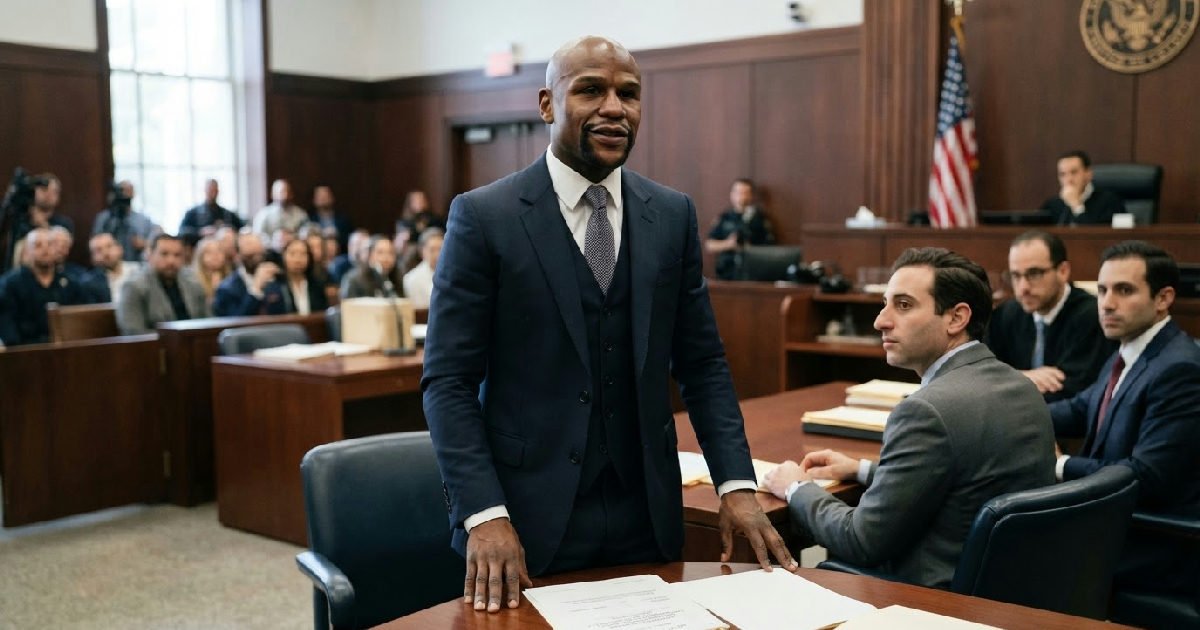
Floyd Mayweather Jr. has withdrawn his $175 million fraud lawsuit against Jona Rechnitz, Ayal Frist, Alexander Seligson, and Frist Apex Ventures, LLC.
, the undefeated boxing icon, has abruptly withdrawn his sprawling $175 million fraud lawsuit against his former business manager Jona Rechnitz, real estate advisor Ayal Frist, attorney Alexander Seligson, and Frist Apex Ventures, LLC. Attorneys representing Mayweather filed the notice to discontinue the claims on Thursday, September 24, 2026, in New York County Supreme Court.
This unexpected move brings a temporary halt to a high-stakes legal battle that had accused Rechnitz and his co-defendants of orchestrating a sophisticated, multi-year scheme to divert substantial funds. The initial lawsuit, filed in New York State Court, detailed a complex web of alleged financial impropriety.
The Multi-Million Dollar Allegations Unveiled
Mayweather’s initial filing painted a stark picture of alleged financial mismanagement and outright fraud that reportedly spanned several years. The core of the boxing legend’s claims centered on a series of transactions that he argued systematically siphoned off his wealth.
Among the most significant accusations was the claim that nearly $100 million in jewelry, belonging to Mayweather, was pledged for a mere $13 million. This particular allegation highlighted a potential loss of tens of millions, raising serious questions about the nature of the business dealings between the parties.
Detailed Financial Discrepancies
Further deepening the allegations, the lawsuit cited a $7.5 million payment made for a purported 12-month investment that Mayweather claimed never materialized. This specific payment was allegedly intended to generate returns but instead vanished without explanation or repayment.
Another major point of contention involved a real estate settlement. The lawsuit alleged that $15 million from this settlement was improperly transferred to Frist Apex Ventures, LLC, without Mayweather’s explicit authorization. Such a transfer would represent a direct breach of trust and financial protocol.
The financial irregularities weren’t limited to these incidents. Legal documents also highlighted a $16.4 million loan secured against four properties. Mayweather’s team asserted that funds from this substantial loan were then distributed in ways that ultimately disadvantaged the boxing superstar.
Moreover, the lawsuit referenced the controversial $1 transfer of his private jet. While details surrounding this specific transaction were sparse in public filings, it was cited as another instance within the broader pattern of alleged fraudulent activity.
Mayweather’s Sudden Legal Retreat
The decision to withdraw such a significant and publicly known lawsuit has inevitably sparked considerable discussion. Mayweather’s attorney offered no public explanation for discontinuing the claims, leaving the motivations behind the move open to speculation.
This silence stands in contrast to the initial fanfare surrounding the filing of the case, which detailed a comprehensive list of grievances. The lack of a formal statement from Mayweather’s legal team suggests a strategic, if unexplained, shift in their approach.
The Defendants’ Prepared Response
While Mayweather’s side remained quiet, a source close to Jona Rechnitz’s camp provided a counter-narrative. This source indicated that the defendants were actively preparing a robust response, equipped with extensive receipts and documentation.
Their anticipated defense aimed to demonstrate that Mayweather’s claims were “utterly baseless” and lacked factual merit, suggesting a vigorous legal challenge was imminent. It’s possible the impending disclosure of this evidence played a role in Mayweather’s decision.
Strategic Implications: “Without Prejudice”
Crucially, the claims were voluntarily discontinued “without prejudice” and without costs to either side. This legal phrasing is significant, as it means Mayweather retains the unequivocal option to refile the lawsuit against the same individuals and entities at a future date.
This allows for the possibility that Mayweather’s team may be gathering additional evidence, reassessing their strategy, or seeking an out-of-court resolution. It avoids a definitive dismissal that would bar future legal action on the same grounds.
The move could also signal a desire to avoid a prolonged public trial, which might expose further details of Mayweather’s private financial dealings. For high-profile figures, managing public perception during legal battles can be as crucial as the outcome itself.
The Broader Picture for High-Profile Athletes
This Mayweather fraud lawsuit saga underscores the inherent financial vulnerabilities faced by many successful athletes and celebrities. Despite immense earnings, managing vast wealth often requires delegating significant responsibility to trusted advisors, which can sometimes lead to disputes.
The boxing world, in particular, is no stranger to promotional disputes and complex financial disagreements. These cases frequently highlight the challenges athletes face in navigating intricate business landscapes while simultaneously focusing on their demanding careers.
For individuals like Mayweather, whose career earnings are estimated to be among the highest in sports history, protecting assets becomes paramount. The reliance on managers and financial advisors necessitates a high degree of trust, which, when broken, can lead to devastating financial and reputational consequences.
What Lies Ahead for Mayweather’s Business Ventures
While the immediate legal action has ceased, the underlying questions about the integrity of Mayweather’s past business partnerships remain. The allegations, regardless of their legal conclusion, inevitably prompt a reevaluation of his financial oversight mechanisms and existing collaborations.
This episode serves as a cautionary tale for athletes and entertainers alike, highlighting the importance of rigorous due diligence and continuous monitoring of financial affairs. It emphasizes that even the most successful individuals can become targets of alleged financial misconduct.
The boxing community and financial observers will now watch closely to see if Mayweather opts to refile the lawsuit, or if this marks the quiet conclusion of a substantial financial confrontation. The implications extend beyond just this specific case, influencing how other athletes approach their own athlete’s financial journey and asset protection strategies.