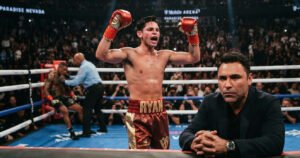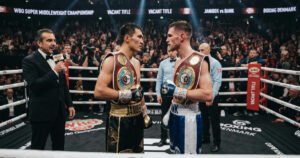
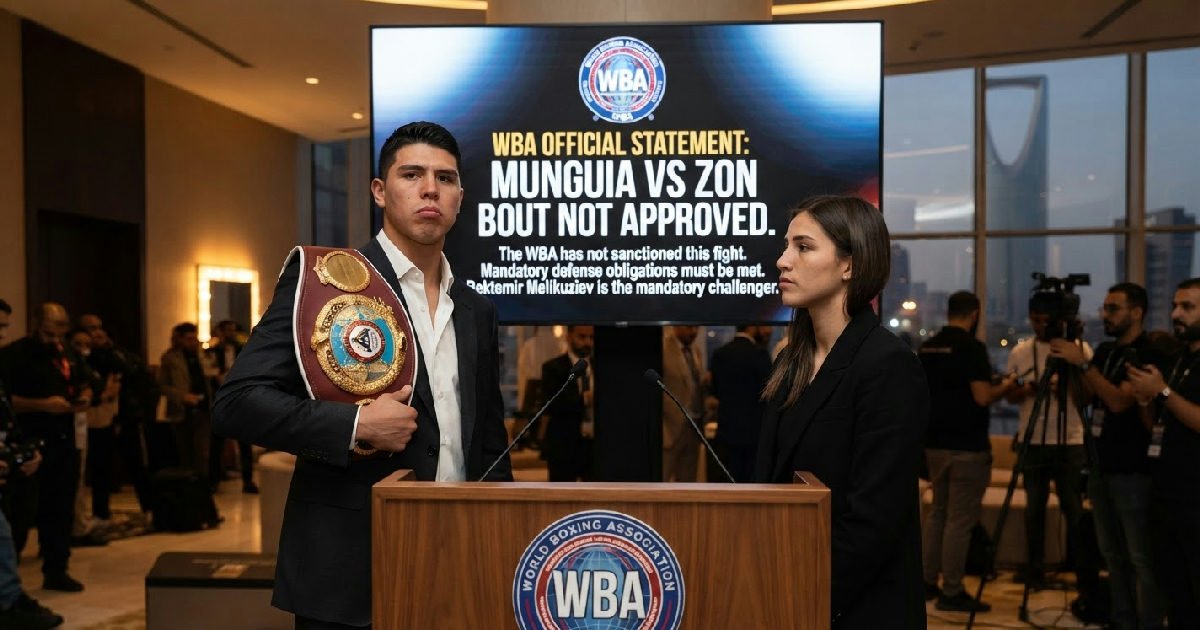
The World Boxing Association (WBA) has publicly intervened in Jaime Munguia’s immediate fighting future, announcing it has not approved his planned super middleweight title defense against Nikita Zon. This unexpected move throws the high-profile bout, slated for the Canelo Alvarez vs. Christian Mbilli undercard on October 31, 2026, in Riyadh, Saudi Arabia, into disarray.
In a statement released on Thursday, October 8, 2026, the sanctioning body confirmed its stance, creating significant uncertainty around Munguia’s reign as champion. The WBA is pressing Munguia to honor his mandatory obligation to face the number-one contender, Bektemir Melikuziev, a fight it officially ordered on September 21, 2026.
Mandatory Challenger at the Center of the Dispute
The organization stated it “will review the situation,” a warning that could have serious consequences for the Mexican star.
This conflict stems from a mandatory defense that’s now long overdue. The WBA Championship Committee initiated a 30-day negotiation period for Munguia and Melikuziev to reach terms, which is set to expire on October 21, 2026. More critically, Munguia’s 120-day period to complete his mandatory defense had already expired back on August 30, 2026, putting him in direct violation of the body’s regulations.
Bektemir “Bek the Bully” Melikuziev (17-1, 11 KO) has been the official mandatory challenger since securing an eliminator win in May of last year. He has grown increasingly frustrated with the delays and Munguia’s attempts to secure an alternative opponent.
Melikuziev publicly rejected a reported “step-aside” money offer from Munguia’s team, signaling his firm intention to enforce his right to a title shot. This situation highlights how sanctioning bodies must act when the WBA orders a rematch or mandatory bout and negotiations stall.
Melikuziev’s Stance and Allegations
The Uzbekistani contender hasn’t been silent about the ordeal. He’s accused Munguia of actively avoiding the ordered fight, even alleging that he had agreed to major concessions to make the bout happen. According to Melikuziev, these included a minimal purse, no VADA drug testing, and even a willingness to fight on short notice, all of which he claims Munguia’s side still rebuffed.
Melikuziev further claimed that Munguia’s camp demanded more money to face him. He even proposed staging the event in his native Uzbekistan with additional funding to meet their demands, an offer that reportedly went unanswered. This public campaign has put immense pressure on the WBA to act, lest its own rules and rankings appear meaningless.
Munguia’s Risky Gambit for a Voluntary Defense
Despite the outstanding mandatory obligation, Munguia’s team proceeded with announcing a fight against Russian southpaw Nikita Zon (12-0-1, 10 KO). The bout was set to be a key feature on the “Mexico Versus The World” undercard in Riyadh, a massive event broadcast on DAZN PPV.
A spot on a Canelo Alvarez undercard typically provides global exposure and a significant payday, which likely fueled the decision to pursue a voluntary defense.
Nikita Zon, an undefeated professional, represents a considerable step down in opposition compared to the battle-tested Melikuziev. Ranked 9th by the WBA, the 32-year-old Zon has a respectable record but has never faced a world-class opponent. His most recent outing was a fifth-round stoppage of Nahuel Gonzalo Garcia in May 2026, marking his first world-title opportunity.
However, early signs suggested the fight’s sanctioning wasn’t secure. The official event poster bizarrely labeled the contest as a “WBA Super Middleweight Fight,” a vague description that stood in contrast to other title bouts on the card which were clearly marked as such. This language hinted that promoters may have been aware that WBA approval was not guaranteed, prompting them to hedge their bets publicly.
This maneuver placed Munguia in a precarious position. By attempting to bypass a dangerous mandatory challenger for a more manageable opponent, he not only disregarded the WBA’s direct order but also risked being stripped of the very title he hoped to defend. It was a gamble that now seems to have backfired, leaving his participation on the card in serious doubt.
WBA’s Options and Credibility Test
The WBA’s declaration that it “will review the situation” leaves several possibilities on the table, ranging from a minor penalty to the most severe sanction. The most direct and justifiable course of action would be to strip Jaime Munguia (46-2, 35 KO) of his super middleweight title. This would immediately vacate the championship and punish the champion for failing to adhere to his mandatory obligations.
Alternatively, the sanctioning body could pursue a less stringent path. The WBA’s options, according to initial reports, include stripping Munguia’s title, designating him as “champion in recess,” or, if negotiations completely break down, calling for a purse bid. The WBA has stated that making Munguia “champion in recess” is also a possibility.
However, any outcome other than stripping Munguia or forcing the immediate mandatory fight would effectively punish Melikuziev for refusing to accept step-aside money. The situation has become a test of the WBA’s credibility regarding mandatory defenses, particularly concerning championship integrity, much like past discussions around a WBA super heavyweight championship.
Accommodating Munguia’s actions would set a damaging precedent, signaling to other champions that mandatory orders can be ignored without serious consequence.
The facts strongly support a decisive ruling. Munguia won the title on May 2, 2026, and his 120-day mandatory window closed on August 30. The WBA’s formal order on September 21 started a clock that Munguia’s team seemingly ignored. With the negotiation period ending shortly, the WBA has every justification to enforce its rules strictly.
Implications for the Super Middleweight Division
Should the WBA strip Munguia, the super middleweight landscape would shift instantly. The vacant title would likely be contested between Bektemir Melikuziev and the next highest-ranked available contender. This would create a new champion and disrupt the established hierarchy that places Munguia, The Ring’s No. 5-ranked super middleweight, near the top of the division.
The fallout would also impact the massive Riyadh event. Losing a world title fight from the Canelo vs. Mbilli undercard is a significant blow to the card’s prestige.
Organizers and broadcast partner DAZN are undoubtedly scrambling behind the scenes, pressuring all sides for a resolution that keeps a championship bout on the schedule, whether it features Munguia or not. The financial and logistical stakes are enormous, much like other recent fight developments.
For Munguia, this is a critical moment. After an unsuccessful challenge against undisputed champion Canelo Alvarez in May 2024, he rebounded by capturing the WBA belt against Armando Resendiz. To lose that title without even entering the ring would be a disastrous career setback, undermining his legitimacy as a world champion. This standoff highlights the perennial tension in boxing between sporting integrity and commercial interests.
Champions often seek lucrative voluntary defenses on major cards, while mandatory challengers fight for the opportunity they earned through the ranking system. This case serves as a powerful reminder that when a champion attempts to sidestep their obligations, the sanctioning bodies hold the power to bring their reign to an abrupt and unsatisfying end.