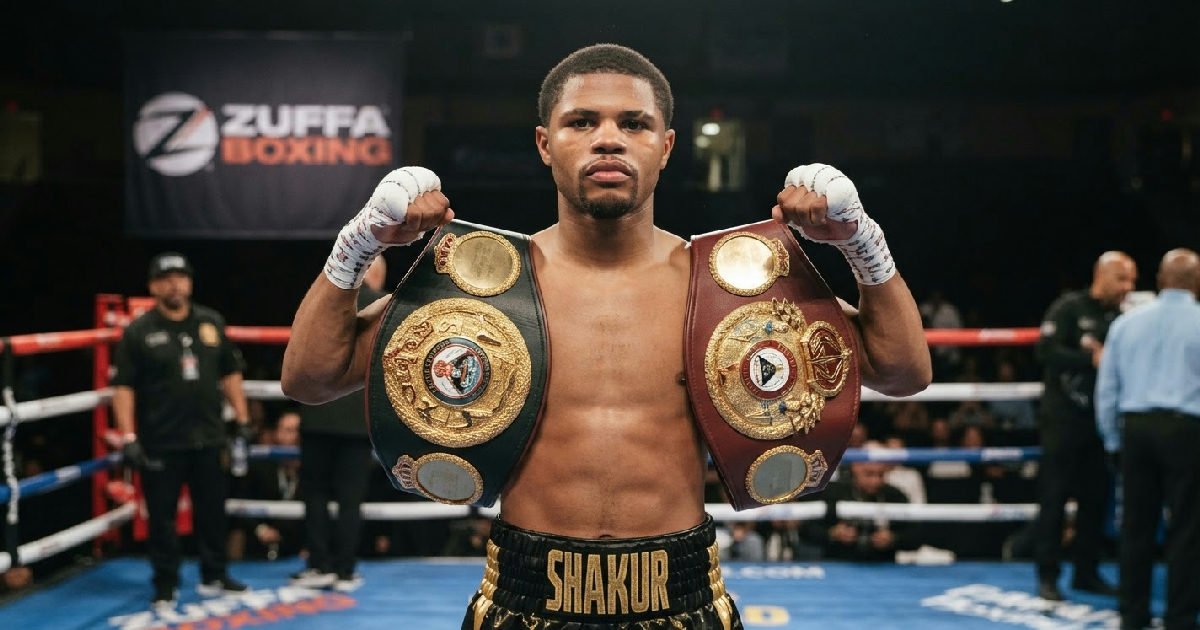
Undefeated four-division boxing champion Shakur Stevenson announced on October 19, 2026, his departure from Dana White’s Zuffa Boxing, a mere three months after signing what was expected to be a lucrative multi-fight deal. The 29-year-old made the revelation on his YouTube channel, stating that his request for release was granted over the weekend.
He plans to launch his own promotional company, taking his career into his own hands after an eight-week training camp yielded no actual fights under the Zuffa banner.
Failed Negotiations Trigger Shakur Stevenson’s Exit
Stevenson, with a pristine professional record of 25-0, 11 KOs, joined Zuffa Boxing in July 2026 amidst considerable fanfare, hailed as one of UFC President and CEO Dana White’s most significant acquisitions.
His arrival was seen as a major statement for Zuffa, which launched its first event in January 2026 with ambitious plans to reshape the boxing landscape. Yet, the anticipated debut never materialised, leading to a swift and unexpected separation.
Stevenson’s decision stems from a series of stalled negotiations for high-profile bouts that never progressed beyond the discussion phase. He spent weeks in camp preparing for fights he was “told was going to happen” but ultimately didn’t, expressing his frustration publicly.
The most prominent of these was a potential showdown with WBO welterweight champion Devin Haney. Talks between the two camps reportedly broke down over disagreements concerning fight weight and rehydration clauses. Haney claimed he had agreed to a 145-pound catchweight but alleged Stevenson then sought a rehydration clause. However, Stevenson countered, asserting that Haney’s side later demanded the fight take place at 147 pounds.
The Haney Standoff
The back-and-forth between Stevenson and Haney highlighted the complexities often found in high-stakes boxing negotiations. Haney, known for his dominant performances, stated on social media that he “wasted 6 months negotiating” and that Stevenson’s camp “did every thing for this fight not to happen.” This public spat underscores the difficulties promoters face in orchestrating bouts between top-tier fighters.
Stevenson elaborated that after initial agreements for 144 and then 145 pounds, Haney’s lawyer sent an “11th-hour” email insisting on 147 pounds. Such last-minute shifts often derail promising matchups, leaving fans and fighters alike disappointed and highlighting the intricate challenges within high-stakes boxing negotiations.
Stevenson’s Candid Assessment
In his video statement, Stevenson adopted a measured tone, avoiding direct blame. “It is what it is,” he conceded, acknowledging the often-unpredictable “business of boxing.” He reiterated, “I’m not mad at anyone. I’m not pointing no fingers,” but the underlying disappointment was palpable after dedicating eight weeks to preparing for unmaterialized contests. Negotiations with WBA 140-pound champion Gary Antunne Russell also failed to gain traction.
His decision to seek release indicates a clear preference for control over his career trajectory rather than prolonged inactivity. This move resonates with other fighters who have increasingly sought greater autonomy in a sport historically dominated by promoters. Stevenson’s release, granted “over the weekend,” effectively makes him a free agent once more.
Zuffa Boxing Faces Unexpected Blow
For Zuffa Boxing, losing a talent of Stevenson’s calibre without a single fight is a significant setback, particularly given the initial buzz surrounding his arrival. White had publicised plans for Stevenson’s next appearance, but these discussions now amount to nothing. Zuffa had reportedly signed Stevenson to a “staggering $15 million per fight” contract, showcasing their financial commitment to bringing top talent aboard.
Zuffa Boxing, co-founded by Dana White and Turki Alalshikh, chairman of Saudi Arabia’s General Entertainment Authority, aimed to introduce a more centralised, UFC-like structure to professional boxing. Their stated goal was to “fix” what White often described as a “broken” promotional landscape. This departure, however, casts a shadow on their ability to consistently deliver fights for their high-profile roster members.
The promotion launched its first official card in January 2026, backed by substantial Saudi investment and a long-term contract with Paramount+. While they have staged other events and signed various fighters, the Stevenson situation highlights the unique challenges of the boxing world.
Intricate negotiations and fighter demands can often supersede a promoter’s best intentions. Discussions around fighter weight and rehydration clauses complicate high-profile bouts.
Stevenson Embraces Entrepreneurial Path
Stevenson’s immediate response to becoming a free agent was to announce the formation of his own promotional company. This strategic shift underscores a growing trend among top boxers to take greater control over their careers, fight selections, and earnings. “I’m now taking my career in my own hands and I’m starting my own promotional company,” he declared.
He expressed a clear willingness to collaborate, stating he’s “open for co-promoting and working with any of the…” and “willing to work with other promoters and anybody else that’s out there that’s willing to be serious about my career as I am about my career.”
This approach suggests a flexible model, allowing him to partner with various entities to secure the biggest and most compelling fights.
The four-division world champion has clear ambitions for his next steps, aiming to join the ranks of those seeking major boxing challenges. His immediate priority lies in securing major fights at lightweight (135 lbs) or super lightweight (140 lbs), where he currently holds his WBO and Ring junior welterweight titles.
A move up to welterweight (147 lbs) is on his radar for “a year or two” down the line, but he emphasised this would be “on my time, not on anyone else’s.”
Broader Implications for Boxing’s Future
Stevenson’s decision to leave Zuffa Boxing and establish his own promotional entity could set an important precedent for fighter empowerment in boxing. It reinforces the idea that top talent, especially undefeated champions with strong market appeal, can dictate terms and seek alternatives when traditional promotional structures fail to meet their expectations. This challenges the long-held promoter-centric model of the sport.
For Zuffa Boxing, the incident serves as a public reminder that even with significant financial backing and high-profile leadership like Dana White, navigating the intricate world of boxing promotion remains complex. Their initial statement of intent, focused on disrupting the sport, has hit a snag with the early departure of one of its marquee signings.
It highlights the difficulty in integrating a UFC-style exclusive contract model into boxing, where fighters often value more flexible arrangements.
The incident also puts a spotlight on the often-fraught negotiation process that characterises boxing, especially when it comes to matching elite fighters. Issues like weight clauses, rehydration limits, and purse splits frequently scuttle highly anticipated bouts.
Stevenson’s experience illustrates the frustration that can build when such issues prevent fighters from competing and earning, despite being in peak physical condition. It will be interesting to see how Zuffa adapts its strategy following this significant departure, particularly as it seeks to solidify its position in a competitive market.
The boxing world will now keenly watch Stevenson’s next move as he aims to secure the “biggest and best fights available” on his own terms. His entrepreneurial leap could inspire other fighters to explore similar avenues for control and opportunity in a dynamic sport.
For instance, recent developments saw Deontay Wilder accept a fight offer, demonstrating the fluid nature of fighter engagements. As the landscape evolves, the balance of power between fighters and promoters continues to be a central narrative.