
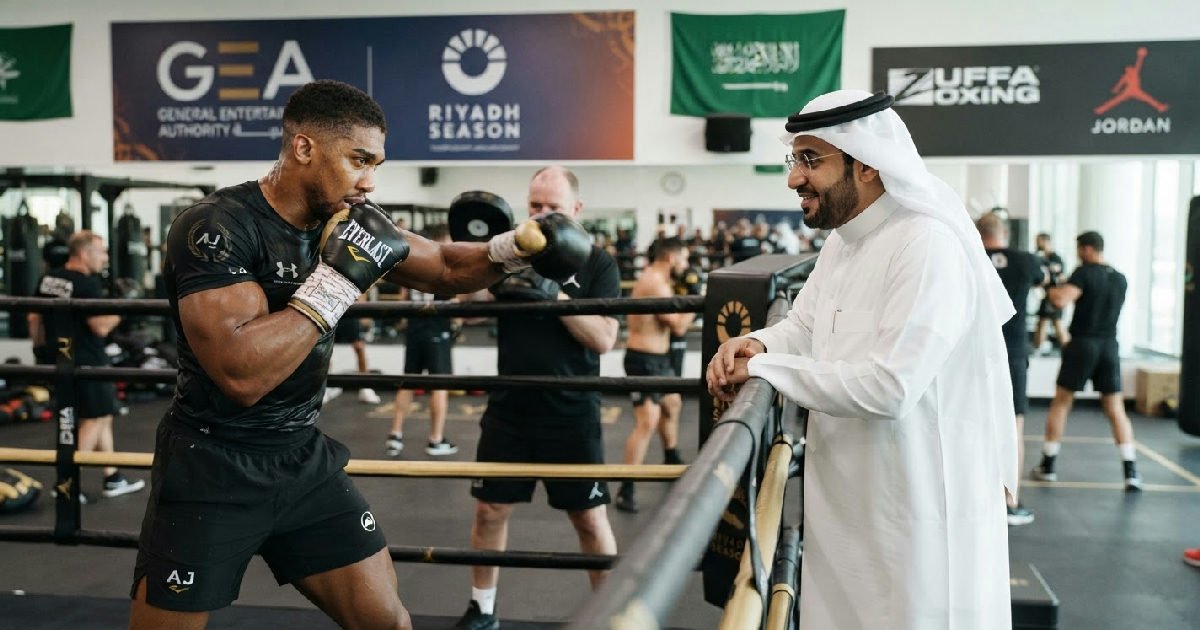
Turki bin Abdul Mohsen Alalshikh, a formidable Saudi government official, has become arguably the most influential figure in global boxing, orchestrating high-stakes bouts and dictating the future of top fighters, including Anthony Joshua. As Chairman of Saudi Arabia’s General Entertainment Authority (GEA), Alalshikh’s strategic investments and decisive actions are reshaping the sport.
His influence extends directly to figures like two-time world heavyweight champion Anthony Joshua, whose career trajectory is now intrinsically linked to Riyadh’s burgeoning boxing scene.
The Architect of Riyadh Season Boxing
Alalshikh’s ascent within the sport reflects a broader Saudi Arabian strategy to position itself as a global hub for major entertainment and sporting events. He has leveraged the GEA’s substantial financial backing to attract marquee names and stage spectacles previously unimaginable in the region. This aggressive approach has fundamentally altered the power dynamics of professional boxing, drawing criticism and praise in equal measure.
Riyadh Season, an annual entertainment festival in Saudi Arabia, has become synonymous with some of boxing’s most significant events under Alalshikh’s direction. Fully funded by the GEA, these seasons have transformed the capital into a combat sports Mecca, drawing millions of visitors and global media attention. The initiative has created unprecedented opportunities for fighters and promoters alike.
Since 2019, the Kingdom has hosted a string of mega-fights, fundamentally altering the traditional landscape of boxing promotions. These events aren’t just about the boxing; they are elaborate productions showcasing Saudi Arabia’s capacity to host world-class spectacles. The financial muscle behind these ventures has proven irresistible to many within the sport.
Key Fights and Financial Muscle
Alalshikh’s vision has brought a series of blockbuster fights to Saudi soil. One of the earliest major events was Anthony Joshua’s rematch against Andy Ruiz Jr. in December 2019, famously dubbed the “Clash on the Dunes.” More recently, fans saw Tyson Fury face Francis Ngannou in October 2023, followed by the undisputed heavyweight clash between Tyson Fury and Oleksandr Usyk.
The GEA’s willingness to fund these events, including substantial fighter purses, has been a game-changer. Fighters are increasingly drawn to the Kingdom for the financial incentives, often overshadowing offers from traditional boxing markets. This has allowed Alalshikh to consolidate significant power, dictating terms and matchups for some of the sport’s biggest names, including the highly anticipated Tyson Fury and Anthony Joshua fight.
Shaping Anthony Joshua’s Future
Anthony Joshua’s career has become a prime example of Alalshikh’s influence. The Saudi official has taken a direct, hands-on role in scheduling and promoting Joshua’s upcoming bouts. This includes the major showdown against Tyson Fury, now confirmed for December 11 at Cardiff’s Principality Stadium, which will stream globally on Netflix.
But the plans for Joshua don’t stop there. Alalshikh has already outlined a busy schedule for the British heavyweight, reportedly planning another fight for him in Saudi Arabia in February 2026. This would then be followed by a significant event in London in September 2026, demonstrating a long-term strategic investment in Joshua’s career and the broader boxing market.
Such direct involvement from a non-promoter figure is unprecedented in modern boxing, highlighting Alalshikh’s unique position. He doesn’t just fund the fights; he actively shapes the careers of the sport’s biggest stars. This level of control underscores a new era where Saudi influence increasingly dictates the sport’s marquee events.
Expanding Boxing’s Global Footprint
Alalshikh’s ambitions for boxing extend beyond merely hosting lucrative events; he’s actively building new infrastructure for the sport. In a significant move, he acquired The Ring magazine in 2024, a publication often referred to as “The Bible of Boxing.” This acquisition further solidifies his footprint within the sport’s historical and media landscape.
Perhaps even more impactful is his co-founding of Zuffa Boxing, a new promotional venture in partnership with TKO Group Holdings, the parent company of UFC and WWE, and UFC President Dana White. Alalshikh reportedly holds a 60% ownership stake and serves as chairman of this new entity.
Zuffa Boxing aims to cultivate new talent through academies and utilize the UFC Performance Institute, with its first event slated for late summer 2025 and a full launch in 2026 or 2027.
This initiative represents a deliberate effort to create a sustainable pipeline for boxing talent, merging Saudi investment with established combat sports expertise. It’s a move that could profoundly alter how future generations of fighters are developed and promoted. By integrating promotional power with media ownership and talent development, Alalshikh is constructing a comprehensive ecosystem for boxing.
Addressing the Sportswashing Controversy
The substantial investment by Saudi Arabia, spearheaded by figures like Alalshikh, has inevitably drawn significant criticism from human rights organizations. Groups such as Amnesty International and Human Rights Watch have accused the Kingdom of “sportswashing.”
They argue that these high-profile sporting events serve to divert global attention from Saudi Arabia’s human rights record, which includes issues like the jailing of women’s rights activists and restrictions on free speech.
Critics point to the assassination of journalist Jamal Khashoggi and the existence of an area in al-Ha’ir prison reportedly known as the “Tutu Wing” – a reference to one of Alalshikh’s nicknames, allegedly for detainees who criticized him on social media. These allegations cast a shadow over the otherwise glittering spectacle of Riyadh Season boxing events, prompting ongoing ethical debates within the sports community.
Impact on Traditional Boxing Markets
Beyond human rights concerns, the shift of major boxing events to Saudi Arabia has sparked debate about its impact on traditional boxing strongholds like the United States and the United Kingdom. Some critics contend that moving these lucrative bouts away from established fan bases could diminish enthusiasm and media interest in those regions.
The atmosphere at some Saudi events has also been described by some as less vibrant than traditional boxing venues.
The Saudi government, however, maintains that its extensive investments in sports and entertainment are primarily aimed at economic diversification, boosting tourism, and inspiring its own populace. Crown Prince Mohammed bin Salman has publicly stated his indifference to “sportswashing” claims, asserting that the Kingdom’s focus remains on its Vision 2030 objectives.
The ongoing debate highlights the complex interplay of sport, geopolitics, and human rights in the 21st century.
Looking Ahead: Alalshikh’s Enduring Influence
Turki Alalshikh’s relentless drive and the vast resources at his disposal mean his impact on boxing is unlikely to wane anytime soon. He has not only brought unprecedented financial scale to the sport but has also initiated structural changes, from promoting talent to acquiring influential media outlets.
His active role in securing a future path for heavyweight titans like Anthony Joshua demonstrates a personal commitment that transcends mere sponsorship.
As Zuffa Boxing prepares for its full launch and Riyadh Season continues to attract global attention, Alalshikh’s vision appears set to further solidify Saudi Arabia’s position at the pinnacle of combat sports. Whether this transformation ultimately benefits the sport globally or merely centralizes power in new hands remains a subject of intense discussion among fans, fighters, and promoters alike.