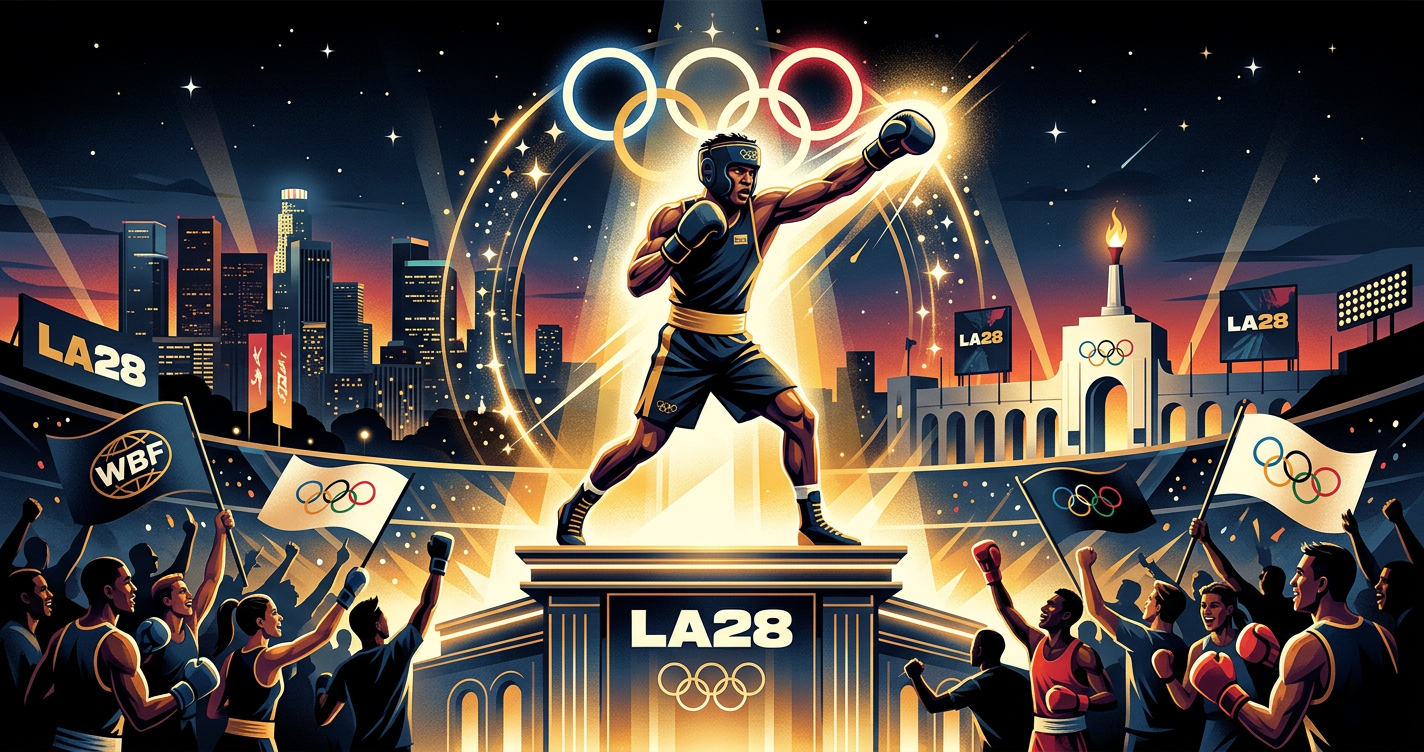
The uncertainty hanging over boxing’s future at the Olympic Games finally appears to be lifting. After years of administrative turmoil and public disputes between the International Olympic Committee (IOC) and the now-discredited International Boxing Association (IBA), a new framework is taking shape to ensure the sport remains a fixture for the Los Angeles 2028 Games.
For months, the sport sat on the “provisional” list, a polite way of saying it was on the verge of being evicted from the world’s most prestigious sporting stage. But recent shifts in governance and the rising influence of World Boxing—a rival federation established to save the sport’s Olympic status—have provided the structural stability the IOC demanded. It’s a messy transition, but the path to Southern California is no longer a dead end.
Establishing the New Guard
The crux of the issue was never about the quality of the fighting; it was about the lack of transparency in the back office. The IOC took over the running of the boxing tournaments at Tokyo 2020 and Paris 2024 to bypass the IBA’s leadership. However, they made it clear they would not do so a third time. Without a credible, democratic international federation to partner with, boxing was finished.
World Boxing has emerged as the primary vehicle for this rescue mission. By securing the backing of major National Federations across Europe, Oceania, and the Americas, the body has begun to meet the membership thresholds necessary to be formally recognized. This shift isn’t just about paperwork—it’s about survival for thousands of amateur athletes who view the gold medal as the ultimate career launchpad.
The Stakes for Global Talent
If you look at the current heavyweight landscape, the impact of the Olympics is undeniable. Oleksandr Usyk and Anthony Joshua built their professional foundations on the back of Olympic success. Even as they move into different phases of their careers, Joshua and Usyk have recently shown a willingness to collaborate, highlighting the unique brotherhood forged in the amateur ranks.
Without the 2028 Games, the pipeline that produced Terence Crawford, Gervonta Davis, and Tyson Fury (who famously narrowly missed the Beijing team) would be severely fractured. The professional game relies on the rigorous scouting and development provided by national amateur programs. Losing that four-year cycle would force promoters to rethink how they identify and build the stars of tomorrow.
Governance and Financial Hurdles
Rebuilding the sport’s reputation isn’t just about changing the name on the door. The IOC has demanded total reform in judging and officiating—areas that have been plagued by controversy for decades. The new leadership must prove that the “old way” of doing business is over. This involves implementing more rigorous, AI-assisted monitoring of scorecards and an overhaul of how referees are vetted.
Financially, the stakes are equally high. Olympic inclusion brings with it significant funding for smaller nations. Many national boxing federations depend entirely on government grants tied to Olympic participation. If the sport is removed, those gyms close, the coaches leave, and the sport dies at the grassroots level in dozens of countries.
The Road to Los Angeles
While the heavy lifting is being done in boardrooms in Switzerland, the fighters are already focusing on the 2028 cycle. The next two years will be critical as World Boxing seeks to finalize its calendar and host its own world championships. The goal is to provide a seamless transition that mirrors the professional standards the IOC expects.
Promoters are also watching. With figures like Dana White and Eddie Hearn constantly looking for the next big thing, a stable Olympic platform ensures a steady stream of “can’t-miss” prospects hitting the market every four years. The 2028 Games in Los Angeles—a city with a deep, historic connection to boxing—could provide the most high-profile showcase the sport has seen since the 1984 Games.
Olympic Boxing FAQ
Is boxing definitely going to be in the 2028 Olympics?
While not yet 100% “official” in the traditional sense, the progress made by World Boxing and the IOC’s recent encouraging signals mean it is now highly likely. The sport is currently included in the preliminary schedule for LA28, provided governance standards continue to be met.
What happened to the IBA?
The IBA (formerly AIBA) was stripped of its recognition by the IOC following long-standing issues with governance, financial transparency, and judging integrity. While it still operates, it no longer has any involvement in the Olympic movement.
Why does the IOC refuse to run the tournament themselves?
The IOC’s mission is to oversee the Games, not to manage the daily operations of individual sports. They stepped in for Tokyo and Paris as an emergency measure but have stated they do not have the resources or the mandate to act as a permanent international federation for boxing.