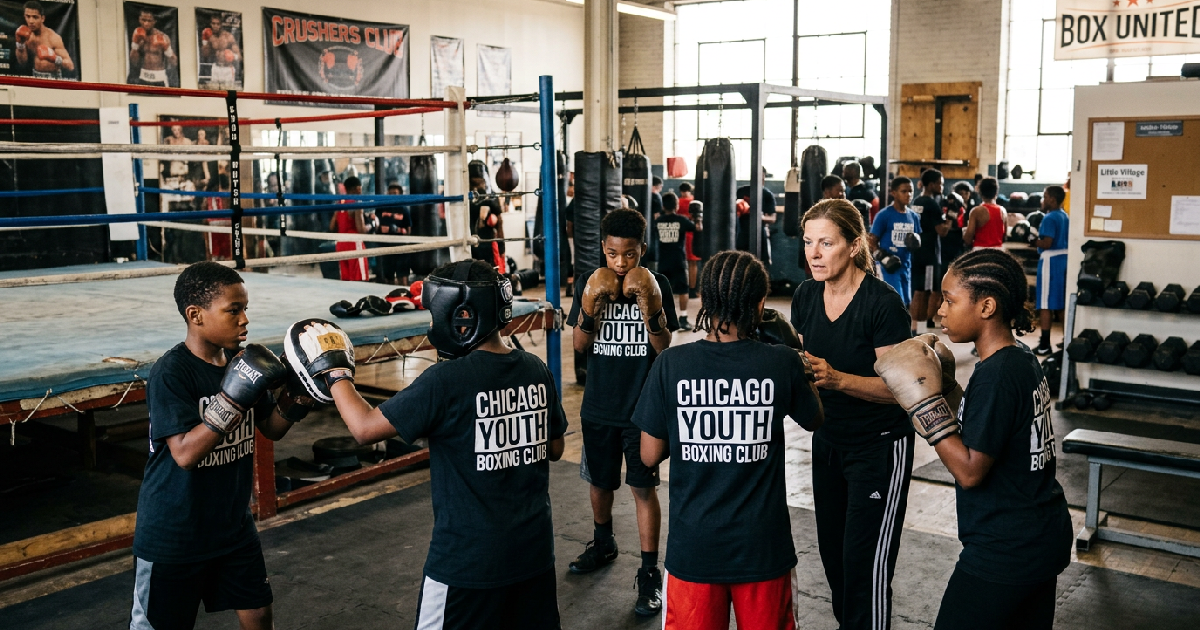
Non-profit organizations across Chicago, including Crushers Club, Chicago Youth Boxing Club (CYBC), and Box United, are utilizing the sport of boxing to provide local youth with a direct alternative to gang involvement and violence.
By offering structured training alongside academic and life skills support, these programs have reached thousands of participants in neighborhoods like Englewood and Little Village. Executive Director Sally Hazelgrove and other community leaders are using the gym as a tool to promote discipline and resilience in at-risk environments.
The impact of these initiatives extends beyond physical fitness, often serving as a gateway for personal and academic growth. For many participants, the boxing gym is the only neutral ground in areas divided by gang boundaries.
These organizations prioritize a “whole-person” development model, ensuring that the mental and emotional needs of the youth are met while they learn the technical aspects of the sport. While some focus on career longevity and brain health in boxing at the professional level, these grassroots programs are focused on immediate survival and stability.
In South Chicago’s Englewood neighborhood, Sally Hazelgrove has been leading the Restoring the Path Crushers Club gym since March 2013. The program was born from years of research Hazelgrove conducted starting in 2000, where she interviewed gang members to understand what would motivate them to leave the streets. In 2004, the answer was unanimous: boxing.
Since its opening, the club has served over 500 youth, providing a constructive outlet that can even serve as a way for participants to terminate their juvenile probation.
Crushers Club offers gang alternatives in Englewood
Sally Hazelgrove views her role as one of empowerment rather than just instruction. She often tells her participants that they are the primary change makers in their neighborhoods. “I tell all of them it’s your job to save all the children,” she said, emphasizing her goal to empower the youth to lead within their communities.
This leadership model is designed to break cycles of violence by giving young people a sense of ownership over their futures.
The urgency of the mission is reflected in the personal stories of those who train there. One participant recalled a childhood defined by trauma, having witnessed his father being shot when he was only six years old. He noted that death had become “normal” after losing numerous friends to gun violence.
After joining the gym at age nine, boxing became a source of stability that helped him navigate the environment around him.
By focusing on high-risk youth, Crushers Club provides a support system that mirrors the intensity of the streets but directs that energy toward positive outcomes. This approach recognizes that the discipline required for boxing is often a perfect fit for individuals who are seeking structure and purpose.
The program’s longevity in Englewood suggests that the boxing-first model remains a powerful draw for young people looking for a way out of gang life.
Chicago Youth Boxing Club expands reach in Little Village
Established in 2006, the Chicago Youth Boxing Club (CYBC) has grown from a humble beginning in a church basement at Lvita Community Church to a staple of the Little Village community. Under the leadership of Executive Director Noah, the non-profit has helped more than 3,000 children.
The organization is specifically designed to be a safe space where kids from rival gangs can coexist and be themselves without fear of conflict.
The CYBC operates on three specific pillars of impact: Strong Minds, Active Lives, and Safe Community. To support the “Strong Minds” pillar, the facility includes study rooms and organizes college visits, acknowledging that a champion’s success is measured both in and out of the ring. This academic integration ensures that the discipline learned through fitness training translates into success in the classroom.
Financial support for these programs often comes from corporate and community partnerships. Recently, CYBC received a $5,000 donation from Academy Sports and Outdoors, which was presented by Kelly Clarkson to support their ongoing mission in Little Village. This funding helps maintain the “Safe Community” pillar by facilitating open gym hours and social outings that foster a sense of belonging and stability for local youth.
Mentorship and long term success in the gym
A unique aspect of the CYBC is the continuity of its coaching staff. Many of the current trainers are former participants who grew up in the program, creating a deep, authentic connection with the children they now mentor. These coaches understand the specific pressures of the neighborhood, allowing them to provide more effective guidance than an outsider might be able to offer.
The “Active Lives” pillar of the program includes nutrition education and fitness training that builds resilience. For young people who may face health disparities in their communities, learning about nutrition and regular exercise is a vital life skill. Just as com/anthony-joshua-dismisses-jake-paul-s-injury-with-that-s-figh/”>Anthony Joshua recently discussed the physical risks inherent in the sport, these coaches emphasize that discipline and health are the foundations of any fighter’s career and personal life.
By blending sports with social services, the CYBC provides a holistic environment that addresses the root causes of urban instability. The program’s results are seen in the high number of participants who pursue post-secondary education or find stable employment after their time in the gym.
This model has proven that the boxing ring can be a classroom for life skills that are applicable far beyond the sport itself.
Box United focuses on female empowerment through boxing
Box United is a Chicago-based nonprofit that focuses specifically on giving young girls the tools to build confidence and physical strength. Through their after-school program, “Fight Like A Girl,” the organization combines technical boxing training with lessons on mental health, resilience, and teamwork. This curriculum is designed to help girls navigate the unique social and systemic challenges they face in their daily lives.
The program has seen expansion on the city’s South Side thanks to support from the Girls Opportunity Alliance. This backing has allowed Box United to reach more schools and provide a broader range of services to its participants. Much like the Natasha Spence and Maricela Cornejo rematch at Roy Jones Jr.
Promotions highlights the competitive nature of women’s professional boxing, these grassroots initiatives show girls that they have a rightful place in the ring and in leadership roles.
Coaches like Sydney, who have deep roots in the community, serve as essential role models for the girls in the program. These relationships are critical for maintaining engagement and ensuring that the girls feel safe and supported as they learn. By seeing women from their own communities leading these sessions, the participants are encouraged to develop their own voices and pursue their goals with confidence.
Sustainable community models and the future of Chicago boxing
The success of these various organizations points toward a sustainable model for reducing urban violence and improving youth outcomes. Because boxing is a sport that naturally appeals to those seeking strength and community, it serves as a powerful “hook” to get youth through the door. Once they are engaged, the programs can layer on the academic, emotional, and social support necessary for long-term success.
As these non-profits look toward the future, the focus remains on scaling these efforts to other neighborhoods facing similar challenges. Each organization relies on a mix of donations, grants, and volunteer efforts to keep prices low or free for the participants.
The continued success of these programs will depend on the city’s ability to support these grassroots leaders who are working on the front lines of community development.
Ultimately, the metric for success for programs like Crushers Club and CYBC is not the number of professional fighters they produce, but the number of students who graduate and thrive. By turning the boxing gym into a community center, these organizations are proving that the sport can be a life-saving intervention.
They provide more than just a place to train; they provide a foundation for a future free from violence.