The looming question mark over Saul “Canelo” Álvarez
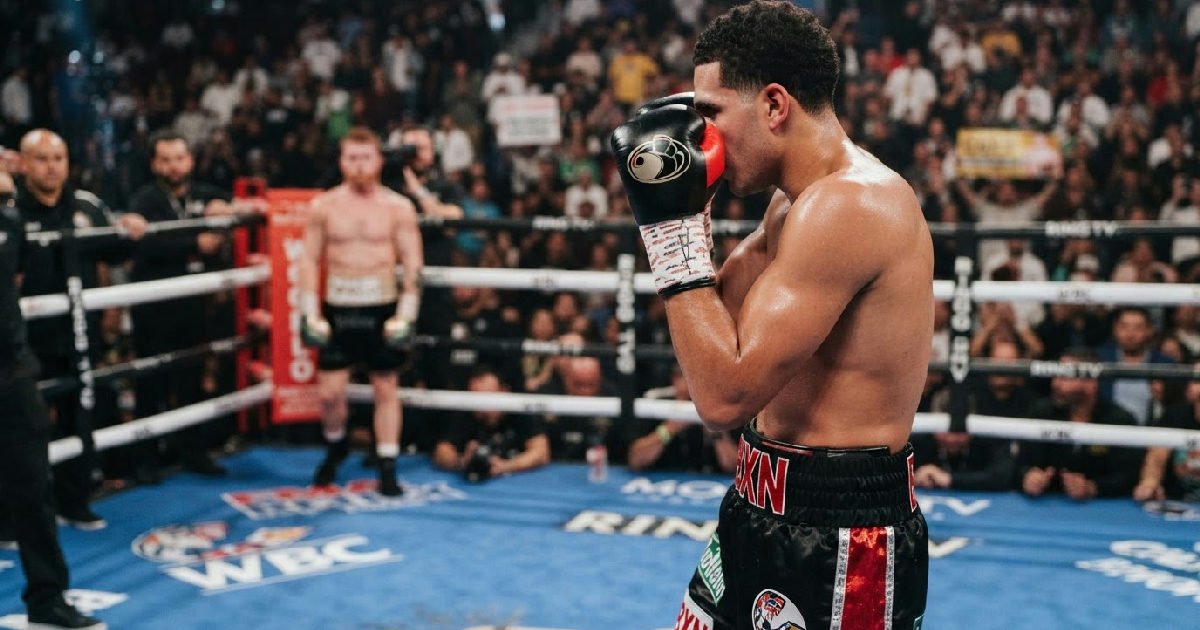
Saul “Canelo” Álvarez remains the biggest draw in boxing, but questions about his physical regression are increasing ahead of his upcoming match against Christian Mbilli. Many fans are also skeptical about the future of David Benavidez. Álvarez, who is now 36 years old, has amassed a professional record closing in on 70 fights, a rarity for modern elite champions.
His impressive longevity is attributed to a start in Mexico that saw him turn professional at just 15, logging over 30 bouts by the time he was 19. This trajectory contrasts sharply with contemporary fighters, many of whom reach the spotlight with far fewer contests under their belt.
However, the sheer volume of tough fights and demanding training camps appears to be catching up to the undisputed super middleweight champion. He has already endured multiple injuries and required several surgeries, suggesting that time has naturally taken its toll on his physical peak.
While few predict an outright knockout loss for Álvarez, who is known for his durability and thick neck, observers are torn on the Mbilli fight. They recognize that Álvarez is simply not the same fighter he was even a few years ago, having passed his absolute zenith in the sport.
Decline and the Christian Mbilli challenge
Álvarez’s physical decline is subtle but noticeable, potentially more significant than what is acknowledged in the media. His last confirmed fight was a unanimous decision win over Jaime Munguía on May 4, 2024, where he successfully defended his undisputed titles.
The bout against Christian Mbilli is viewed as a genuine test because Mbilli is a high-quality opponent, even if he isn’t considered “special.” The uncertainty lies entirely with Álvarez’s performance level on the night.
If Álvarez manages to win against Mbilli, it’s almost certain he will continue fighting. A loss, however, could prompt him to seek a final, farewell fight, possibly in Guadalajara, against an opponent he would be heavily favored to defeat.
This potential exit strategy mirrors a growing trend in sports where iconic athletes stage controlled, emotional send-offs rather than retiring immediately after a major defeat. For Álvarez, whose main event career has been defined by big stakes, anything less than a competitive retirement fight would feel anticlimactic.
David Benavidez and the rising anti-Benny sentiment
While Saul “Canelo” Álvarez’s career heads toward its final chapter, David Benavidez is struggling with a peculiar form of fan criticism, sometimes referred to as “anti-Benny” sentiment. This growing skepticism is directed at his promotional narrative and opponent selection.
Benavidez and his team have effectively utilized the notion that he is being “avoided” by elite fighters like Álvarez, Dmitry Bivol, and Artur Beterbiev. While this marketing strategy can boost visibility, it also invites intense scrutiny of his career choices.
Some fans question the reality of being “ducked,” pointing out that Benavidez has maintained a carefully selected schedule. They suggest that the perception of him being universally dodged may be exaggerated by his own camp.
The truth regarding whether Benavidez has been truly ducked or merely cautious is difficult to ascertain in real-time. It’s a debate that may only be settled years down the line, with the benefit of hindsight and full career context.
WBC ordered fight against Michał Cieślak
Benavidez’s immediate future involves a mandatory cruiserweight development, further complicating his path. The World Boxing Council (WBC) has ordered a fight between Benavidez and Michał Cieślak for the organization’s “green belt.”
The prevailing belief is that the WBC would not have issued this order unless they expected the fight to happen. Turning down a mandatory match would reflect poorly on both the organization and Benavidez.
This contest is seen by many as a strategically placed “stay-busy” fight for Benavidez before a much more serious challenge. The expectation is that he wants another competitive training camp and fight experience before stepping up to face Jai Opetaia.
Opetaia represents the true test for Benavidez at cruiserweight. Should Benavidez fail to commit to the Opetaia fight after potentially handling Cieślak, the anti-Benavidez sentiment currently circulating among fans will likely intensify dramatically.
The proposed Benavidez vs. Opetaia matchup is significant enough that it could potentially take over the Cinco de Mayo weekend slot in 2027, which is traditionally reserved for Álvarez. A win there would finally silence many critics.
Ryan Garcia and the dysfunctional Golden Boy dynamic
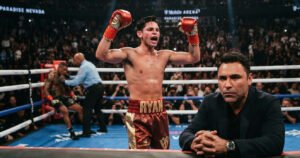
Another major narrative disrupting the sport involves the tumultuous and seemingly unending relationship between Ryan Garcia and his promoter, Oscar De La Hoya’s Golden Boy Promotions (GBP). Despite their frequent public feuds, Garcia has repeatedly signed new contract extensions with GBP.
The core of their continuous conflict stems from striking personality similarities. Both Garcia and De La Hoya possess strong “diva tendencies” and are often described as attention-seekers, making a harmonious long-term partnership difficult.
This dynamic often leads to intense personal friction, as individuals with similar difficult personality quirks rarely manage a positive, lasting relationship. The constant back-and-forth has characterized Garcia’s professional life for years.
De La Hoya’s history of personal disputes with his own fighters, including Álvarez and Vergil Ortiz, points to a pattern that seems rooted in his strong, often self-centered, personality. Having been rich and successful for so long, De La Hoya appears incapable of learning from past errors.
With only one fight reportedly remaining on Garcia’s current agreement, speculation is rampant about his next move. The most obvious alternative appears to be jumping to Zuffa, the promotional company now making waves in boxing, but history suggests Garcia might just reconcile with GBP again.
The repeated signing of extensions, even after bitter public breakups, indicates that the relationship, while volatile, serves some mutual professional purpose. However, this dysfunction has become a distraction from Garcia’s undeniable talent inside the ring.
This promotional drama highlights the ongoing challenge of managing star athletes with complex personalities, particularly in a sport like boxing where personal brand often outweighs professional discipline. Garcia’s career path is almost as captivating for its off-ring politics as for its results.
Assessing the fallout from Conor Benn’s crushing defeat
The fallout from Conor Benn’s recent, comprehensive defeat has raised serious questions about his commercial viability and his future under Dana White’s management. Benn was utterly overwhelmed in the fight, suffering a loss that severely exposed limitations in his technical ability.
The perception among fans is harsh, viewing Benn’s performance as that of a “scrub” who was not ready for the stage he occupied. This directly contradicts the earlier effusive praise from White, who had described Benn as a uniquely special fighter.
While White positioned the acquisition of Benn as a major win over rival promoter Eddie Hearn, the results on the night make that victory feel hollow. Benn’s loss has significantly diminished his commercial appeal and upside potential.
Compounding the problem, Benn’s recent run of fights since returning in 2023 lacks the excitement previously associated with him. He has recorded zero stoppage wins in that time, failing to finish even an aging and compromised Regis Prograis.
Without the consistent excitement of knockout wins, building a “mega-brand” around Benn becomes an immensely difficult task. The options for his remaining four fights under his current deal seem limited to a potential trilogy with Eubank.
The initial appeal of the Eubank rivalry was based on a classic boxing war, a performance characterized by pure heart and will. However, subsequent fights, such as against Rodolfo Orozco and Peter Dobson, were far less thrilling.
Many observers believe Benn has reached his peak, both commercially and athletically. It’s hard to see a clear path forward that generates the same massive financial returns or media attention that his early career promised. Conor Benn’s performance now forces a significant re-evaluation by his promoters.
The increasing dilution of world titles in boxing
Beyond the personal dramas of boxing’s biggest stars, the sport continues to grapple with systemic issues, most notably the proliferation and devaluation of world titles. The sheer number of belts being circulated by sanctioning bodies has fundamentally altered the path to becoming a champion.
Historically, when a major title became vacant, contenders were required to fight for the “full version” of the championship. Now, the common practice involves the use of interim titles, which allows the sanctioning bodies to simply elevate a fighter when the undisputed champion moves on or retires.
This process makes it possible to schedule a “world title fight” much more promptly, ensuring that promoters can feature a championship bout on nearly every card. Promoters eagerly work with the four major sanctioning bodies—and occasionally the IBO—precisely because it simplifies the creation of title fights.
The motivation is purely commercial: promoters believe that attaching “World Title Fight” to a main event makes it easier to sell to the public, offering supposedly higher stakes. But this comes at the cost of weakening the definition of a true World Champion.
This dilution has led to situations where fighters are awarded titles without having to defeat a reigning champion or even win a vacant belt in the ring. The trend accelerated significantly around 2020, becoming an entrenched piece of the boxing landscape.
The ease with which belts can now be acquired undermines the achievement of being an undisputed champion, like Álvarez. It’s a trade-off where commercial interests are prioritized over sporting integrity, ultimately confusing and frustrating long-time fans.
Terence Crawford and the retirement speculation
The status of pound-for-pound great Terence Crawford also remains a subject of intense speculation among the boxing community. Despite rumors of a potential comeback, there is genuine uncertainty about whether he will return to active competition by the end of 2027.
The decision seems to hinge heavily on the financial incentives, as any return would necessitate a “very big” payday to justify the physical toll and commitment of a full camp. Crawford’s current inactivity could be genuine retirement or merely a way to amuse himself and inflate his market value.
If he were to return, the choice of opponent would be crucial. A fight against Jaron “Boots” Ennis is possible but perhaps less likely than a massive event against Ryan Garcia, given the commercial draw of Garcia despite his losses.
The nature of Crawford’s potential return reflects the top tier of boxing, where mega-stars hold immense leverage. Their choices are driven less by the necessity to fight and more by the size of the guaranteed purse offered for their services.
The enduring appeal of mid-tier stars like Isaac Cruz
Amidst the speculation about boxing’s top names, the role of reliable, exciting fighters like Isaac “Pitbull” Cruz offers necessary context. Cruz, while not a mega-star, remains a highly marketable figure due to his aggressive style and fan-friendly performances.
Cruz’s reputation is often debated, with some arguing he is overrated based primarily on a competitive loss to Gervonta Davis. However, this assessment overlooks his genuine appeal as a solid B-side or a headliner for smaller, quality shows.
He is recognized as a good fighter with clear limitations and flaws, but his success lies in accentuating his strengths and exploiting his marketable aggression. In modern boxing, possessing a “shred of marketability” can outweigh being technically flawless.
Promoters focus their efforts behind the scenes on highlighting a fighter’s strengths while minimizing exposure of their negatives, particularly when they demonstrate popular appeal. Cruz fulfills a critical role in the ecosystem, providing reliable excitement and drawing crowds.
His presence on cards ensures that even secondary events maintain a high level of drama and competitive integrity. Cruz embodies the fighting spirit that traditional fans often feel is missing in the overly strategic world of championship boxing.
The debate over boxing’s greatest moments
Finally, the mailbag discussions invariably turn to debates over the sport’s most explosive, unforgettable moments. This highlights the emotional connection fans have with fights that defy expectation and deliver shockwaves.
Three moments frequently cited as eliciting the wildest fan reactions include Juan Manuel Márquez’s sudden knockout of Manny Pacquiao, the chaotic and controversial ending of Floyd Mayweather Jr.’s fight against Victor Ortiz, and Shane Mosley temporarily buckling Mayweather’s knees.
Márquez’s finish of Pacquiao was particularly sudden and dramatic, striking against the run of play and defying the momentum of the fight at that moment. Similarly, Mosley’s power momentarily shocked observers accustomed to Mayweather’s impenetrable defense.
These types of moments—from Tyson Fury getting off the canvas against Deontay Wilder, to the brutal power of Sergio Martínez against Paul Williams—are what sustain the sport’s popularity. They are unpredictable, raw displays of athleticism and determination that transcend the political machinations of promoters and sanctioning bodies. These discussions remind fans why they dedicate so much time and energy to analyzing the sport.