
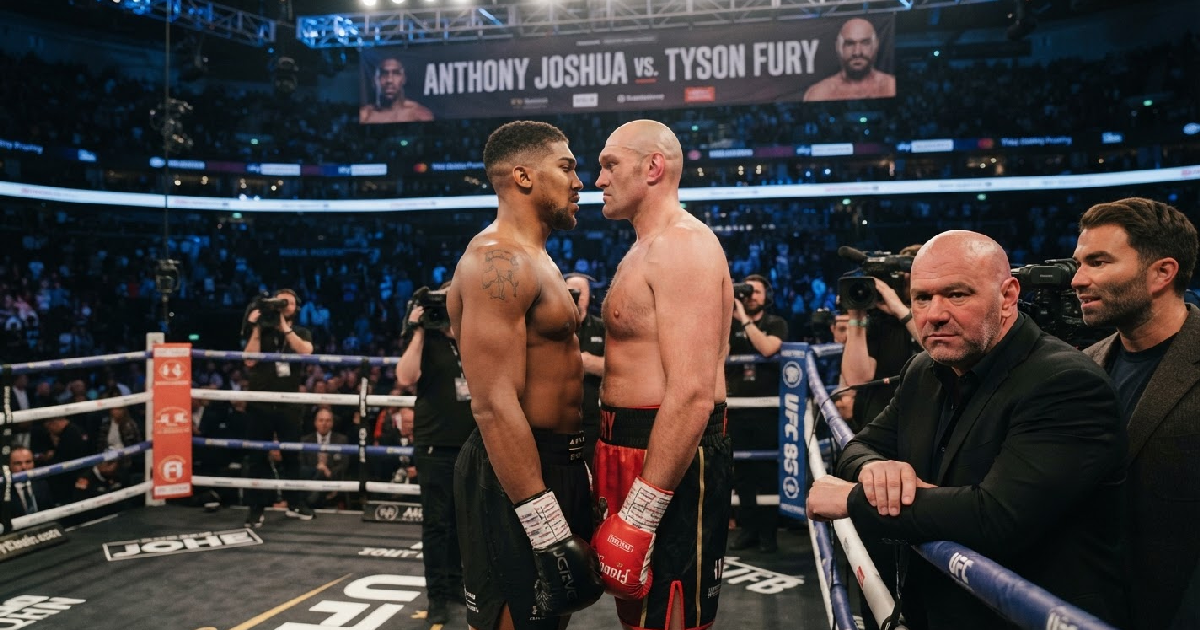
The monumental heavyweight boxing showdown between Anthony Joshua and Tyson Fury remains without a confirmed venue, despite a signed agreement months ago.
Dana White, the influential head of Zuffa Boxing and the Ultimate Fighting Championship (UFC), recently revealed his perspective on the ongoing delays, pointing to “games” and the relentless pursuit of financial gain as key factors. His remarks illuminate the complex negotiations hindering one of boxing’s most anticipated matchups.
Dana White identifies “games” and ego in negotiations
White’s insights suggest that commercial interests and personal agendas are dictating the pace of talks. This protracted standoff leaves fans and commentators speculating about the true obstacles preventing a final announcement. It seems the boxing world is watching a high-stakes negotiation unfold in plain sight.
Speaking to The MacLife, Dana White was unambiguous when discussing why the fight’s location remains unconfirmed. He stated that “publicly lots of games being played, lots of ego involved” are clearly evident. For White, the ultimate question dictating the fight’s venue is straightforward: “Where’s the money? Go where the money is.”
He continued, “I think you can see where all the delay is coming from. I don’t think it’s a big secret where the delay is coming from. It’s all playing out.” White chose not to identify specific individuals behind these tactics. His comments, however, highlight the often-intricate nature of high-stakes boxing negotiations, where financial leverage often takes precedence.
This candid assessment from a prominent figure in combat sports carries considerable weight. It underscores a situation where maximizing revenue seems to be outweighing other considerations. Such prolonged negotiations are a common feature of major heavyweight bouts, but they’re rarely this protracted after an initial agreement has been reached.
Eddie Hearn’s strategic push for an England venue
While Dana White refrained from naming specific players, recent comments from Anthony Joshua’s promoter, Eddie Hearn, offer a strong indication of the underlying dynamics. Hearn has consistently asserted that Joshua insisted the fight occur in England. This demand is reportedly reflected in the signed agreement between the fighters’ camps.
Hearn has also made it explicit that any decision to move the event outside of England would require Joshua’s express approval. This particular clause was deliberately negotiated into the contract, giving Joshua significant control over the venue. Such public declarations serve to enhance Joshua’s negotiating position.
The promoter’s strategy seems designed to benefit his fighter regardless of the eventual location for the Tyson Fury vs. Anthony Joshua clash. If the bout proceeds at Wembley Stadium, Hearn can cite Joshua’s long-standing desire to host Britain’s biggest heavyweight fight at home.
Should the event shift to an international locale, like Madison Square Garden, he could argue that the financial offer was simply too compelling to decline.
Global bids fuel venue competition
White’s principle of “go where the money is” directly addresses the intense global competition to host mega-fights. Various nations and cities actively bid for the prestige and significant economic boost these monumental events provide. This competition naturally drives up the financial offers presented to promoters and fighters.
For the highly anticipated Anthony Joshua vs. Tyson Fury bout, this means potential bids from outside the UK could be substantially larger than any domestic stadium deal. These offers typically encompass not just fighter purses but also substantial site fees, sponsorship opportunities, and lucrative broadcast rights. The appeal of a larger payday can easily supersede initial venue preferences.
This dynamic presents a complex dilemma for all parties involved. While the advantages of a home crowd and logistical convenience are valuable, the sheer scale of financial rewards from an overseas bid can be too substantial to ignore. It is a delicate balancing act between contractual agreements and pure economic incentive, especially when negotiating a major fight announcement.
Impact of prolonged venue uncertainty
The extended delay in announcing a venue for the Anthony Joshua vs. Tyson Fury fight inevitably impacts its overall timeline. Each day that passes without a confirmed location pushes back crucial planning stages for marketing, ticket sales, and logistical arrangements. This prolonged uncertainty risks fan frustration and skepticism.
Fans have waited years for this clash between two of heavyweight boxing’s biggest stars. The constant deferrals and evolving narratives test their patience. It also raises questions about the transparency and efficiency of major boxing negotiations, dampening enthusiasm for what should be a straightforward blockbuster event. The ongoing saga has made the boxing community eager for resolution.
Moreover, the longer the fight remains in limbo, the greater the chance of unforeseen complications arising. Injuries, contractual disagreements, or changes in fighter form could potentially derail the entire event.
This common pitfall in boxing highlights how delays can have cascading negative effects on planned matchups and careers, even for a fight with immense public interest, prompting figures like Eddie Hearn to discuss reliability in certain contexts.
Outlook: When will the heavyweight clash find its home?
The path forward for the Anthony Joshua vs. Tyson Fury fight hinges on one side determining that the financial reward significantly outweighs their current negotiating leverage. Dana White explicitly articulated this, suggesting that the “games” will only cease when a definitive financial offer is too good to refuse.
This could involve a massive bid from a foreign entity or a renegotiation of terms for a UK venue.
Eddie Hearn’s consistent advocacy for an English venue appears calculated to extract maximum value. Whether that value ultimately comes from an enhanced UK offer or a sweetened international deal remains uncertain. But Hearn has clearly established his position, placing the ball firmly in the court of potential host cities and nations.
The boxing world continues its eager wait for a resolution that will finally bring this generational heavyweight contest to fruition.