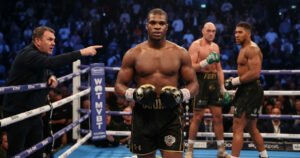

Filipino boxing sensation Eumir Felix de los Santos Marcial is staring down a formidable scheduling conflict that could significantly impact his bid for gold at the 2026 Asian Games in Aichi-Nagoya, Japan.
The Olympic bronze medalist faces a daunting four-day window between a scheduled professional fight in the United States and his initial amateur bout at the multi-sport event. This tight turnaround presents a complex logistical and physical challenge for the highly decorated boxer, prompting concerns about his preparation and performance.
A Daring Double Act for Eumir Marcial
This predicament underscores the growing complexities faced by elite athletes who navigate both professional careers and national team duties. Marcial’s dual ambition to excel in both amateur and professional boxing, while commendable, often leads to such intricate dilemmas. His ability to manage rapid transitions between fight formats and recovery periods will be severely tested.
The core of the issue lies in the exceptionally narrow window Marcial will have to recover, travel across continents, and prepare for an entirely different style of competition.
Transitioning from a professional boxing match, which typically involves longer rounds and different scoring criteria, to an amateur format demanding high-volume punching and rapid movement, is no small feat. This demanding schedule raises questions about his peak physical condition.
Marcial’s commitment to representing the Philippines at the Asian Games remains steadfast, especially given his past successes and the event’s importance for national pride. The Asian Games serve as a crucial platform for many athletes, often acting as a qualifier or a significant stepping stone towards the Olympic Games.
For a boxer of Marcial’s caliber, a strong showing is not just about a medal; it’s about cementing his legacy and inspiring a nation.
The Looming Schedule Clash
The professional fight, yet to be officially announced with specific details, would conclude in the United States, requiring Marcial to immediately embark on a lengthy journey to Japan. This travel alone can induce significant fatigue, jet lag, and disrupt finely tuned dietary and training regimens.
Upon arrival, he would need to undergo weigh-ins and a medical check, leaving minimal time for acclimation or specific amateur fight preparation.
Weight management is another critical aspect. Professional fights and amateur tournaments often have slightly different weight class specifications or, more importantly, different approaches to weight cutting and rehydration. A quick turnaround complicates this delicate process, potentially leaving Marcial depleted before he even steps into the ring. Such a demanding schedule for a top athlete highlights the pressures in modern boxing.
Marcial’s Hybrid Career Path
Eumir Marcial, born on October 29, 1995, in Zamboanga City, Philippines, has carved out a unique career trajectory, balancing the demands of both amateur and professional boxing. His journey began with considerable amateur success, culminating in a bronze medal at the 2020 Tokyo Summer Olympics in the middleweight division. This achievement alone solidified his status as a national hero.
Beyond his Olympic feat, Marcial boasts an impressive amateur resume, including a silver medal at the 2019 World Championships and another silver at the 2023 Asian Games in Hangzhou, China, where he competed in the men’s 80kg division.
That 2023 performance also secured him a quota for the Paris 2024 Olympic Games, underscoring his continued prowess. He is also a five-time Southeast Asian Games gold medalist, further illustrating his dominance in regional competitions.
His professional career began in July 2020, under the banners of MP Promotions and Premier Boxing Champions (PBC). Despite turning professional, Marcial explicitly pledged to continue representing the Philippines in amateur competitions, a rare commitment in an era where many elite amateur boxers transition fully to the paid ranks. This dedication to both facets of the sport has made his career path particularly fascinating.
Olympic Dreams and Professional Pursuits
Marcial currently holds an undefeated professional record of 7 wins, with 4 of those coming by knockout, as of April 2026. His professional bouts include victories over Andrew Whitfield in December 2020, Isiah Hart in April 2022, and Steven Pichardo in October 2022.
He also secured a TKO win against Ricardo Ruben Villalba in February 2023 and a knockout against Thoedsak Sinam in March 2024. These experiences have undoubtedly sharpened his professional skills.
The Filipino boxer also captured the vacant WBC International Middleweight Championship in October 2025, adding a significant professional title to his growing list of accolades. This particular achievement demonstrated his ability to adapt to the professional game and compete at a high level.
However, managing the demands of professional obligations alongside his aspirations in events like the Asian Games presents a constant tightrope walk. Many top fighters, such as those preparing for other middleweight bouts, typically focus solely on their professional calendars.
Implications for Asian Games Performance
The physical and mental toll of competing at the highest level in two different boxing formats within such a compressed timeframe cannot be overstated. Amateur boxing demands explosive, high-output flurries and strict adherence to scoring rules, often favoring volume and precision over raw power. Professional boxing, conversely, often rewards sustained pressure, power punching, and strategic endurance over longer rounds.
Marcial’s body will need to recover not just from the immediate exertion of his professional fight, but also adapt to the different energy systems and tactical approaches required for amateur competition. This adaptation period is usually extensive, involving weeks of targeted training, not mere days.
Any minor injury or even residual soreness from the professional bout could be severely exacerbated in the unforgiving environment of an international amateur tournament.
Physical Toll and Strategic Risks
Beyond the physical, there’s the psychological aspect. Competing in a professional fight carries a specific mindset and pressure. Shifting gears to the equally intense but distinct pressure of an amateur tournament, where every punch counts towards immediate points, can be mentally draining. Fighters typically require a dedicated training camp to transition between these styles effectively.
His opponents at the Asian Games will be fresh, having prepared specifically for the amateur format, without the recent wear and tear of a professional fight. This could give them a distinct advantage. Marcial’s team will need to meticulously manage his recovery, nutrition, and mental conditioning to mitigate these inherent disadvantages. It’s a strategic risk that could jeopardize his medal chances.
Navigating the Demands of Elite Boxing
Eumir Marcial’s situation is a stark reminder of the unique pressures placed on elite athletes who attempt to straddle multiple boxing codes. While the financial incentives of professional boxing are undeniable, the prestige and national honor associated with events like the Asian Games and Olympics remain powerful motivators. Striking a balance requires careful negotiation and management from all parties involved.
This challenge is not entirely new in the boxing world, but it has become more pronounced as professional opportunities expand and national federations seek to retain their top talent for amateur showcases. The International Boxing Association (IBA), which governs amateur boxing, has at times had a contentious relationship with professional bodies, though rules have somewhat relaxed to allow such dual participation.
Athlete Welfare and Sporting Federations
The responsibility for athlete welfare in such scenarios falls jointly on the boxer’s professional team, their national boxing federation, and the organizing committees of the events. Ensuring adequate recovery time, safe travel, and appropriate medical oversight becomes paramount. Without these considerations, athletes risk burnout, injury, and suboptimal performance, ultimately harming their long-term careers.
Discussions around protecting boxers, particularly those at the pinnacle of the sport, are ongoing. Federations often grapple with the desire for their best athletes to compete for national honors versus respecting their professional commitments. This delicate balance requires proactive planning and clear communication well in advance of major tournaments.
The Road Ahead: 2026 and Beyond
As the 2026 Asian Games draw closer, all eyes will be on Eumir Marcial and his team to see how they manage this extraordinary challenge. The decision to participate in both events, despite the tight schedule, reflects a deep commitment from the Filipino boxer.
It also highlights his confidence in his own resilience and ability to perform under duress. His prior success in securing an Olympic quota in 2023 demonstrates his capacity to deliver when it counts.
While the four-day turnaround is far from ideal, Marcial has a history of overcoming obstacles. His experience in high-stakes environments, both amateur and professional, will be crucial. Observers will be keenly watching to see if this ambitious schedule choice pays off with another medal for the Philippines or if the physical and mental strain proves too much for even a fighter of his immense talent.
Preparations for Aichi-Nagoya
To navigate the challenge, Marcial’s camp will likely implement an extremely rigorous and precise plan. This would include meticulous weight management protocols, advanced recovery techniques, and strategic sparring to maintain readiness for both formats. The support staff, including coaches, nutritionists, and physical therapists, will play an outsized role in maximizing every available hour.
The outcome of Marcial’s 2026 Asian Games campaign, particularly given these constraints, will serve as a compelling case study for athletes pursuing dual career paths in combat sports. It will underscore the physical and administrative hurdles involved, including the risks of severe weight cutting for quick turnarounds.
The boxing world will watch to see if his decision to push the boundaries of athletic endurance leads to triumph in his division and beyond, or if it highlights the inherent limitations of such an ambitious schedule.