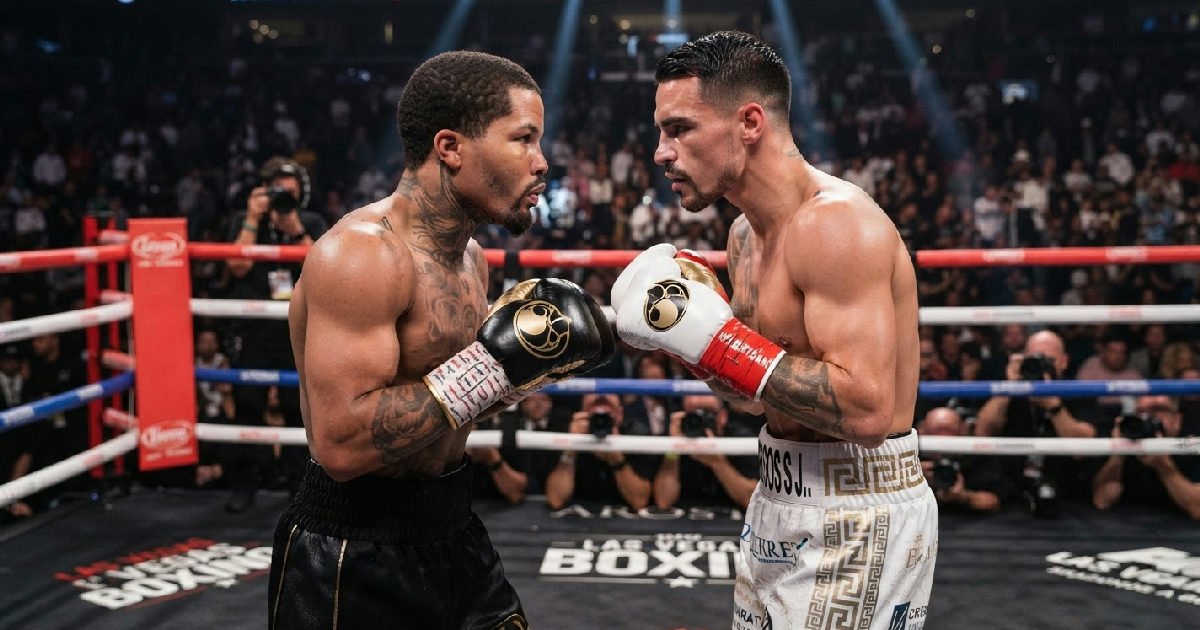
Gervonta Davis, the 31-year-old American boxing sensation, is now in active negotiations for a highly anticipated comeback fight against former world champion George Kambosos Jr. The potential clash marks Davis’s return to the ring after a prolonged absence since March 2025. He’s reportedly stated, “I fear nobody,” setting a defiant tone for his planned resurgence.
The ongoing discussions, confirmed by both camps, center on bringing Davis, known as “Tank,” back into the lightweight fray. Australian “Ferocious” Kambosos Jr., 33, has been vocal on social media, acknowledging the talks but raising concerns about a rehydration clause. This specific contractual point has emerged as a key sticking point for the former undisputed champion.
Gervonta Davis’s tumultuous time out of the ring
Davis’s last appearance in the ring was March 2025, where he retained his WBA lightweight title in a contentious majority draw against Lamont Roach Jr. The bout drew significant controversy when Roach was denied a crucial ninth-round knockdown. An investigation by the New York Athletic Commission was initiated, and Roach’s team even sought to overturn the result, alleging Davis used an “illegal irritant.”
Following that disputed encounter, a rematch with Roach was slated for August 2025 but never materialized. Plans for an exhibition match against YouTuber-turned-boxer Jake Paul also fell through. These missed opportunities were overshadowed by more serious legal issues, as Davis faced domestic violence charges, leading to his extended hiatus from competitive boxing.
The American champion’s career trajectory paused, leaving fans and pundits to speculate about his future. His current standing as “Champion in recess” for the vacant WBA World Lightweight title underscores the uncertainty that has surrounded his boxing career for over a year and a half. Such unmaterialized bouts often leave fighters searching for their next major challenge.
George Kambosos Jr.’s return from a rocky road
Across the globe, George Kambosos Jr. has navigated his own series of ups and downs since his monumental victory in 2021. The Australian shocked the boxing world when he dethroned Teofimo Lopez by split decision, claiming the undisputed lightweight crown. That career-defining win instantly propelled Kambosos into boxing’s elite ranks.
However, his reign was short-lived. Kambosos suffered consecutive points defeats to Devin Haney, relinquishing his titles and then failing to reclaim them. He later shared the ring with Vasyl Lomachenko, further solidifying his reputation for facing top-tier opposition. These rumors of significant matchups are a constant in the sport.
Kambosos Jr.’s most recent fight was in June 2025, an eighth-round stoppage loss to Richardson Hitchins. That marked his second venture at 140 pounds, hinting at a potential move to super lightweight. But with the Davis negotiations, it seems he’s prepared to revisit the lightweight division for a high-stakes encounter.
A frank acknowledgment on social media
The Australian hasn’t shied away from addressing the ongoing talks. He took to social media, specifically X, to confirm that his team and Davis’s representatives are indeed in discussions. His post, however, pointedly questioned the necessity of a rehydration clause, a common but often controversial contractual stipulation in boxing.
The sticking point: rehydration clause, a recurring battleground
The rehydration clause has emerged as a significant point of contention in the negotiations, transforming what might otherwise be straightforward talks into a more intricate dance. This clause typically dictates the maximum weight a fighter can regain between the official weigh-in and a secondary check on fight day.
Its purpose is to prevent extreme weight cutting followed by rapid, dangerous rehydration, which can grant one fighter a considerable size and strength advantage in the ring. Kambosos Jr.’s public objection highlights a common friction point in high-stakes bouts.
For a fighter of Gervonta Davis’s stature, who has campaigned successfully across multiple weight classes, including super lightweight, managing weight is always a factor. A strict rehydration limit could significantly impact his energy levels and ability to recover adequately after the initial weigh-in.
This means meticulously planning not just the cut to the agreed-upon weight, but also the delicate balance of refeeding and rehydrating in the hours leading up to the first bell. It’s a calculated risk that can make or break a performance.
Kambosos, having moved up to 140 pounds in his last outing, likely views such a clause as an attempt to neutralize a potential natural size advantage he might bring back to the lightweight division. His candid social media post – “just stop with the rehydration clauses ffs. A fight’s a fight!!!” – underscores his frustration.
He seems to advocate for a more traditional, straightforward contest where physical preparation, rather than intricate contractual stipulations, determines the outcome. This clash over clauses is often a battle of strategic advantage before punches are even thrown.
Historically, rehydration clauses have been a double-edged sword. While intended to promote fairer fights and fighter safety by curbing extreme weight manipulation, they can also be weaponized in negotiations. Fighters with a reputation for struggling with weight are often targeted with these clauses, forcing them into a more challenging pre-fight regimen.
The resolution of this particular sticking point will be a strong indicator of how much both sides are prepared to yield to ensure this compelling matchup comes to fruition.
Implications for the lightweight division and beyond
The potential clash between Gervonta Davis and George Kambosos Jr., if it moves past the negotiation stage, promises to ignite the lightweight division, which remains one of boxing’s most talent-rich categories. Davis, despite his recent inactivity, has consistently been a top draw, his explosive power and knockout artistry captivating audiences.
His return isn’t just about personal redemption; it’s about injecting star power back into a landscape eager for marquee matchups.
For Davis, this fight represents more than a mere comeback. It’s an opportunity to silence critics, prove his resilience, and emphatically re-establish himself as a top-tier contender, or even a champion, in a division he once dominated. Taking on a former undisputed champion like Kambosos Jr.
offers a legitimate challenge and a clear path back to the sport’s summit. His defiant “I fear nobody” declaration is precisely the kind of statement fans expect from a fighter of his aggressive style and reputation.
Meanwhile, George Kambosos Jr. stands at a pivotal juncture in his career. After reaching the pinnacle by defeating Teofimo Lopez, he faced setbacks against Devin Haney and Richardson Hitchins. A win over Davis would not only signify a remarkable career resurgence but also catapult him back into contention for world titles.
His hunger to prove his mettle against the best, even against a fighter like Davis who has been out of the ring, makes him a formidable and motivated opponent. This dynamic often leads to big fights that define careers.
A path forward amidst challenges
The lightweight division is currently brimming with talent and potential matchups. The outcome of these negotiations, and ultimately the fight itself, will significantly influence the landscape for other contenders. It also sets a precedent for how top fighters manage their careers following extended breaks or legal troubles.
What’s next for “Tank” Davis?
Gervonta Davis’s declaration that he fears no one indicates a fighter eager to prove his enduring talent and mental fortitude. This potential fight serves as a litmus test, not just for his physical readiness but also for his ability to handle the pressures of a high-profile return.
The domestic violence charges that sidelined him have cast a shadow, and a convincing performance would go a long way in rehabilitating his image within the sport.
Should Davis overcome Kambosos Jr., he would immediately be back in the conversation for major title fights against other top lightweights. This would include potential clashes with current champions or rising stars in the division. His reputation for thrilling knockouts and explosive power has always made him a pay-per-view draw, and a successful comeback would only enhance that appeal.
The negotiation process itself reflects the complexities of modern boxing. Beyond the physical combat, the battles fought at the negotiating table—over purse splits, weight clauses, and fight locations—are often just as intense. The resolution of the rehydration clause, in particular, will indicate how much both sides are willing to concede to make this significant bout a reality.