
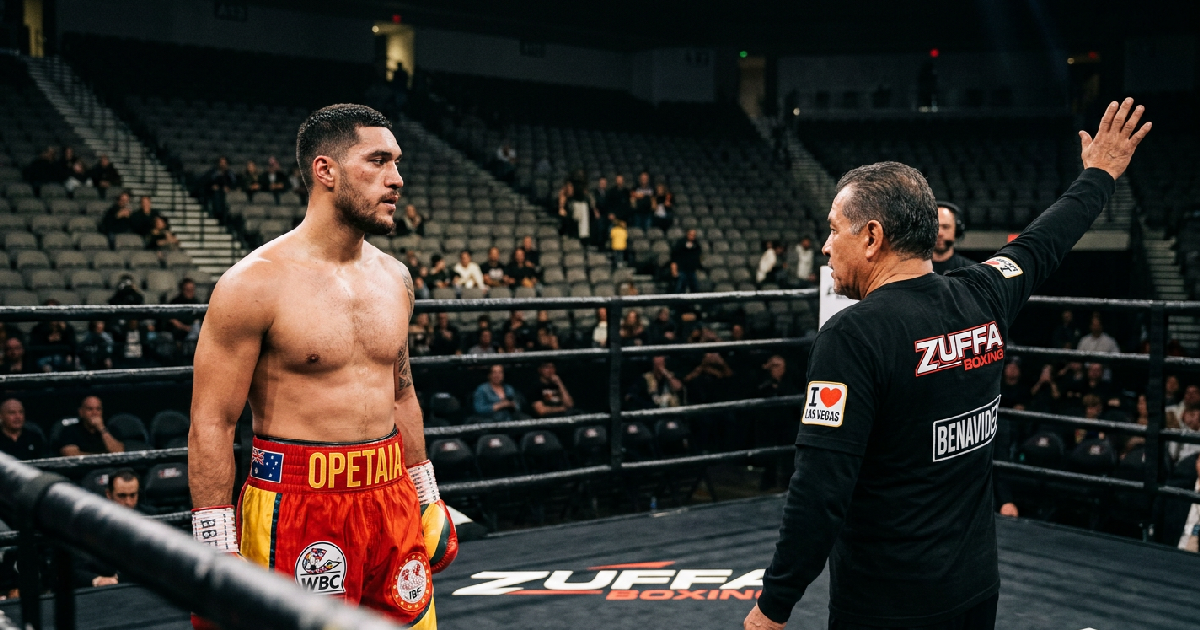
Jose Benavidez Sr., the trainer and father of David Benavidez, has questioned whether cruiserweight champion Jai Opetaia possesses the commercial appeal to headline major pay-per-view events in the United States. Following a recent appearance by the Australian fighter in Las Vegas, Benavidez Sr. suggested that athletic ability does not always translate into the financial leverage required to secure bouts with the sport’s biggest names.
The veteran trainer pointed to the atmosphere and attendance at a recent event held at the Meta Apex as a primary concern. While Jai Opetaia reportedly performed well in his outing against Brandon Glanton, Benavidez Sr. noted the venue choice and the lack of a large crowd as evidence that the champion may struggle to attract a significant ticket-buying audience outside of his home country. He argues that this perceived lack of “drawing power” makes a high-stakes crossover clash less appealing from a purely business standpoint.
The critique comes at a time when the boxing industry is increasingly dominated by social media metrics and gate revenue. Many top-tier fighters now prioritize opponents who bring a pre-built audience to the table, and Matchroom Boxing has remained active in blocking Zuffa’s expansion, adding another layer of promotional friction for fighters attempting to break into the American market.
Commercial Value vs Boxing Pedigree
The central argument from the Benavidez camp is that in the modern era, the “numbers” often carry more weight than championship belts in matchmaking negotiations. Benavidez Sr. has indicated that even established world champions can be overlooked if they cannot guarantee a strong gate for promoters. For a fighter like Jai Opetaia, who has achieved immense popularity in Australia, the transition to being a bankable star in Las Vegas or New York remains a hurdle.
Some industry observers believe Jai Opetaia is one of the most dangerous boxers currently dominating the ring, which ironically makes him a high-risk, low-reward prospect for others. If his commercial metrics do not match his technical proficiency, elite fighters in higher weight classes may feel justified in looking for more lucrative or less dangerous opportunities elsewhere.
Fan Reactions and Allegations of Avoidance
The comments from Benavidez Sr. have sparked debate within the boxing community, with many fans suggesting that “drawing power” is being used as a convenient narrative to avoid a difficult matchup. Critics of the trainer’s stance argue that Jai Opetaia’s skills in the ring should be the primary focus rather than his ticket sales. They suggest that the Benavidez camp is attempting to diminish the champion’s standing by attacking both his marketability and his technical ceiling.
There have also been reports of the trainer comparing Jai Opetaia unfavorably to other rising stars in the division. By questioning the champion’s talent alongside his bankability, the Benavidez camp effectively cools public interest in a potential fight that would involve significant physical risk. This strategy is common in boxing politics as fighters and their representatives try to navigate the complex industry fallout situations that often stall major match-ups.
Zuffa Boxing and the New Industry Dynamics
The involvement of Zuffa Boxing, led by Dana White, has added a new dimension to this debate. While the entry of a major MMA entity into the boxing world was expected to disrupt the status quo, the choice of smaller production-centered venues for recent fights has drawn criticism for lacking the “big fight feel” of traditional arenas. This clinical environment has provided ammunition for rival trainers like Benavidez Sr. to claim that certain fighters are not ready for the brightest lights.
For Jai Opetaia to shift the narrative, his management may need to secure a domestic fight in a major arena that proves he can attract a diverse and sizable audience. Until he can demonstrate that he is a reliable “seller” in the eyes of American promoters, he may find himself in a position where top-tier peers use his attendance figures as a reason to keep him at arm’s length, regardless of his status as the premier cruiserweight in the world.