
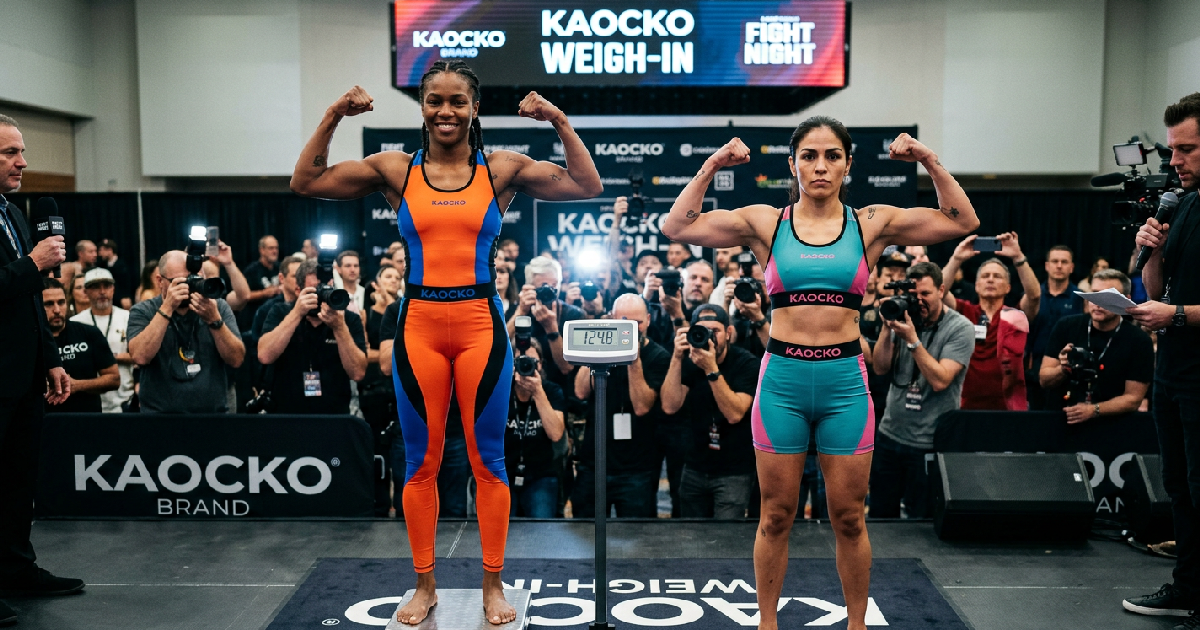
In the high-stakes world of professional combat sports, the weigh-in ceremony has evolved from a standard regulatory requirement into a calculated stage for marketing and brand positioning. This week provided a stark reminder of that shift during the weigh-ins for a Kaocko-promoted event, where two female competitors turned a routine procedure into a viral moment that dominated social media discourse before a single punch was thrown.
While the physical conditioning of the athletes was evident, the focus shifted immediately to their choice of attire. One fighter made waves by opting to cover herself only with strategically placed tape, a move that ensured cameras were flashing and keyboards were clicking across the combat sports landscape. Her opponent followed suit by also choosing a bold appearance, underscoring a growing trend in the industry where the “battle of the scales” is becoming as carefully choreographed as the fight itself.
The Evolving Role of Weigh-In Showmanship in Modern Boxing
The weigh-in has long been a place for intimidation and psychological warfare. We’ve seen the intense staredowns of the past, but the current era is increasingly defined by visual spectacles aimed at capturing the short attention spans of digital audiences. By pushing the boundaries of traditional sports attire, these athletes are effectively bypassing traditional media gates to speak directly to fans on platforms like Instagram and X.
Critics often argue that such displays distract from the technical merit and grit required in the ring. However, for many fighters outside of the global top tier, the struggle for visibility is real. In an environment where boxing results and fixtures are published across a crowded digital space, standing out during the pre-fight build-up is seen by some as a commercial necessity rather than a mere vanity project.
Balancing Athlete Promotion and Sport Integrity
The Kaocko event highlights the fine line promoters must tread. On one hand, the promotion reportedly benefits from the spike in engagement and ticket interest generated by viral weigh-in clips. On the other, there is a persistent debate regarding whether this visual strategy helps or hinders the long-term quest for the sport to be taken seriously on par with the men’s divisions.
Promoters have historically leaned into the entertainment side of sports, but the use of tape as a primary garment marks a specific escalation in the visual strategy of regional promotions. It mirrors tactics seen in other high-profile crossovers, where the spectacle is essentially the product. This isn’t just about weight management; it’s about influencer-era marketing where every second of video footage is a potential monetization opportunity.
Global Trends and Commercial Pressure on Fighters
We are seeing this phenomenon across various weight classes and organizations. As the heavyweight rankings shift and new stars emerge in the traditional sectors of the sport, those on the periphery often feel compelled to take larger risks with their public personas. The pressure to maintain a brand is often as heavy as the pressure to complete a successful training camp.
This trend isn’t isolated to women’s boxing, but it is certainly more prevalent there due to the history of how female athletes have been marketed. While champions have built their reputations on pure athletic dominance, a secondary tier of competitors has found a different path toward financial security through high-visibility stunts and viral social media moments.
The Impact of Social Media on Regulatory Norms
Regulation of weigh-ins usually falls under the jurisdiction of local commissions, who are primarily concerned with the health of the fighter and the accuracy of the scales. Rarely do these commissions step in to police attire unless it interferes with the actual weighing process. This hands-off approach has allowed a vacuum to form, which fighters and promoters are more than happy to fill with provocative content.
As the heavyweight schedule continues to grow with both traditional bouts and spectacle-driven events, the industry is forced to reconcile these two very different versions of the sport. One is a disciplined pursuit of titles; the other is a fast-paced hunt for clicks and engagement.
What Lies Ahead for Kaocko and Influence-Driven Events
The aftermath of this weigh-in will likely see an increase in viewership for the fight itself. For Kaocko, the mission of generating buzz has been accomplished. The fighters involved have seen their social media following rise, and the promotion has secured its place in the headlines for another news cycle. But the question remains whether this translates into a sustainable model for the sport.
History suggests that while the spectacle gets people through the door, only the quality of the action keeps them there. The tape weigh-in may be the talking point today, but once the bell rings, the reality of the sport takes over. Whether this leads to a new standard for fight promotion or remains a polarizing moment in the current season will depend on how fans and sponsors respond to the blurring lines between athletics and the attention economy.