
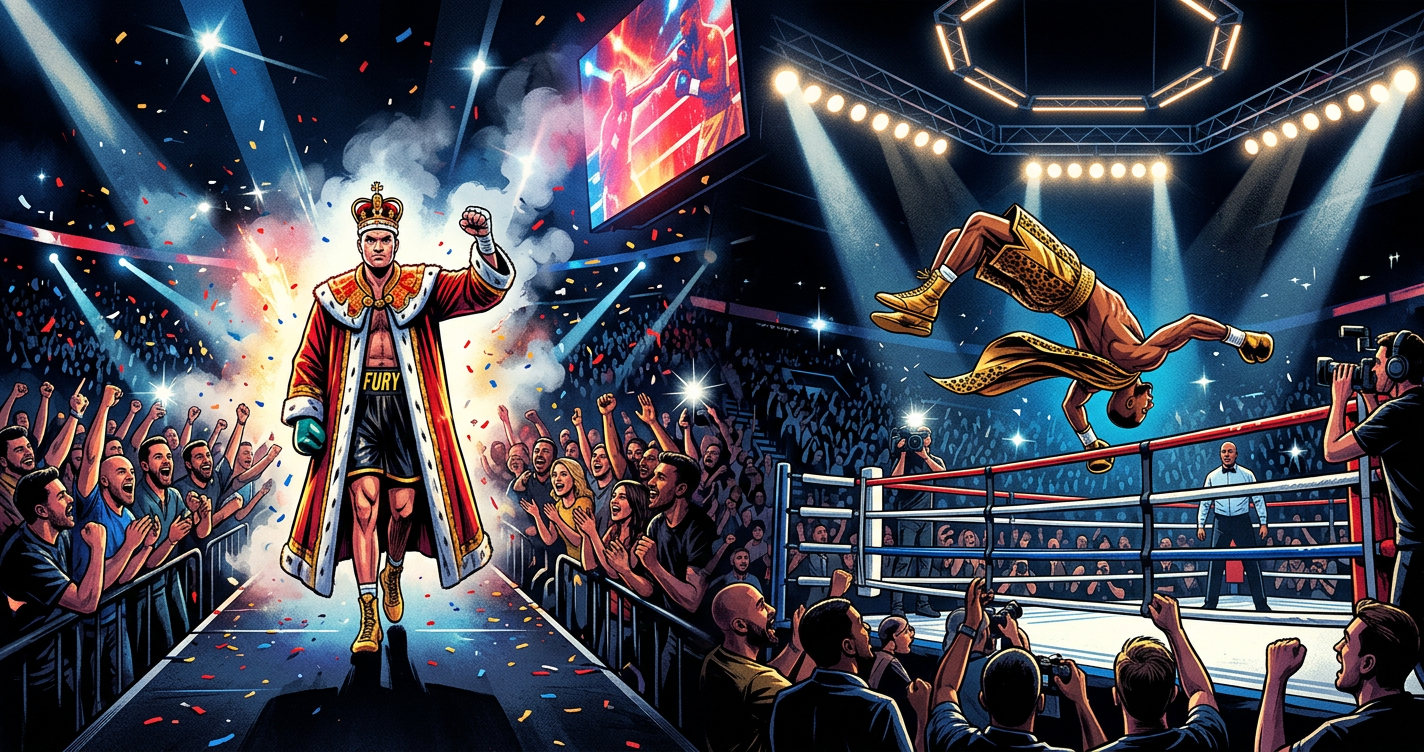
Boxing is the only sport where the athlete provides their own soundtrack and theatrical production before the whistle ever blows. While the fight itself determines a career, the ring walk defines a persona. These choreographed marches toward the ring have evolved from simple logistics into high-stakes psychological warfare and multi-million dollar spectacles.
The Evolution of the Boxing Entrance
In the early twentieth century, a fighter simply walked to the ring draped in a towel. That changed as television began to demand more production value. By the time Muhammad Ali was taunting opponents with his presence alone, the walk became a tool to unsettle the opposition. Today, with the influence of heavy-hitters like Eddie Hearn and Al Haymon, the entrance is as much about branding as it is about tradition.
The best entrances aren’t always the most expensive. They are the ones that capture the tension of the moment or the personality of the fighter. When a champion makes their way to the ring, they are essentially announcing their intent to the world.
Iconic Entrances That Defined Eras
Tyson Fury: The King’s Return in Las Vegas
Tyson Fury has mastered the art of the absurd. Perhaps his most famous entrance occurred during his second fight with Deontay Wilder. Carried out on a literal throne while “Crazy” by Patsy Cline played, Fury signaled that he wasn’t just there to box—he was there to reclaim what he felt was his. It was a display of supreme confidence that seemed to drain the energy from the room before the first bell even rang.
Recent reports regarding the formal talks for a 2026 clash between Anthony Joshua and Tyson Fury suggest that we might see yet another escalation in these production budgets. When two of the biggest stars in Britain finally meet, the ring walks alone are expected to be cultural events.
Prince Naseem Hamed: The Master of Excess
No list of ring walks is complete without Naseem Hamed. His 1997 entrance against Kevin Kelley at Madison Square Garden remains the gold standard for pure theater. Hamed spent several minutes dancing behind a screen that projected his silhouette before eventually flying over the crowd on a magic carpet of sorts—or at least a very expensive hydraulic lift. It was polarizing, it was long, and for Kelley, it was likely infuriating.
Mike Tyson: Intimidation Through Silence
At the opposite end of the spectrum is Mike Tyson. During his peak in the late 1980s, Tyson often eschewed music entirely. He walked to the ring to the sound of a rattling chain or a single, ominous industrial beat. Dressed in plain black trunks with no socks and a towel with a hole cut through the middle for his head, Tyson’s entrance was a masterclass in psychological dread. He proved that sometimes, less is significantly more.
Technological Shifts and Modern Spectacle
As we move into 2026, the technology behind these walks has shifted. We now see augmented reality (AR) graphics used on broadcasts and elaborate light shows that rival stadium concerts. Promoters prioritize these moments because they are highly “sharable” on social media, extending the reach of the fight beyond just the boxing purists.
However, these spectacles can occasionally backfire. We’ve seen instances where heavy costumes—most famously Deontay Wilder’s forty-pound suit—have been cited as causes for fatigue. While fans love the show, the fighter’s primary job remains the twelve rounds that follow the music.
What the Future Holds for Big Fight Nights
The industry is looking toward massive domestic showdowns to keep the momentum of the sport alive. With Sky Sports focusing on domestic rivalries, the emphasis is shifting toward narrative-driven entrances that lean into local pride and historical feuds. We are likely to see more “homecoming” style walks that utilize local musical talent and cultural icons.
Whether it’s a fighter being carried in a cage or a silent, terrifying stroll to the ring, the walk remains the last moment of peace before the chaos. It is the final opportunity for a fighter to look the world in the eye and say they are ready.
Frequently Asked Questions
Does a long ring walk actually affect a fighter’s performance?
It can. Trainers often worry about “leaving the fight in the dressing room” or cooling down too much during a protracted entrance. Some fighters, like Deontay Wilder, have famously claimed that heavy costumes compromised their legs before the fight even started. Most elite professionals, however, use the time to channel their adrenaline.
Who pays for the elaborate ring walk productions?
It is usually a negotiation between the promoter and the fighter. For major pay-per-view events, the network and promoter often foot the bill as part of the visual marketing for the show. High-profile fighters with their own personal brands may also invest their own money to ensure their entrance is memorable.
Which fighter is considered the pioneer of the theatrical ring walk?
While many fighters in the early TV era had flair, Muhammad Ali is generally credited with turning the walk and the pre-fight build-up into an art form. In the modern era, Prince Naseem Hamed took it to its theatrical extreme, paving the way for the “sports entertainment” style entrances we see from fighters like Tyson Fury today.