Emmanuel Dapidran Pacquiao, known globally as Manny Pacquiao, rose from extreme poverty in the Philippines to become the only boxer in history to win twelve major world titles across eight different weight divisions.
Born on December 17, 1978, in Kibawe, Bukidnon, Pacquiao’s early life was defined by a struggle for survival after his parents, Rosalio Pacquiao and Dionisia Dapidran, separated when he was in the sixth grade.
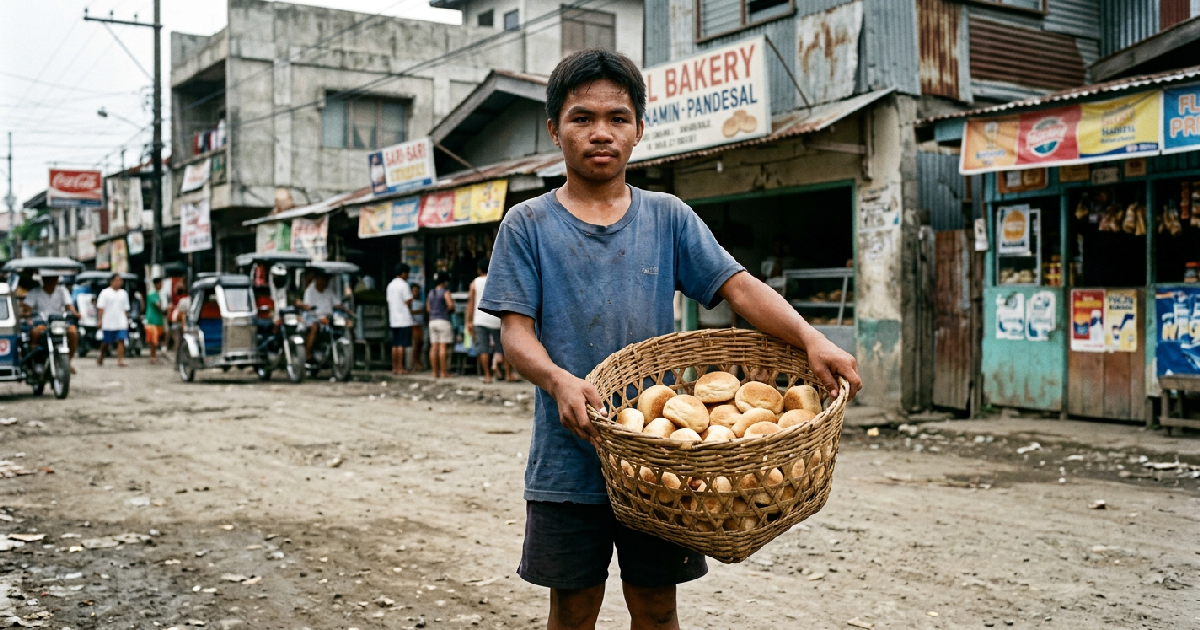
Living in General Santos City, he frequently faced hunger and worked odd jobs, such as selling bread and peanuts, to support his family.
While he successfully completed his elementary education at Saavedra Saway Elementary School, the crushing weight of abject poverty forced him to drop out of high school. His introduction to boxing came at age 12 through his uncle, Sardo Mejia, who trained him in a makeshift home gym.
Witnessing James “Buster” Douglas defeat Mike Tyson in 1990 served as a pivotal moment that Pacquiao later noted in his autobiography “changed my life forever.”
By age 15, Pacquiao had established himself as the premier junior boxer in the southern Philippines. Driven by financial necessity, he stowed away on a ship to Manila, where he lived on the streets and worked construction between training sessions.
He made his professional debut at age 16 on January 22, 1995, defeating Edmund “Enting” Ignacio in a four-round junior flyweight bout. During his early years, Pacquiao named Juan Manuel Marquez as a more skilled opponent than Floyd Mayweather, reflecting the high-level technical challenges he faced throughout his career.
Establishing a global presence through major titles
Pacquiao’s ascent to international prominence began on December 4, 1998, when a 19-year-old Pacquiao captured his first major title. He knocked out Thailand’s Chatchai Sasakul in the eighth round to win the World Boxing Council (WBC) flyweight championship.
This victory proved he belonged on the world stage, though he famously had to put weights in his pockets during his early career just to meet minimum weight requirements.
On June 23, 2001, he made a sensational United States debut as a late replacement. He stopped Lehlo Ledwaba in six rounds to claim the International Federation (IBF) junior featherweight title. This victory introduced American audiences to his signature speed and power, traits often compared to modern greats like com/terence-crawford-canelo-alvarez-retirement-outlook-2026/”>Terence Crawford or Canelo Alvarez in terms of pound-for-pound dominance. He followed this in 2003 by defeating Marco Antonio Barrera to claim The Ring magazine featherweight championship.
The unprecedented eight-division world championship record
Manny Pacquiao eventually became the only boxer in history to win twelve major world titles across eight different weight divisions. This feat includes lineal championships in four distinct classes: flyweight, featherweight, super featherweight, and light welterweight. No other fighter has managed to replicate this specific breadth of success across so many weight categories while maintaining elite performance levels.
His longevity is equally remarkable, as he remains the only boxer to hold world championships across four decades, spanning the 1990s, 2000s, 2010s, and 2020s. Throughout 26 pay-per-view bouts, his career generated 20.4 million buys and approximately $1.29 billion in revenue.
His impact on the sport was formally recognized when he was named “Fighter of the Decade” for the 2000s by the BWAA, WBC, WBO, and HBO.
While current fans look toward future mega-fights, such as the Tyson Fury and Anthony Joshua Wembley clash, Pacquiao’s historical trajectory remains the benchmark for weight-climbing ambition. Success at this level requires more than physical talent; it demands the mental resilience Pacquiao forged on the streets of Manila.
Induction into the International Boxing Hall of Fame
The International Boxing Hall of Fame officially inducted Pacquiao as part of the class of 2025. This honor solidifies his status as one of the most influential athletes in history, not just for his titles but for his narrative of triumph over extreme hardship. His career effectively ended with a resume that few, if any, will ever surpass in terms of divisional variety.
From selling bread in South Cotabato to headline status in Las Vegas, Pacquiao’s journey remains a cornerstone of boxing lore. His transition from the ring to a political career in the Philippines as a senator further extended his influence beyond the sporting realm. He remains a symbol of how determination can transform a life of hunger into one of global significance.