
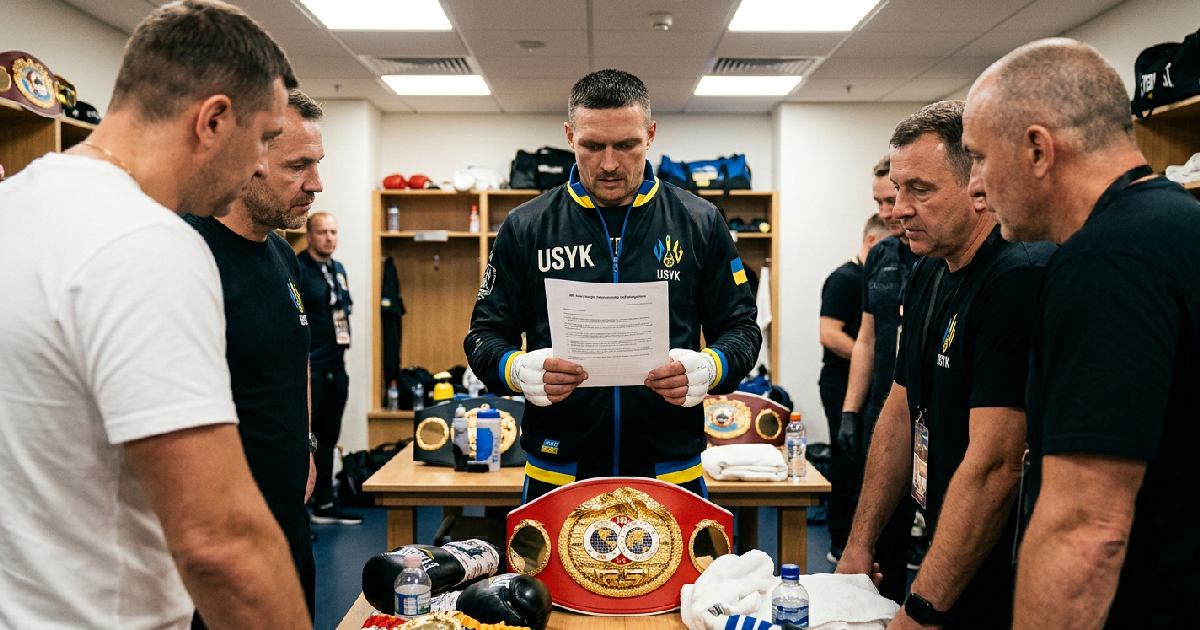
Undisputed heavyweight champion Oleksandr Usyk has been given a strict seven-day deadline to decide whether he will defend his IBF heavyweight title against mandatory challenger Daniel Dubois or vacate the belt. The IBF’s ruling, issued this week, places the Ukrainian star under immediate pressure as he weighs his next move following his historic victory over Tyson Fury.
If Oleksandr Usyk fails to commit to the mandatory defense within the one-week window, the sanctioning body is expected to strip him of the title, effectively ending his reign as the division’s first undisputed king in the four-belt era.
The timing of the IBF’s demand creates a significant hurdle for the champion’s camp. Having just endured a grueling 12-round battle to unify the titles, Oleksandr Usyk is currently exploring several high-profile options for his next appearance. While a rematch with Tyson Fury remains the most lucrative and anticipated path, the IBF’s insistence on a mandatory defense against Daniel Dubois threatens to break up the collection of belts before a second fight can even be finalized.
Public interest in the heavyweight division has reached a fever pitch, but the political machinery of sanctioning bodies often moves at its own pace. This isn’t the first time that undisputed status has been short-lived due to mandatory obligations. In a similar vein of contract complexities, the boxing match delayed by contract talks between other top-heavyweights illustrates how difficult it is to keep all parties satisfied while belts are on the line.
The mandatory challenge from Daniel Dubois
Daniel Dubois has repositioned himself at the front of the queue after a series of resilient performances. His status as the IBF mandatory challenger means he is legally entitled to a shot at the gold, and his promotional team is keen to capitalize on this leverage. For Oleksandr Usyk, taking the fight means another dangerous encounter against a younger, powerful puncher, while refusing it means losing the hardware on the scales of bureaucracy.
Should the belt become vacant, Daniel Dubois would likely face the next highest-ranked contender for the title. This scenario could lead to a domestic blockbuster in the United Kingdom, potentially involving Anthony Joshua. Industry insiders suggest that the IBF is unwilling to grant further extensions, having already allowed the undisputed fight to take precedence over previous mandatory cycles.
This ultimatum comes at a time when the heavyweight landscape is shifting rapidly. With veteran fighters like Ruiz Jr. reportedly nearing comeback, the pool of viable contenders is growing, putting more pressure on champions to stay active or relinquish their positions. Oleksandr Usyk now finds himself at a crossroads where legacy and logistics collide.
Rematch clauses and the undisputed dilemma
The primary complication for Oleksandr Usyk is the existing rematch clause in his contract with Tyson Fury. Most major unification fights include a provision for an immediate second bout, especially when the result is a close or competitive decision. However, sanctioning bodies like the IBF are not legally bound by private promotional contracts, leading to the current standoff between the champ’s obligations and his opportunities.
Choosing to keep the IBF belt would require Oleksandr Usyk to postpone the Tyson Fury rematch. This would likely disrupt the scheduling for major events in Saudi Arabia, where these bouts are currently anchored. If he decides that the Tyson Fury sequel is the priority, he will almost certainly relinquish the IBF title, allowing the division to fragment once again into multiple champions.
The heavyweight division has long struggled with this “alphabet soup” of titles. Even as fans celebrate the crowning of an undisputed champion, the reality of maintaining four separate belts is a logistical nightmare. While Oleksandr Usyk has expressed a desire to remain the king of the division, he has also hinted that the weight of these political battles is a secondary concern to the fights themselves.
A possible detour to the Pyramids
While the IBF deadline looms, Oleksandr Usyk has also been linked to various unique sporting spectacles across the globe. Reports have surfaced regarding potential crossover or exhibition-style bouts that would take him outside the traditional heavyweight rankings. Some have even characterized a potential Usyk-Rico Egypt bout as historic, given the iconic location and the cross-discipline appeal.
But exhibitions do not satisfy mandatory requirements. The IBF is focused purely on the competitive ranking system. If Oleksandr Usyk wants to walk into his next training camp with all four belts over his shoulder, he must sign the paperwork for Daniel Dubois by the end of the week. Failure to act will see the “undisputed” tag removed from his name by next Monday.
Frequently Asked Questions
Why is the IBF forcing Oleksandr Usyk to fight now?
The IBF has a strict policy regarding mandatory challengers to ensure that top-ranked fighters get their opportunity to compete for the title. Since Daniel Dubois is the official mandatory and the undisputed fight has already taken place, the sanctioning body is now enforcing its rules to keep the title active and defended against designated opponents.
What happens if Oleksandr Usyk vacates the IBF title?
If the title is vacated, the IBF will order the two highest-ranked available contenders to fight for the vacant championship. This would most likely involve Daniel Dubois facing another top-tier heavyweight, such as Anthony Joshua or Filip Hrgovic, to crown a new champion while Oleksandr Usyk continues toward a Tyson Fury rematch.
Can Oleksandr Usyk petition for an exception to the rule?
While champions can technically petition for an exception, the IBF has historically been the most rigid of the four major sanctioning bodies regarding mandatory defenses. Given that an exception was already made for the initial undisputed clash, it is highly unlikely they will grant another one, hence the one-week ultimatum issued to the champion’s camp.