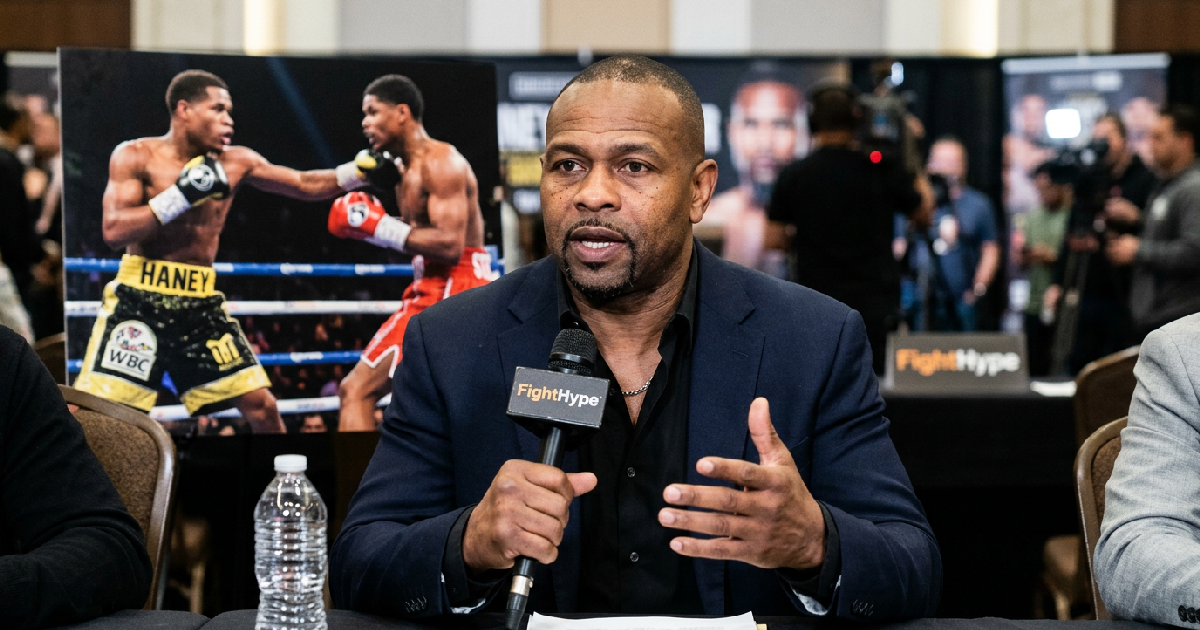
Boxing legend Roy Jones Jr. has publicly advised WBO welterweight champion Devin Haney to reject any catchweight requirements for a potential mega-fight against Shakur Stevenson. In an interview with Fighthype on June 29, 2026, the former four-division world champion argued that Haney, as the reigning titleholder at 147 pounds, should not concede a three-pound advantage to help Stevenson make weight.
The hall-of-famer emphasized that challengers must move to the champion’s division rather than demanding the champion meet them in the middle. “If you want to fight for my titles, come to my weight class and fight for the titles,” Jones Jr. stated.
Roy Jones Jr. discusses catchweight implications for Devin Haney
He warned that agreeing to a 144-pound catchweight would only serve to weaken the champion, potentially diminishing the legitimacy of any victory Stevenson might claim by pulling Haney down from his natural weight.
The primary concern raised by Jones Jr. centers on the physical disadvantage a larger fighter faces when forced to drop below the official limit of their division. Having famously jumped from light middleweight to heavyweight during his career, the veteran knows the impact of weight management on performance.
He argued that forcing a champion to drain themselves makes the contest unfair, stating that a win in those circumstances means the challenger “never really beat” the champion at their best.
Jones Jr. believes the integrity of the WBO title is at stake if the fight is not contested at the full 147-pound limit. “If you pull me a few pounds to beat me, basically, you weaken me,” Jones Jr. explained.
This stance comes as contract disputes stall negotiations across multiple weight classes, where technicalities like weight limits often prevent the biggest fights from being signed. For Jones Jr., the solution is simple: the challenger must adapt to the champion.
Historical precedent from the victory over John Ruiz
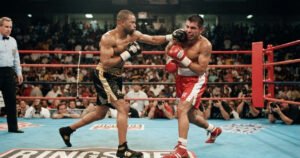
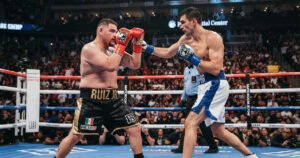
To support his advice, Jones Jr. referenced his own historic 2003 victory over John Ruiz for the WBA heavyweight title. Despite moving up from the smaller divisions, he did not demand that Ruiz meet him at a lower weight or a cap.
Instead, he made sure he reached the heavyweight minimum of 193 pounds to meet the requirements of the division, while Ruiz weighed in at 226 pounds. Jones Jr. triumphed without asking for any concessions.
He suggested that Haney should remain focused on defending his belt at 147 pounds to ensure there are no excuses after the final bell. By refusing to compromise on weight, Haney preserves his physical strength and the prestige of his championship.
This philosophy is shared by Bill Haney, Devin’s father and manager, who has reportedly stated the team is “not going down no more pounds” after years of watching the champion navigate weight cuts in the lightweight and super lightweight divisions.
Key details
Shakur Stevenson, who became a four-division champion after defeating Teofimo Lopez in January 2026, has a different perspective. He holds that a 144-pound limit is a reasonable middle ground, pointing out that Haney fought Jose Ramirez at 144 pounds as recently as May 2025.
Stevenson has argued that if Haney could reach that weight effectively just two fights before claiming the WBO welterweight strap, he should be able to do so again for a legacy-defining bout.
Stevenson has also cited the 2013 clash between Floyd Mayweather and Canelo Alvarez, which took place at a 152-pound catchweight, as evidence that champions can and should compromise.
However, while the two fighters appeared to reach a social media agreement on June 10, Stevenson later accused the Haney camp of “fake public negotiations” after the deal failed to materialize. This mirrors the drama often seen when a vacant strap is contested, and promotional posturing takes precedence over official contracts.
WBO mandatory defense creates new hurdles for Haney
The debate over catchweights may soon be rendered moot by sanctioning body regulations. The WBO has mandated that Haney must make a mandatory defense of his welterweight title against Keyshawn Davis, with a deadline set for August 2026.
If Haney chooses to pursue the Stevenson fight at a catchweight instead of facing his mandatory challenger, he risks being stripped of his championship belt by the organization.
Keyshawn Davis, an Olympic silver medalist, has been vocal in his pursuit of the champion, and Haney previously responded positively to the challenge on social media. If Haney follows the advice of Roy Jones Jr. and insists on 147 pounds, Stevenson may look elsewhere for his next opponent.
Key details
Stevenson is reportedly also considering bouts with Gervonta Davis or Conor Benn, having previously indicated he would be willing to face Benn at the full 147-pound limit.
As fans look forward to a potential ring return for several of the sport’s biggest stars, the pressure remains on Haney to decide his next move. The champion is currently between a high-risk catchweight superfight and a mandatory obligation that protects his standing as titleholder.
If he heeds the warning of Jones Jr., he will remain at the welterweight limit, forcing all challengers to meet him at his peak physical strength.