
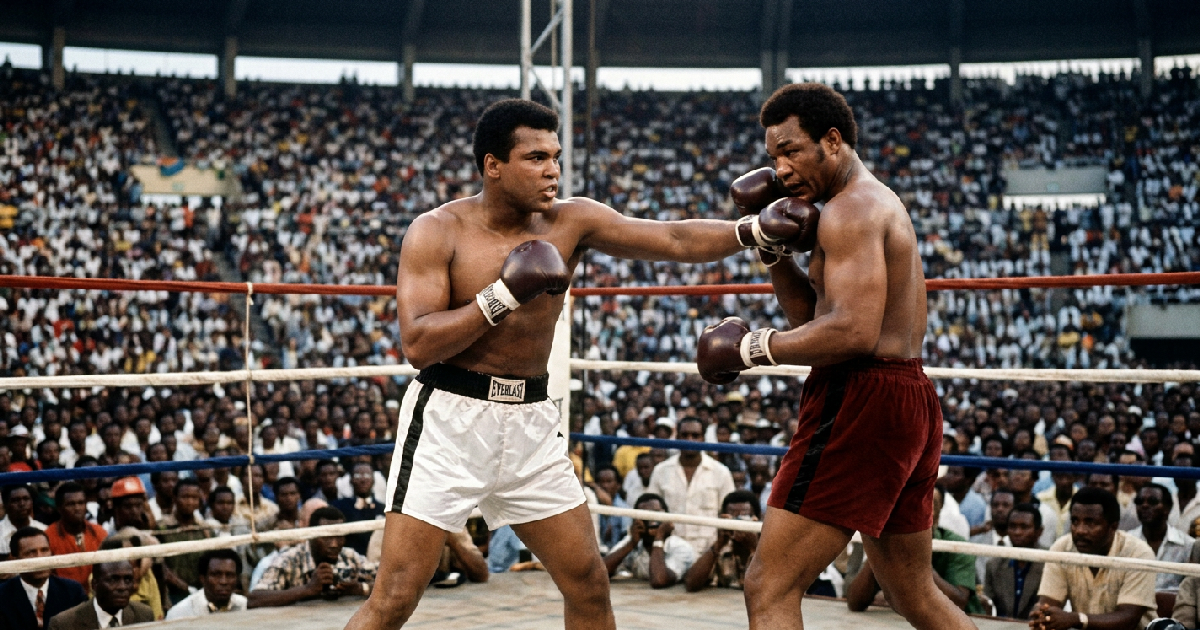
When a fighter who reached the summit of five different weight classes offers an opinion on the history of the ring, the boxing world generally pays attention. Sugar Ray Leonard, a central figure in the legendary “Four Kings” era, has shared his perspective on what he considers the definitive moment in the sport’s history, taking fans back to the iconic night in Kinshasa, Zaire.
Leonard, who built his own monumental legacy through storied rivalries with Roberto Duran and Thomas Hearns, identifies the 1974 “Rumble in the Jungle” between Muhammad Ali and George Foreman as a standout performance. For Leonard, this bout was not merely a tactical struggle for the heavyweight championship; it represented a level of psychological and physical resilience that he believes remains a benchmark for all who follow. This focus on individual greatness and the ability to overcome the odds is a recurring theme when analysts look at how heavyweight rankings shift in the modern era.
Taming the ‘Beast’ in the Zaire Heat
The 1970s was a transformational decade for the heavyweight division, defined by a concentration of talent and personality that many believe has never been duplicated. While Leonard himself went on to dominate the 1980s, he has remained a student of the giants who paved the way. In discussing his favorite historical moments, Leonard pointed to Ali’s legendary victory over Foreman as a pinnacle of drama.
At the time, George Foreman was widely regarded as an unstoppable force — a “beast” in the most literal boxing sense. He had secured a series of devastating wins over high-level opposition in very short order, leading many to believe that an aging Ali faced a nearly impossible task. Leonard has noted that Ali’s ability to withstand the power of such a formidable opponent before securing a late-stoppage victory was a supreme testament to his greatness. It is the kind of legacy that fighters today still aim for, often highlighted in various boxing results and fixtures that document the rise of new contenders.
The Blueprint for High-Stakes Competition
Leonard’s appreciation for these heavyweight battles is naturally colored by his own experience in massive fixtures. Alongside Hearns, Duran, and Marvelous Marvin Hagler, Leonard was part of a cycle of competition where the best fought the best as a matter of course. This competitive philosophy arguably took root during the Ali era, where the magnitude of the challenge often outweighed the physical titles on the line.
Modern boxing enthusiasts still search for that same spark in the current landscape. Whether looking at the heavyweights or the lower weight classes, the standard remains the visceral intensity found in the mid-70s and 80s. A fighter’s merit is still measured by their willingness to take on the “beasts” of their own generation, a quality boxing results and fixtures continue to track as the sport evolves.
Psychological Warfare and the ‘Rope-a-Dope’
What Leonard appears to admire most about the Kinshasa bout was Ali’s implementation of the “Rope-a-Dope.” It was a strategy born of necessity and extreme risk. By leaning against the ropes and absorbing Foreman’s output, Ali managed to weather a storm that many expected to be fatal to his championship hopes. Leonard, recognized as a master technician in his own right, sees that victory as a triumph of the mind over raw physical force.
Heavyweight Impact on Modern Aspirations
Leonard’s choice of a heavyweight encounter as a personal favorite underscores the perennial appeal of the division. While he was an icon of the welterweight and middleweight ranks, he acknowledges that the heavyweight championship traditionally serves as the sport’s North Star. The ripple effects of how Ali managed his career and his biggest nights in the ring are still felt in how modern fights are promoted and how trilogies are viewed by the public.
As the schedule moves forward, the influence of the Foreman-Ali dynamic remains visible in every major underdog story. Leonard’s own career was defined by overcoming substantial odds, such as his return from retirement to face elite names, a feat that mirrored the spirit of Ali’s improbable success in Zaire. For a man who achieved nearly everything the sport has to offer, the image of a fighter staring down the most feared opponent of a generation remains the gold standard of the sweet science.