Contractual clause favours a UK Tyson Fury Anthony Joshua venue
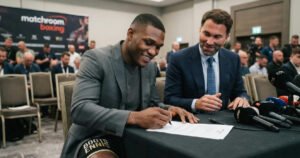
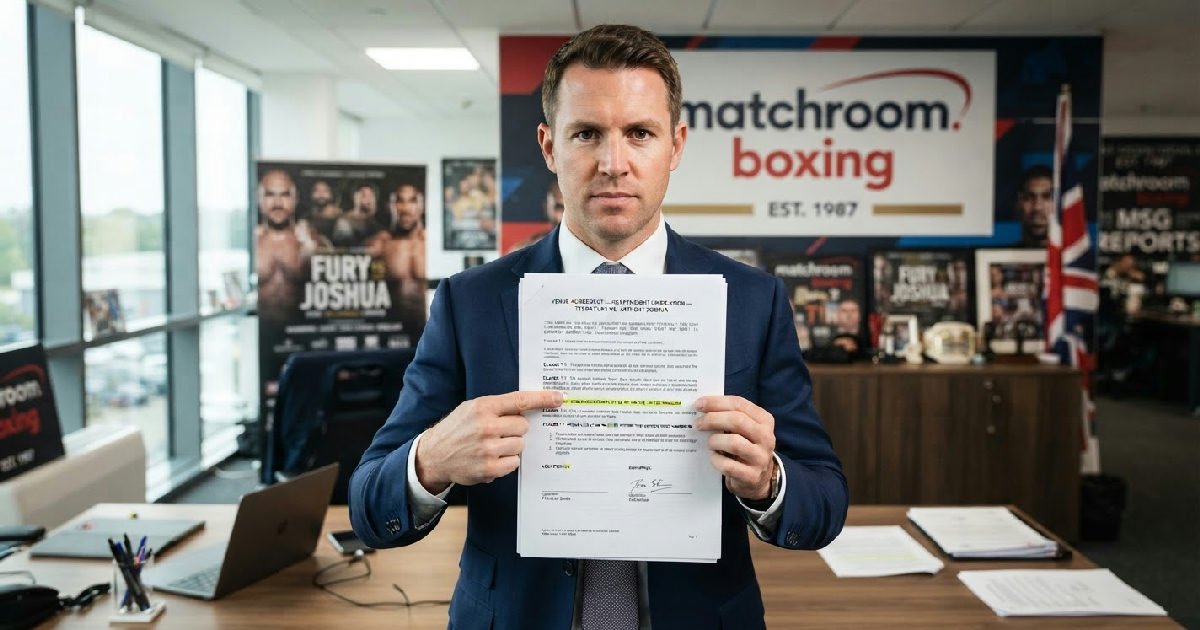
Frank Smith, the Chief Executive Officer of Matchroom Boxing, has strongly dismissed reports suggesting that a venue deal has been finalized for the highly anticipated heavyweight showdown between Tyson Fury and Anthony Joshua. Smith confirmed on Wednesday that the signed contract still legally mandates that the major event must take place in the United Kingdom, contradicting widespread speculation about New York.
The Matchroom CEO made it clear that while his promotion is open to amending the terms, no revised agreement has been completed to move the contest. He labelled claims that both sides had already agreed upon an alternative venue, such as Madison Square Garden, as “factually incorrect.”
Contractual Clause Favours a UK Fight for Tyson Fury and Anthony Joshua
The core of the dispute rests entirely on the location clause within the agreement signed approximately three months ago. Smith noted that when they signed the initial contract, it specifically stipulated that the fight would occur in the UK, a term Matchroom actively sought.
Smith told DAZN Boxing, “We signed a contract for the fight to take place this year in the UK. As far as we’re concerned, we’re delivering upon everything we said we’d do.” He stressed that Matchroom, which promotes Anthony Joshua, is not the party pushing for changes to the original deal.
This contractual leverage is significant. For the bout to move to New York or anywhere else outside the UK, Matchroom must receive what the team considers “sufficient compensation” to approve an amendment. Until that paperwork is officially signed, reports presenting the US venue as official are premature.
Smith maintained that during the original negotiations, his side requested a British venue, and they met no resistance from Tyson Fury’s representatives. “We wanted it in the UK. That’s what we agreed to, and they agreed to it,” he explained. Now, however, the venue has become the sticking point.
The back-and-forth over the venue has prompted public commentary from many figures across the sport. Just recently, Frank Warren stressed the importance of completing the Fury Joshua fight priority soon to maximize its commercial potential.
Netflix Trailer Adds Fuel to Venue Speculation
The venue uncertainty was amplified earlier this week when Netflix released a promotional trailer for the fight. This unexpected move further increased speculation about an imminent announcement and a confirmed location.
Smith dismissed the significance of the trailer itself, noting that the agreement to fight had been in place for months. He asserted that the promotional push simply highlighted the location disagreement, not its resolution.
Netflix holds the broadcast rights for the bout, which was secured when the deal was first inked back in April 2026. This adds another layer of complexity, as the streaming giant needs a firm date and location to begin its major marketing campaign.
Dana White’s Claims Dismissed as Matchroom Defends Promotional Authority
The Matchroom CEO also used the interview to squarely address the controversial claims made by Ultimate Fighting Championship (UFC) President Dana White. White had publicly claimed he was instrumental in securing Madison Square Garden in New York as the potential host venue.
Smith forcefully refuted White’s assertion, reminding the public that White does not promote Anthony Joshua and has no contractual authority to commit him to any location. He called White’s narrative into question, dismissing it outright.
“We are Anthony Joshua’s exclusive promoters throughout the rest of his career,” Smith declared, emphasizing the long-standing relationship between the fighter and Matchroom. “Dana White’s lies are unraveling in front of him,” he added in a sharp rebuke.
This is a continuation of the heated rivalry between Matchroom, led by Eddie Hearn, and White, who launched Zuffa Boxing in 2025. The promotional landscape in boxing is often fraught, but White’s direct involvement in negotiations for a fight he doesn’t formally promote has clearly angered the Matchroom hierarchy.
White’s history of disruptive negotiation tactics, often detailed in the context of the UFC’s business model, is now spilling directly into the UK boxing scene. This creates unnecessary friction in an already delicate negotiation process.
The Risk of Venue Stalemates for Anthony Joshua’s Career
The ongoing struggle over the venue carries significant risk, especially for Anthony Joshua. If the negotiations fall apart because neither side is willing to compromise on the location, Joshua could be forced into less lucrative and arguably more dangerous mandatory fights.
The alternatives mentioned by analysts, such as a rematch against Daniel Dubois or a fight with rising prospect Moses Itauma, offer difficult stylistic challenges. While these are necessary fights in the heavyweight division, they would not generate the equivalent financial returns or global profile of the Tyson Fury fight.
A stoppage defeat against a younger, powerful contender like Dubois or Itauma would severely damage Joshua’s long-term drawing power and further dilute public interest in the legacy clash with Fury. He needs this major fight to solidify his financial standing and his historical relevance.
Matchroom holds strong contractual leverage, given the UK clause, but pushing too hard might prove counterproductive if it kills the deal entirely. For Joshua, the Fury fight represents his most lucrative and career-defining option remaining in the division.
It is a massive opportunity, and some pundits believe that Matchroom needs to secure it, regardless of location. Anthony Joshua will defeat almost anyone, but losing the chance to fight Fury is the real risk here.
The pressure is compounded by the fact that the fight, according to Smith, must happen “this year.” A delay into 2027 would likely cause both boxers and broadcasters to lose momentum and interest.
Financial Disparity Driving the Location Debate
The fundamental reason for the pressure to move the fight away from the UK is, unsurprisingly, financial. While the UK would offer a massive gate and huge domestic interest, the true mega-money offers come from overseas.
Sources close to the negotiations have indicated that the financial packages available for hosting the fight in places like Saudi Arabia far outstrip what can be generated in Britain. Promoter Eddie Hearn previously noted this stark reality.
The Allure of Overseas Money
Hearn stated that a potential fight deal in Saudi Arabia could command figures around £150 million, compared to a reported £40 million package for a British venue like Wembley Stadium. That is a colossal difference, putting immense strain on the UK clause.
When the original agreement was signed, the focus was primarily on securing the fight itself after years of frustrating negotiations. Now that the contract is in place, the financial realities of international hosting bids are forcing a renegotiation.
Saudi Arabia, steered by Turki Alalshikh, the Chairman of the General Entertainment Authority, has become the dominant host for major heavyweight bouts due to its willingness to pay unparalleled site fees. This context makes the insistence on the UK location clause a major strategic play by Matchroom.
The clause likely serves as an insurance policy, ensuring that if the overseas funding does not materialize, the fight still has a high-profile home. But in the current climate, it functions more as a bargaining chip for Matchroom to extract maximum value if they agree to move the location.
The influence of international capital is reshaping boxing. Dana White’s Zuffa Boxing deal, for example, highlighted the growing willingness of non-traditional boxing entities to invest heavily in the sport, often outpacing the earnings from a Canelo Alvarez fight.
Outlook and Urgency for the Heavyweight Saga
Despite the disagreement over the venue, Frank Smith remains optimistic that the fight will ultimately happen. He acknowledged the complexity but insisted that the shared desire to make the massive contest a reality is the driving force.
However, the window is closing quickly. The signed agreement stipulated the fight would take place this year, 2026. “If it doesn’t happen this year, it’s not going to happen,” Smith conceded, highlighting the urgency needed from both camps.
The speculation surrounding the deal intensified earlier this week after Tyson Fury posted on social media that “the one you’ve all been waiting for” was about to be announced. This suggests a desire on Fury’s side to accelerate the timeline and finalize the details.
For the sake of the sport and the heavyweight division, a resolution must be found soon. The fight between the two British heavyweights is widely considered the biggest bout that can be made in boxing, a legacy clash years in the making. Further delays threaten to diminish its status.
The next few weeks will be crucial. Either Matchroom will secure a massive compensation package to greenlight New York, or Fury’s side will revert to the UK contract terms. The alternative—the fight collapsing—remains a real and highly disappointing possibility for fans worldwide.
As long as the contract states the UK, that remains the legal default. Any other venue, whether Madison Square Garden or a more lucrative Middle Eastern option, requires Matchroom’s final, contractual sign-off.