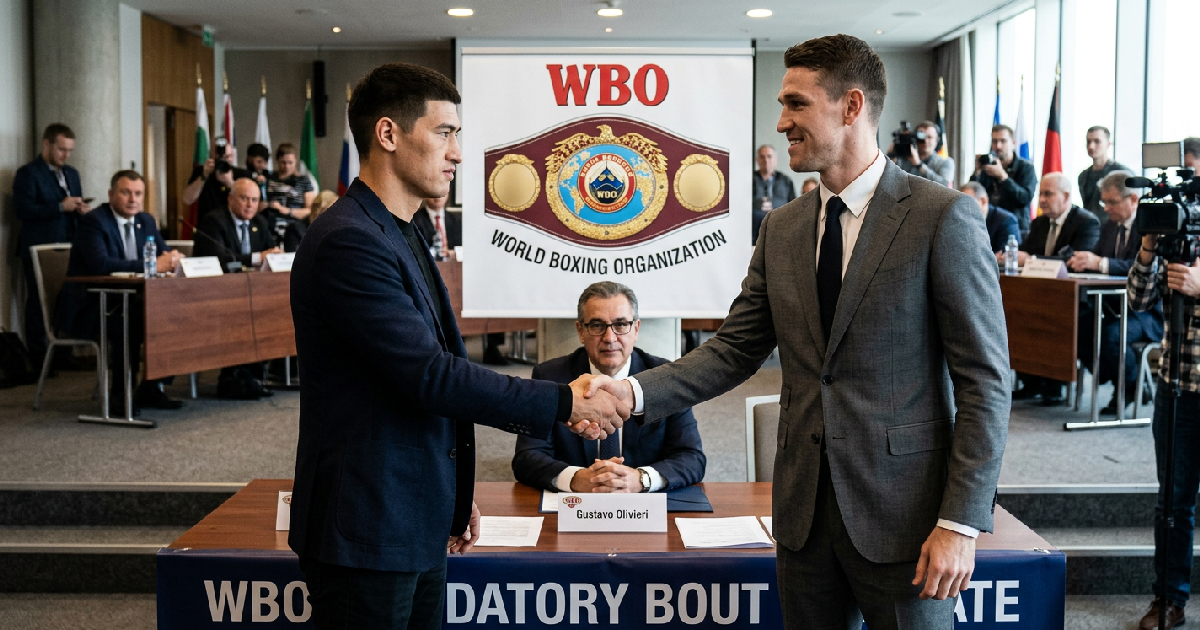
The World Boxing Organization (WBO) officially ordered unified light heavyweight champion Dmitry Bivol to defend his title against interim champion Callum Smith on July 6, 2026. The WBO World Championship Committee, led by Gustavo Olivieri, Esq., has mandated a 20-day negotiation window for both camps to reach a deal. Failure to agree on terms within this period will result in a purse bid to determine the promotional rights for the championship bout.
This mandate forces Dmitry Bivol to address his divisional obligations before pursuing other lucrative options at 175 pounds. The Russian champion is coming off a dominant unanimous decision victory over Michael Eifert in May, a win that saw him retain his WBA, IBF, and WBO titles. Shortly after that performance, Bivol underwent elbow surgery, though his promotional team has indicated that the procedure will not sideline him for an extended period.
WBO sets strict timeline for Dmitry Bivol vs Callum Smith negotiations
The official order from the WBO puts an end to immediate speculation regarding other potential matchups for the unified champion. Before this ruling, the boxing world had been focusing on a possible trilogy fight between Dmitry Bivol and Artur Beterbiev. However, the boxing match delayed by contract talks in other divisions serves as a reminder of how mandatories can disrupt even the most anticipated plans.
The 20-day negotiation clock, specified by the WBO World Championship Committee and posted by Gustavo Olivieri, Esq. on July 6, 2026, started ticking immediately upon the official announcement. This tight timeframe intensifies the pressure on both Bivol’s and Smith’s teams to finalize an agreement swiftly.
If they cannot come to terms, the fight will proceed to a purse bid, potentially opening it up to various promoters who might have different visions for the event’s location and broadcast. This process ensures that, regardless of negotiation complexities, a resolution for the title defense will be reached within the stipulated period.
Callum Smith has been waiting for this opportunity since capturing the WBO interim title earlier this year. The former super middleweight world champion has successfully rebuilt his career at light heavyweight and is now the primary challenger for Bivol’s WBO strap. This fight represents Smith’s first chance to compete for a full world title in the 175-pound weight class since moving up from the 168-pound division.
If the 20-day window expires without a signed contract, the WBO will move to a purse bid, opening the door for any registered promoter to win the rights to the bout. This scenario could lead to a change in the expected venue or broadcaster for the event. While many were looking toward a clash with WBC champion David Benavidez, the WBO’s firm stance ensures Smith will not be bypassed.
Risks and rewards for the unified light heavyweight champion
Dmitry Bivol now faces a significant tactical and administrative challenge. To remain a unified champion, he must either reach an agreement with Smith or risk being stripped of his WBO title. Vacating the belt would be a major setback in his goal of becoming the undisputed champion of the division, as it would fragment the titles once again.
The champion’s recent surgical history also adds a layer of complexity to the upcoming defense. While his camp remains optimistic, recovering from elbow surgery while preparing for a puncher of Smith’s caliber is no small feat. This situation echoes other high-pressure talks in the sport, such as the Fury-Joshua contracts that have seen various hurdles over the years.
This mandatory defense also impacts Bivol’s long-term aspirations. He has publicly stated desires for a third fight against Artur Beterbiev, or a major showdown with David Benavidez. The WBO’s order means these marquee fights must now be put on hold until his obligation to Smith is satisfied. This prioritization of mandatory defenses over more lucrative, non-mandatory bouts is a common theme in boxing, often frustrating fans and fighters alike, but upholding the integrity of each sanctioning body’s championship lineage.
For Callum Smith, the mandate is the culmination of a patient campaign at light heavyweight. Having already held world honors at super middleweight, Smith is looking to join the elite group of two-weight world champions. His status as mandatory challenger had been expected to result in this order, especially after Bivol’s successful defense against Eifert earlier this summer.
He has methodically rebuilt his standing at 175 pounds, demonstrating his readiness for another world title shot since his move from super middleweight. This fight offers Smith an immediate career-defining opportunity to solidify his position at the pinnacle of the light heavyweight division.
Evaluating the light heavyweight landscape after the WBO mandate
The order effectively prioritizes the mandatory system over “super-fights” that fans often demand. While Artur Beterbiev has reportedly expressed interest in a third fight with Bivol, the WBO’s rules on interim champions usually take precedence. This ensures the divisional hierarchy is respected, even if it delays undisputed championship goals.
The next three weeks will determine whether this fight lands on a major platform later this year. Both fighters are high-profile names in the international market, with Smith maintaining a strong following in the United Kingdom. If negotiations go smoothly, the bout could serve as a centerpiece for the late 2026 boxing calendar.
Should the fight fall through or Bivol choose a different path, the WBO may look at other top-ranked contenders. Recent shifts in other weight classes, such as when Rolando Romero was elevated by the WBA, show how quickly title pictures can change. For now, the focus remains entirely on whether Bivol and Smith can agree on terms to bring this light heavyweight clash to the ring.