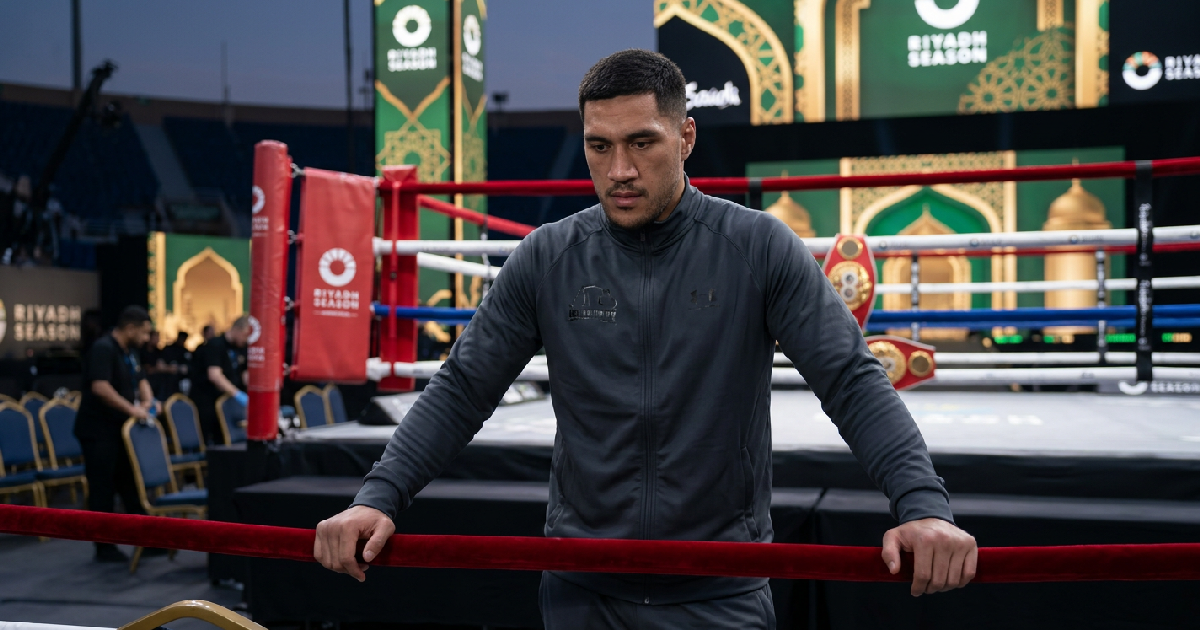
The cruiserweight division has a clarity problem, and Jai Opetaia is currently standing at the center of the storm. What was supposed to be a straightforward period of consolidation for the division’s most feared operator has instead devolved into a week of legal threats, promotional friction, and administrative headaches that threaten to stall the Australian’s momentum.
Coming off a series of dominant performances, Opetaia was widely viewed as the man to bring order to the 200-pound landscape. But the last few days have shown that the battles taking place outside the ring are proving far more difficult to navigate than the ones inside the ropes. Between sanctioning body mandates and conflicting promotional interests, the path to undisputed status is looking increasingly cluttered.
Sanctioning Body Demands and Tactical Deadlocks
The primary source of the recent friction stems from the mandatory obligations imposed by boxing’s governing bodies. For a fighter like Opetaia, who has expressed a clear desire to collect all the hardware in the division, these mandates often act as a double-edged sword. While they provide a clear path to titles, they also restrict a fighter’s ability to pursue the lucrative, legacy-defining fights the public actually wants to see.
Reports from within the Opetaia camp suggest a growing frustration with the pace of negotiations. In an era where “super-fights” are often brokered with unprecedented speed in Saudi Arabia, the traditional machinery of boxing politics feels slower and more obstructive than ever. The Australian has found himself caught between the desire to remain active and the need to satisfy the technicalities of his ranking status.
It’s a situation that isn’t unique to Opetaia, but it hits harder for a champion who has spent a significant portion of his prime dealing with injuries and administrative delays. Every week spent arguing over purse splits or mandatory challengers is a week of a physical prime that isn’t being spent under the lights.
Promotional Friction and the Saudi Factor
The role of Turki Alalshikh and the Riyadh Season initiatives cannot be overstated in this context. Opetaia has become a staple of these massive international cards, but that alignment brings its own set of complications. When a fighter is essentially drafted into a larger ecosystem of global sports entertainment, the local promotional ties and existing broadcast deals often begin to fray.
Insiders suggest that the “messy” nature of the past week involves a tug-of-war over where Opetaia fights next and, perhaps more importantly, who controls the promotional narrative. There is a sense that the traditional power brokers in the sport are struggling to maintain their grip as the financial gravity of the Middle East pulls the top talent toward a new center of power. For Opetaia, this means dealing with multiple “bosses,” each with a different vision for his 2026 campaign.
Risk of Stagnation in a Volatile Division
The danger here is not just a delay; it’s the loss of aura. Opetaia’s rise was built on the image of an unstoppable, highly active force. If the coming months are defined by “step-aside” money, legal filings, and social media posturing rather than highlight-reel knockouts, the casual fan base may begin to look elsewhere. The cruiserweight division is historically volatile, and several hungry contenders are waiting for any sign of a champion being distracted by board-room drama.
And then there is the weight class itself. Speculation continues to swirl about Opetaia eventually making the jump to heavyweight. If the administrative hurdles at cruiserweight become too burdensome, that move might happen sooner than anyone anticipated. But jumping weight classes to escape a messy desk is rarely a recipe for long-term championship success.
Looking Ahead to the Summer
The next 48 hours will likely determine whether this week was a temporary speed bump or the start of a prolonged period of inactivity. If a deal for a major Title defense or a unification bout isn’t finalized soon, Opetaia may find himself watching from the sidelines while other champions in the division take the initiative.
For now, fans are left with more questions than answers. The talent is undeniable, and the hunger appears to be there. But in boxing, talent is only half the battle. The other half is surviving the politics, and right now, Opetaia is in a real scrap.
Frequently Asked Questions
Why is Jai Opetaia’s schedule currently in question?
The uncertainty stems from a combination of mandatory title defense obligations and conflicting promotional interests. While Opetaia wants high-profile fights, sanctioning bodies are pushing for specific challengers that don’t always align with the commercial goals of his promotional team.
Is there a risk of Opetaia being stripped of his titles?
While there has been no official word on stripping titles yet, the IBF and other bodies have been increasingly strict about mandatory timelines. If a deal cannot be reached with the designated challenger, the sanctioning bodies often move to vacate the title to keep the division moving.
Could Jai Opetaia move to the heavyweight division soon?
It is a possibility that has been discussed by his team. Opetaia has the frame and power to compete at the higher weight, and the financial rewards at heavyweight are significantly higher. If the politics at cruiserweight remain this difficult, a move up could be an attractive exit strategy.