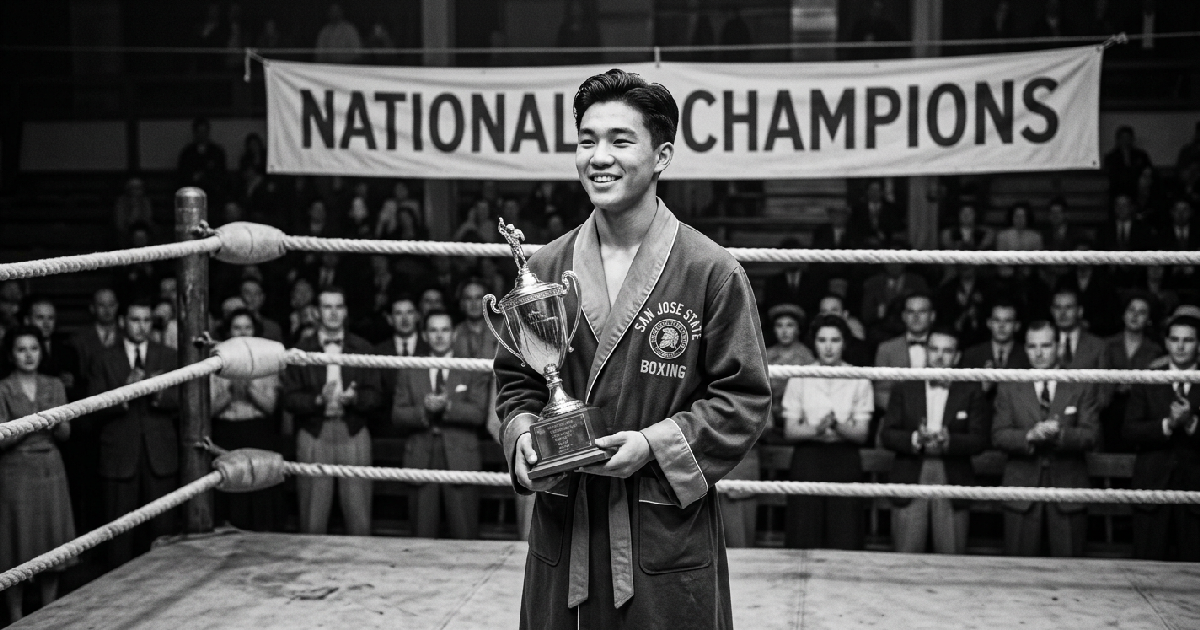
A San Jose State University student of Japanese descent reportedly remains a vital figure in collegiate history for capturing a national boxing championship during the early 1940s. His achievement reportedly occurred just prior to the implementation of federal policies that saw thousands of Japanese Americans forcibly relocated to internment camps. This chapter in amateur sports history has resurfaced as organizations and the community reflect on the career of a fighter who earned national prominence during a volatile period for civil rights in the United States.
The boxer, whose athletic trajectory was curtailed by the onset of wartime restrictions, represented a period of growth for the San Jose State boxing program. His success on the national stage underscored the university’s reputation as a competitive force in the sport. However, his competitive journey reportedly transitioned from the institutional spotlight to the restricted confines of a relocation center shortly after his success in the ring. The contrast between his status as an elite athlete and his eventual internment highlights the personal toll taken on American citizens of Japanese ancestry during this era.
Historians often point to this period as a reminder of the contradictions inherent in mid-century American life. While he was celebrated as a premier amateur athlete, he was simultaneously viewed with suspicion by government authorities due to his background. This sense of duality is a recurring theme in boxing history, where the sport frequently mirrors larger societal shifts. Much like how modern fans track the most dangerous boxers in the ring today, the rosters of that era featured elite talents who faced challenges far beyond their physical opponents.
The Environment for Collegiate Boxing in the 1940s
During the early 1940s, San Jose State stood as a significant hub for collegiate boxing. The program reportedly attracted disciplined athletes who balanced their academic commitments with the rigors of high-level training. National tournaments during this era were considered a pinnacle for student-athletes, drawing the best competitors from across the country to vie for individual and team honors. The success of Japanese-American athletes in this environment was a testament to the diverse talent pool developing in California at the time.
The student’s path to a national title was reportedly defined by technical proficiency and a resilient tactical approach. Observers from the period described a boxer with exceptional footwork and counter-punching abilities. His success was considered a point of pride for the San Jose community, which had become a fertile ground for boxing talent during the pre-war years. But the geopolitical climate was changing rapidly, casting a long shadow over these collegiate achievements as international tensions escalated.
As the political climate in California deteriorated for the Japanese-American community, the window for athletic advancement closed. According to reports, the transition from the prestige of a national championship to the reality of forced relocation happened within a very short timeframe. This disruption effectively ended any aspirations for a move into professional boxing or further defense of amateur titles. The narrative mirrors other instances in the sport where external forces intervene, such as how the fallout of business scandals can disrupt the momentum of modern careers.
Impact of Internment on Athletic Legacies
The relocation of Japanese Americans following the outbreak of war in the Pacific disrupted thousands of lives, including those at the peak of their physical prime. For the San Jose State champion, the change in status was jarring. He shifted from being a celebrated athlete representing a major California institution to being processed for relocation under federal orders. This period remains a stark example of how geopolitics can override individual merit within the sporting world.
Within the internment camps, sports often became a vital outlet for maintaining morale and community structure. While national competition was no longer an option, many former athletes reportedly continued to train and mentor younger residents within the camps. These stories provide a granular look at the human cost of internment on the sporting community, showing that while formal careers were halted, the spirit of competition often persisted in more localized forms.
Efforts to document this history have increased as institutions work to ensure the achievements of mid-century athletes are not lost. This recognition is part of a larger movement to acknowledge the contributions of minority athletes who paved the way during more restrictive eras. From early pioneers to modern developments, such as the evolutions in women’s boxing rankings, the sport continues to be a venue where social barriers are navigated and occasionally broken.
Future Recognition of Historical Champions
As academic archives are explored more thoroughly, it is expected that more stories of marginalized champions will emerge. The San Jose State athlete stands as a representative for many whose potential was never fully realized due to systemic forces. Today, his championship serves as both a testament to his individual skill and a reminder of the fragility of civil liberties during times of crisis. His medals and press clippings remain significant historical artifacts of a career that faced unique external pressures.
The boxing community appears increasingly committed to recognizing these historical figures through academic research and commemorative efforts. The goal is to provide a more complete picture of the sport’s heritage, ensuring that the records reflect the diverse group of people who shaped it. The resilience shown by these wartime athletes continues to be a point of study for those interested in the intersection of sports and social history in America.
Reporting on Historical Sports Achievements
Historians and educational institutions remain focused on uncovering the stories of minority athletes whose careers were impacted by wartime policies. By revisiting these championships, researchers are able to fill gaps in the sporting record and use these narratives as educational tools. These stories illustrate the impact of external policy on individual achievement and provide context for the challenges faced by athletes of previous generations.
His competitive boxing career at the national level reportedly concluded upon his relocation. While many participants continued to engage in athletics within the camp systems to maintain community morale, the opportunity to defend his title or pursue a professional career was effectively removed by the restrictions of the era. This legacy continues to inform the way sports historians view the impact of the 1940s on the American boxing landscape.