
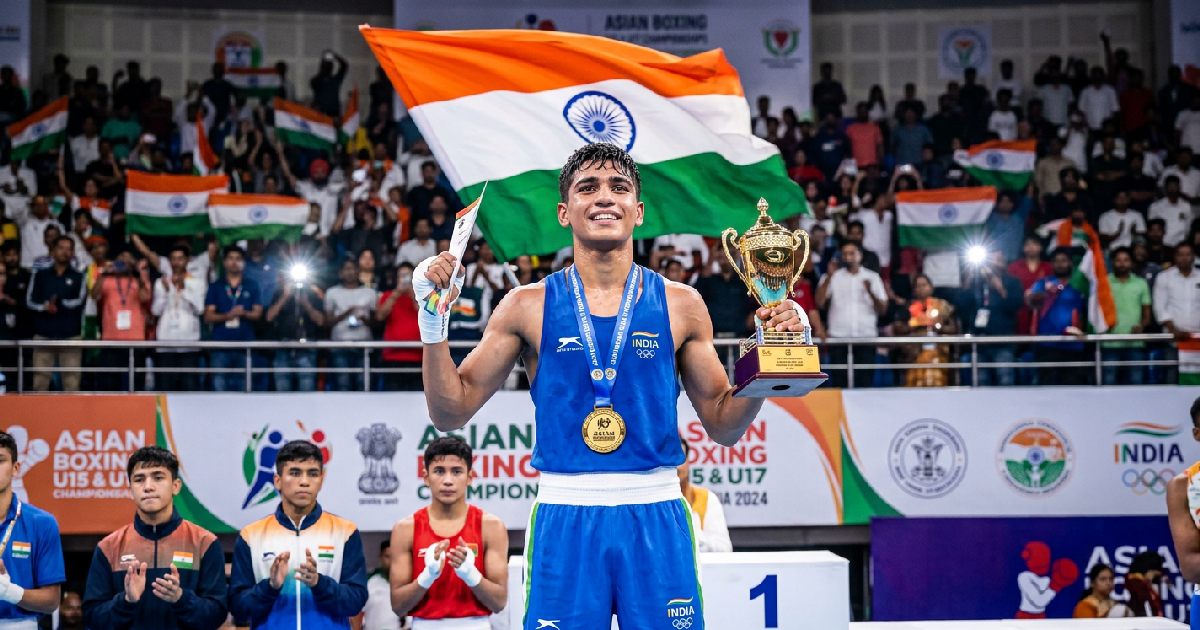
India’s youth boxing contingent has delivered a series of standout performances at the Asian Boxing U15 and U17 Championships, reinforcing the nation’s growing reputation as a powerhouse in amateur developmental cycles. The championships, which feature some of the most promising junior and school-age talents across the continent, saw Indian boxers reportedly outclass several opponents through technical precision and conditioning. While established regional powers from Central Asia provided stiff competition, the Indian squad maintained a competitive presence across multiple weight categories.
The success at these championships comes during a pivotal era for the sport, where grassroots development remains a primary focus for national federations. India has reportedly invested in residential academies and specialized coaching for the U15 and U17 age groups, aiming to create a transition into the senior ranks. This strategy appears to be yielding results, as the current crop of athletes showed a level of tactical maturity that often belied their age. The ability of these young fighters to adapt to different styles—switching between aggressive pressure and counter-punching—highlighted the depth of current training programs.
And while the focus remains on personal development, the collective impact on the podium remains a key metric for the Boxing Federation of India. In several bouts, Indian representatives secured victories over traditional rivals, signaling a shift in the competitive balance of Asian youth boxing. This surge in form mirrors the trajectory seen in other divisions, where top boxers dominating the ring in 2026 have set a high bar for the next generation to follow.
India Maintains Stature Across Multiple Weight Classes
The U17 division proved productive for the Indian team, with several fighters advancing deep into the tournament brackets. Observers noted that the Indian boxers exhibited effective footwork and ring generalship, often neutralizing physical advantages held by their opponents. The coaching staff’s emphasis on tactical efficiency was evident, as the athletes focused on point-scoring rather than looking for early stoppages, which is a key discipline in junior competitions.
In the U15 category, the younger “school-age” boxers demonstrated a firm grasp of fundamentals. These athletes are beginning their journey in international competition, yet their composure undercover at a major continental championship was a recurring theme throughout the rounds. This poise is critical as they look toward future Olympic cycles, following in the footsteps of established names who have navigated these same developmental pathways. This progress is reminiscent of how Scrappy Ramirez navigates a patient path to his own title goals, proving that career longevity starts with disciplined youth foundations.
Success at this level creates a ripple effect throughout the domestic circuit. When these young athletes return home with continental recognition, it validates the work being done in regional hubs. It also provides a benchmark for their peers, raising the overall standard of competition within India’s internal landscape. The technical proficiency on display suggests that the gap between the sub-junior and senior levels is narrowing, which serves India’s long-term international prospects.
Focus on Technical Refinement and Conditioning
Observers at the ringside highlighted the physical readiness of the Indian squad. The current roster showed high-level aerobic capacity, allowing them to maintain a consistent work rate during the closing minutes of three-round contests. This physical edge is becoming a trademark of the national program, which reportedly incorporates modern sports science and nutrition plans for its participants.
The technical shift is also noteworthy. There is a move away from one-dimensional styles toward a more sophisticated defensive game. Boxers were seen using head movement and shoulder rolls to catch and counter, a style that is increasingly necessary for success in international amateur boxing. Such tactical evolution is often discussed when comparing modern prospects to the heavyweights of the past, much like how David Price evaluates Tyson Fury’s current form against changing sports standards.
Strategic Importance of Continental Success
Succeeding at the Asian level is widely considered a difficult task due to the presence of seasoned Central Asian powerhouses. For India to consistently place boxers on the podium at the U15 and U17 levels is a statement of intent. The Asian Boxing Confederation (ASBC) has noted rising standards across the board, but India’s ability to field competitive athletes in various weight classes—from the lighter categories to the heavier ones—sets them apart from smaller nations.
This wide-ranging success is vital for the health of the sport domestically. Boxers who find success at the Asian Championships often secure additional support, which alleviates the financial burdens associated with high-level training. As the sport deals with various external shifts and challenges, maintaining a robust amateur pipeline ensures that the focus remains on the athletes and their achievements on the canvas.
Path Toward Senior International Triumphs
The immediate goal for these U15 and U17 standouts will be the World Youth Championships and, eventually, a spot on the senior national team. History shows that many Olympic medalists begin their ascent by performing well at these continental age-group events. The national governing body is expected to keep this cohort together, providing them with more international exposure to diversify their experience.
The long-term outlook for Indian boxing remains optimistic. If these young athletes can bridge the gap between junior success and senior consistency, India could move from being a recurring contender to a dominant force in global boxing. The blueprint is in place, and the performances in this latest Asian championship indicate that the talent is ready to execute it.