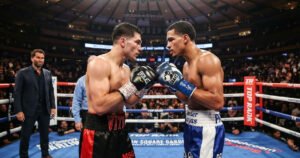
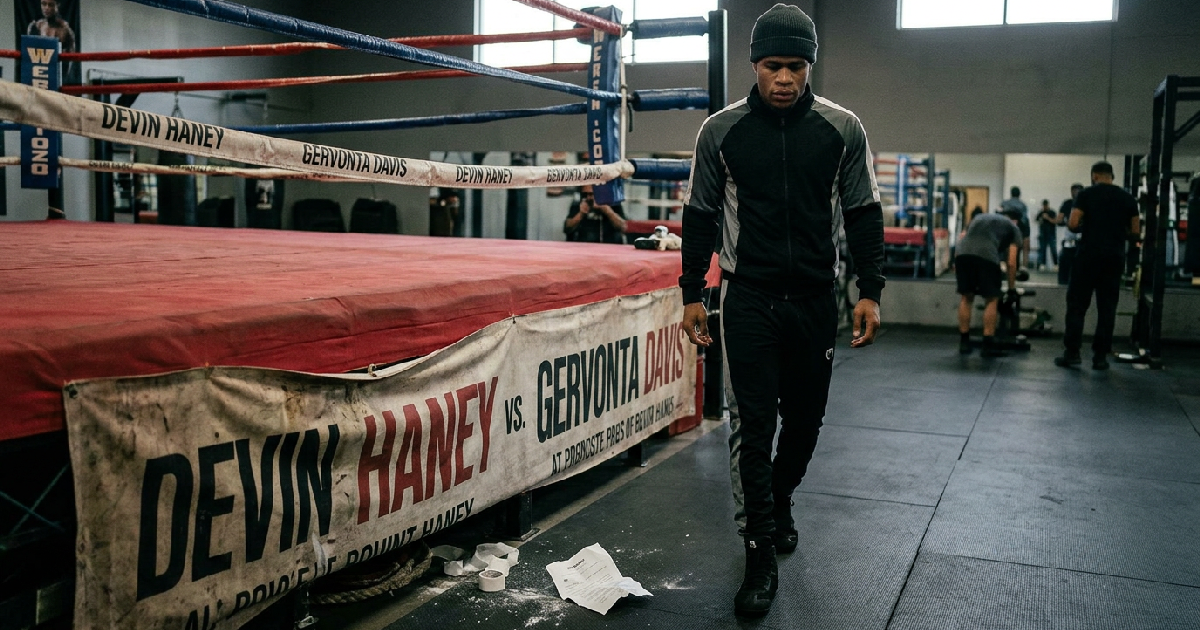
Devin Haney has declared he’s walking away from a potential mega-fight against Gervonta Davis, citing a reported 70-30 financial split offer from Davis’s camp that he deemed unacceptable. The dramatic announcement unfolded on X (formerly Twitter) on Friday, July 3, 2026, putting an abrupt end to what had appeared to be ongoing, albeit contentious, negotiations between the two prominent lightweight stars.
The alleged lopsided proposal has effectively derailed one of boxing’s most anticipated matchups. Haney’s claims, though since deleted from his social media, have ignited a fresh wave of debate among fans and pundits about the increasingly complex landscape of high-stakes fight negotiations.
Social media feud sparks end to Devin Haney Gervonta Davis fight talks
The public unraveling of the negotiations began with an exchange on X between Devin Haney and Gmoney, an associate of Gervonta Davis. Haney directly alleged that Davis’s side had presented a heavily skewed financial offer.
“Gervonta just had AL call with a 70/30 offer..,” Haney posted, referencing Al Haymon, a key figure in boxing management. This claim quickly became the focal point of the heated online back-and-forth, illustrating how modern fight talks often spill into public view.
Before Haney’s specific revelation, Gmoney had indicated that discussions were active, urging Haney to respond swiftly. “I just got off the phone with Al. Holla back fast or I’m going elsewhere nigga. Time is ticking bitch,” Gmoney wrote, implying urgency from their side.
Key details
However, Haney’s subsequent post about the alleged split quickly shifted the tone. Gmoney then questioned Haney’s apparent delay in responding to Haymon, writing, “Why tf you need 24 hours to hit Al back when you on this mf just chatting.”
Following Haney’s declaration that he was moving on, Gmoney dismissed his decision, suggesting fear was the underlying motive. “He’s scared. No need to keep going back & forth w that clown,” Gmoney posted, further escalating the public spat.
Amidst the personal jabs, which included Gmoney challenging Haney’s financial standing and Haney insisting on his superior earnings, Haney ultimately deleted the posts, including those detailing the alleged 70-30 offer. As of now, neither Gervonta Davis’s team nor Al Haymon has publicly confirmed or denied the terms Haney described, leaving the veracity of the offer in question but the outcome clear.
The contentious 70-30 financial split
A 70-30 split in favor of one fighter for a superfight is typically a major sticking point, often signaling a significant power imbalance in negotiations. For a bout between two top-tier athletes like Devin Haney and Gervonta Davis, such a disparity is rarely accepted without considerable pushback.
Fight purses are usually negotiated based on a fighter’s drawing power, championship status, and perceived market value. While one fighter might command a larger share, a 70-30 split suggests a hierarchical arrangement that a fighter of Haney’s caliber would likely resist, especially given his own championship credentials.
This type of disagreement over revenue distribution is far from uncommon in boxing. Major boxing matches are frequently delayed by contract talks, sometimes for years. Promoters and fighters often employ various strategies to maximize their earnings, leading to prolonged standoffs that frustrate fans.
The lack of official confirmation from Davis’s camp or Al Haymon complicates the narrative. Without a public statement from the other side, Haney’s claim stands as the primary, albeit unverified, reason for the breakdown. This silence leaves room for speculation, but the impact on the fight’s prospects remains the same.
What this means for the lightweight division
The collapse of a potential Devin Haney vs. Gervonta Davis showdown leaves a significant void in the lightweight division. Both fighters are widely regarded as among the best in the world, and their clash would have provided much-needed clarity at the top.
For Devin Haney, moving on means exploring other significant matchups. He’s previously been linked with other elite fighters, and the division is replete with talent. Names like Vasiliy Lomachenko, Shakur Stevenson, or even a rematch with Ryan Garcia could be on his radar, presenting compelling alternatives for his next outing.
In fact, Oscar De La Hoya has recently expressed interest in a Devin Haney rematch for Ryan Garcia, suggesting a path forward if the Davis fight is truly off the table. This kind of immediate pivot is typical when blockbuster fights fail to materialize, as fighters and their teams look to maintain momentum and secure lucrative engagements.
Gervonta Davis, often dubbed “Tank,” also has a robust list of potential opponents. His popularity and knockout power ensure he’ll always be a hot commodity. Other fighters, like Richardson Hitchins, have even publicly stated that Davis has been reaching out directly. Richardson Hitchins says Gervonta Davis has been DMing him, reportedly requesting a contract, indicating Davis’s team is actively seeking new challenges.
This situation underscores the fluid nature of elite boxing, where top contenders often have multiple options but few highly anticipated bouts actually come to fruition without extensive, often public, wrangling. Fans are left waiting, hoping that these marquee matchups eventually get made, even if it takes time.
The impact of public negotiation on boxing deals
The highly public nature of these negotiations, playing out on social media platforms like X, highlights a growing trend in modern boxing. While traditional fight negotiations were largely conducted behind closed doors, fighters and their entourages increasingly use social media to leverage positions, exert pressure, or even prematurely announce developments.
This shift brings both opportunities and risks. On one hand, it generates immense fan interest and keeps potential bouts in the public consciousness. It allows fighters to directly communicate with their audience, building hype and expressing their frustration or confidence.
On the other hand, it can complicate delicate business discussions, turning them into public spectacles. Sensitive financial details, like the alleged 70-30 split, can become distorted or weaponized, making it harder for parties to find common ground away from the glare of public opinion.
Such exchanges also open the door for associates, like Gmoney, to become involved, sometimes adding fuel to the fire rather than facilitating constructive dialogue. The emotional intensity of social media often overrides the strategic patience required for complex deal-making, potentially leading to breakdowns like the one seen between Haney and Davis.
Historical context of challenging superfight negotiations
The struggles to finalize a Devin Haney vs. Gervonta Davis fight are hardly unique in boxing history. Many of the sport’s most anticipated matchups have been plagued by arduous negotiations, often stretching for years over disagreements on purse splits, promotional rights, and even glove manufacturers.
Classic examples include the protracted talks for Floyd Mayweather Jr. vs. Manny Pacquiao, a fight that took over five years to materialize. Similar challenges have surrounded numerous other potential blockbusters, with fans growing accustomed to the frustrating dance of competitive financial demands and ego.
It speaks to the inherent difficulty of aligning multiple powerful entities – fighters, managers, promoters, and broadcasters – all with their own interests. Each party aims to secure the most favorable terms, which often means an aggressive stance in negotiations, sometimes to the detriment of the fight itself.
This dynamic ensures that even when there’s a clear public appetite for a superfight, the path from desire to reality is often winding and fraught with obstacles. The Haney-Davis situation serves as another reminder of how easily these dream matchups can fall apart, leaving fans to wonder what might have been.
Looking ahead for Haney and Davis
With Devin Haney seemingly moving on, the boxing world will be watching closely to see what his next step will be. He remains a top contender, and his desire for significant fights is undiminished. His decision to walk away from a deal he found unfavorable also speaks to his confidence in his own value.
For Gervonta Davis, the situation also presents a need for a clear direction. While his star power is undeniable, securing an opponent that satisfies both his ambition and fan expectations will be critical. The public nature of the Haney fallout will undoubtedly factor into future negotiations with other potential challengers.
Ultimately, the hope remains that these two elite fighters might one day meet in the ring, but for now, that prospect appears to have dimmed considerably. The alleged 70-30 split has become a symbol of the hurdles that continue to plague the creation of boxing’s most exciting matchups, leaving fans to content themselves with other intriguing possibilities within the divisions.
As the lightweight division continues to evolve, both Haney and Davis will need to secure compelling fights to solidify their legacies. Their individual paths forward will now be under intense scrutiny, with every potential opponent and negotiation likely to be compared against the failed blockbuster bout that could have been.
This isn’t just about money; it’s about perceived respect and parity between two champions. When one side feels significantly undervalued, a fight, no matter how anticipated, becomes almost impossible to make. The focus will now shift to who they fight next, and whether those matchups can deliver the same excitement that a Haney-Davis clash promised.
The boxing world is a constantly shifting landscape of alliances and rivalries. While this specific bout may be off the table for the immediate future, the competitive drive of both Devin Haney and Gervonta Davis means they’ll undoubtedly seek out other challenges to prove their dominance. The appetite for a superfight remains strong, and time will tell if these two paths will ever converge again.
Their respective teams will now be working behind the scenes to lock in the next big opportunity. Whether that involves a unification bout, a move to another weight class, or simply a high-profile defense, both fighters have options.
The only certainty is that the discussion around their potential clash won’t disappear entirely, even if the current negotiations have. Fans will continue to clamor for the fight, hoping that future circumstances might lead to a more equitable and agreeable arrangement.
This incident serves as a stark reminder that in professional boxing, the drama outside the ring can often be as compelling, and as frustrating, as the action within it.
The balance of power in negotiations for major fights is a delicate one, and when that balance is perceived to be skewed, even the most desired matchups can unravel with surprising speed.
Key details
The boxing community will now turn its attention to their individual trajectories, eager to see how both Haney and Davis navigate this new phase in their careers without a direct path to each other.
The episode highlights the critical role of negotiation in elite sports, where financial terms often dictate whether a contest can move from a hypothetical dream match to a signed contract.
The public nature of this breakdown also puts pressure on both camps to deliver equally compelling matchups in the interim, ensuring that fan interest doesn’t wane. It’s a high-stakes game where every public utterance and every private offer can either build or destroy the foundations of a potential boxing classic.
As of early July 2026, the immediate future for a Devin Haney versus Gervonta Davis clash looks uncertain. Their respective fan bases, however, will undoubtedly keep the pressure on for a resolution to what many see as an essential fight for the sport. The hope is always that cooler heads will eventually prevail, leading to a blockbuster event that lives up to its immense potential.
This current breakdown means boxing enthusiasts will need to adjust their expectations for the immediate future. Both fighters are still young and at the peak of their powers, suggesting that a future encounter isn’t entirely impossible.
However, it will require a significant shift in negotiation tactics and a more balanced approach to revenue sharing if this eagerly awaited bout is ever to become a reality. For now, the dream match remains just that – a dream.
The repercussions of this public fallout could also affect other major fights in the lightweight and super lightweight divisions. With two of its biggest names now pursuing separate paths, the landscape opens up for other contenders to step into the spotlight. It’s a ripple effect that demonstrates just how interconnected the top tiers of professional boxing truly are, even when individual negotiations stall.
Each fighter will now be strategizing their next move, aiming to enhance their bargaining position should future talks ever resurface. The boxing world thrives on rivalries, and the Haney-Davis saga is far from over in the minds of fans, even if their teams are currently moving in different directions.
The waiting game for a true mega-fight often involves these frustrating pauses, but hope for its eventual realization persists.
The boxing calendar is always full, and new challenges will emerge for both Devin Haney and Gervonta Davis. While the superfight many craved has hit a significant roadblock, the sport itself will continue to provide compelling matchups.
The true test for both fighters will be how they maintain their momentum and star power, even without facing each other in the immediate future, proving their worth to fans and potential future opponents alike.