Former WBC cruiserweight champion Tony Bellew has made a surprising declaration, naming David Haye as the most powerful puncher he ever faced in his decorated career. This candid assessment comes despite Bellew having shared the ring with other renowned knockout artists, including unified cruiserweight and two-time undisputed heavyweight champion Oleksandr Usyk and hard-hitting light heavyweight Adonis Stevenson.
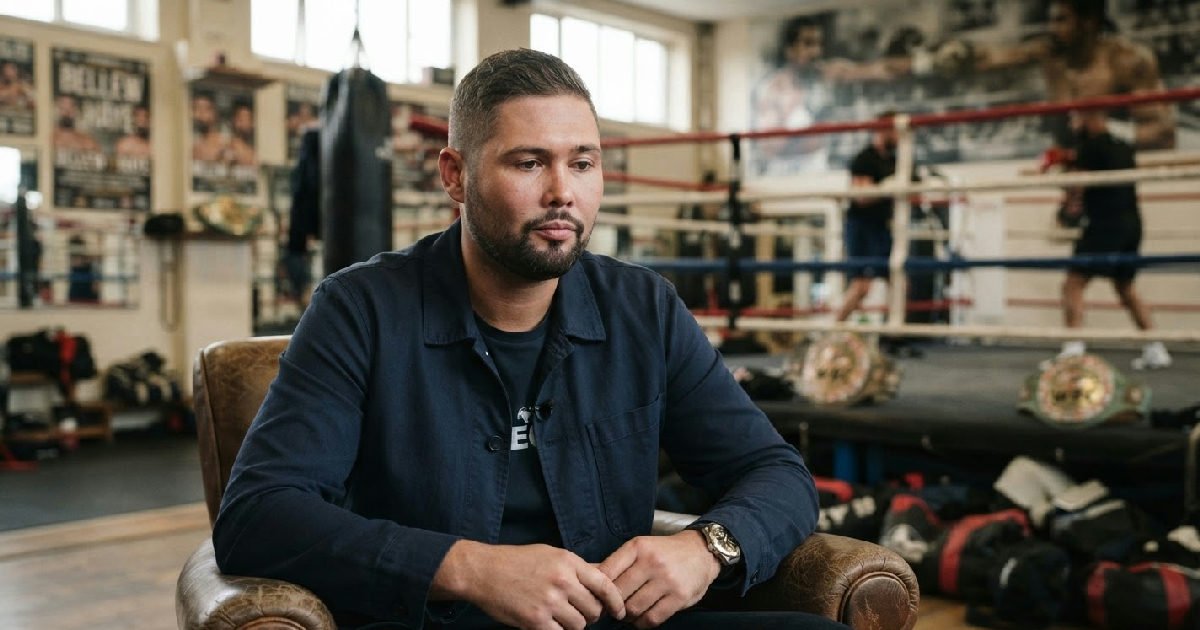
Bellew, who retired from professional boxing in November 2018, offered his insights during a recent interview with DAZN. His definitive choice challenges widespread assumptions, particularly given his high-profile encounters with opponents perceived as modern-day titans of the sport.
Tony Bellew hardest puncher assessment
Many in boxing circles might have expected Bellew to name Oleksandr Usyk, who delivered an eighth-round knockout in their 2018 bout, or perhaps Adonis Stevenson, who also dropped him during their clash. Yet, Bellew unequivocally dismissed these notions. He insisted that Haye possessed a raw, concussive power that stood above the rest.
“Haye was the one who had the most power. I’m certain on that,” Bellew told DAZN, leaving little room for doubt. He acknowledged Stevenson “could certainly punch.” However, Bellew attributed his own diminished resistance in that fight to significant weight struggles, suggesting it wasn’t a true test of Stevenson’s full impact.
This uncommon perspective from the Liverpudlian bomber underscores the subjective nature of judging power in boxing. It highlights that the most impactful punch isn’t always the one that results in a knockout loss, but rather the one that leaves a lasting, visceral impression.
Recalling the sparring scare with Haye
Bellew’s conviction about Haye’s unparalleled power stems from a vivid memory, particularly a crucial sparring session from their younger days. He recounted a moment where Haye hit him so forcefully that his back leg “kicked out like a donkey.”
He added, “I didn’t go down, but it just kicked out. I’ve still not been hit by someone like him.” This anecdotal evidence serves as a powerful testament to the sheer force Haye could generate. This was long before their professional rivalry took centre stage.
Bellew emphasized, “I knew Haye’s power was going to be a problem from when I sparred him, and he really could bang. There’ll be many fighters who fought Haye who’ll tell you all about how much power he had.” It’s a feeling that resonates deeply with those who’ve experienced it firsthand.
David Haye’s fearsome punching legacy
David Haye, known as “The Hayemaker,” built a formidable reputation on his explosive power throughout his career. He was a unified cruiserweight champion, holding the WBA, WBC, and The Ring magazine titles. He later moved up to capture the WBA heavyweight title in 2009 by defeating the towering Nikolai Valuev.
Haye’s career, which spanned from 2002 to 2018, was punctuated by numerous knockout victories. His ability to deliver devastating blows made him one of the most exciting fighters of his era. He was capable of ending fights with a single, well-placed punch.
The fact that Bellew, who defeated Haye twice, still considers him the hardest puncher he encountered speaks volumes. It indicates that even when tactical superiority leads to victory, the raw physical attributes of an opponent can leave an indelible mark on a fighter’s memory.
The enduring Haye-Bellew rivalry
The rivalry between Tony Bellew and David Haye captured the imagination of British boxing fans. It evolved from heated exchanges to two highly anticipated pay-per-view spectacles. Bellew ultimately emerged victorious in both encounters, solidifying his place in boxing history.
Their first heavyweight clash took place in March 2017, with Bellew winning by knockout. The rematch followed in May 2018, where Bellew once again stopped Haye. This brought a decisive end to their personal feud.
While Bellew won both bouts, Haye’s later career was famously plagued by injuries, often limiting his effectiveness in the ring. However, Bellew’s recent comments clarify that these physical setbacks didn’t diminish his opponent’s inherent power. This reinforces the respect he held for Haye’s hitting ability.
This dynamic adds an interesting layer to their rivalry. Despite besting him twice, Bellew clearly retains a profound respect for Haye’s striking capability. It illustrates that winning a fight doesn’t always equate to neutralizing an opponent’s most potent weapon, especially when it comes to sheer force.
Bellew’s distinguished boxing journey
Tony Bellew’s boxing journey, spanning from 2007 to 2018, left an indelible mark on the sport. His career culminated in a professional record of 30 wins, 3 losses, and 1 draw, with 20 victories coming by knockout. It was a testament to perseverance and strategic risk-taking.
A career highlight arrived in May 2016 when he dramatically claimed the vacant WBC cruiserweight championship. He secured this title with a knockout victory over Ilunga Makabu at Goodison Park, the home of his beloved Everton FC. Bellew recovered bravely after being knocked down himself in the opening round.
Before his retirement, Bellew successfully defended his newly won title against BJ Flores. His final professional outing was a courageous move down to cruiserweight for an undisputed contest against Oleksandr Usyk, then the undisputed king of the division. Although he lost, Bellew’s willingness to test himself against toughest ring challenges against an elite opponent cemented his legacy.
Broader debates on boxing’s hardest hitters
Bellew’s declaration inevitably fuels wider discussions about the sport’s most powerful punchers, both current and historical. He has previously weighed in on this debate. He cited boxing legends of the sport like George Foreman as “the greatest puncher boxing has ever seen and known.”
He has also been critical of claims surrounding other contemporary heavy hitters, such as Deontay Wilder. Bellew openly questioned the quality of Wilder’s opponents, suggesting that true punching power must be assessed against top-tier competition to be accurately judged.
This nuanced perspective adds significant weight to his specific naming of Haye. It shows Bellew isn’t just picking the man who beat him, or the biggest name. Rather, it’s someone whose impact left an undeniable physical and psychological impression, regardless of the fight’s ultimate outcome.
Assessing a fighter’s toughest blows
The quest to identify a boxer’s “hardest puncher” opponent often goes beyond pure power metrics or official knockouts. It delves into the qualitative experience of absorbing a shot. This includes the feeling of impact and the lingering effects a punch can have.
For Bellew, that visceral, unforgettable sensation came unequivocally from David Haye. This proves that sometimes, the most dangerous weapon isn’t always wielded by the champion who stops you. It can be the punch that fundamentally rattles you, leaving a lasting memory of raw, unadulterated force.
Bellew’s comments offer a rare glimpse into the mind of a fighter. They distinguish between a strategic loss and the raw, physical shock of immense power. It’s a valuable contribution to the ongoing narrative of who truly hits the hardest in the brutal ballet of boxing.