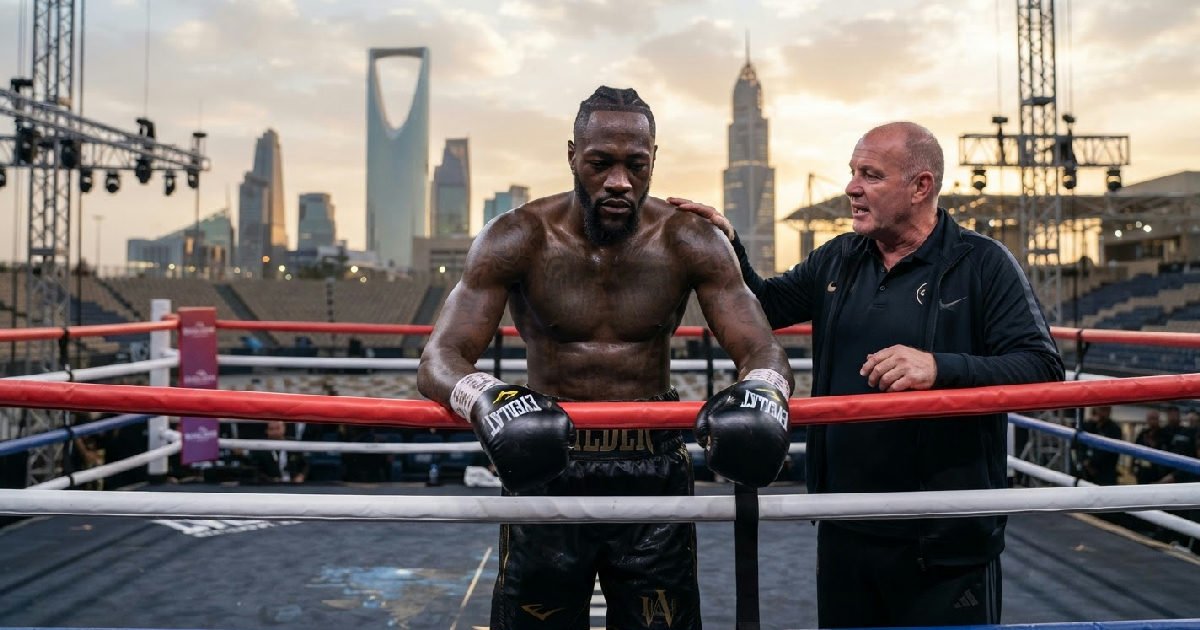
A high-stakes heavyweight clash between former WBC champion Deontay Wilder and reigning IBF cruiserweight king Jai Opetaia was agreed to on May 29, 2024, only to fall apart before the first bell. This set in motion a chain of events that culminated in a disastrous outcome for Wilder.
The bout was a key part of the ambitious “5 vs 5” card planned for June 1, 2024, at the Kingdom Arena in Riyadh, Saudi Arabia, but it was ultimately scrapped following a main event injury.
The anatomy of a collapsed Deontay Wilder fight deal
Instead of facing the smaller but undefeated Opetaia, Wilder was rerouted into a bout against fellow heavyweight Zhilei Zhang on the same night. That fight ended in a crushing fifth-round knockout loss for the American, a result that has left his career as an elite contender in serious jeopardy.
The fight that never was with Opetaia now stands as a pivotal “what if” moment in modern heavyweight boxing.
The agreement between Deontay Wilder and Jai Opetaia was a fascinating piece of matchmaking. It pitted one of the most formidable punchers in heavyweight history against a skilled and undefeated cruiserweight champion. It was slated to be a featured bout on the undercard of the light-heavyweight unification showdown between Artur Beterbiev and Dmitry Bivol, an event promoted jointly by Matchroom Boxing and Queensberry Promotions.
This “5 vs 5” concept, backed by Saudi Arabia’s massive investment in boxing, aimed to pit five top fighters from each promotional stable against each other. The Wilder-Opetaia fight was a cornerstone of that plan.
It was designed to provide a compelling cross-promotional narrative and a high-risk, high-reward contest for a global audience on DAZN and TNT Sports Box Office. For Wilder, it was a chance to bounce back from a disappointing loss to Joseph Parker.
For Opetaia, it was a golden opportunity to leapfrog his division and score a career-defining win.
A wrench in the Riyadh plans
The carefully constructed card came undone when main event fighter Artur Beterbiev suffered a knee injury in training. This forced the postponement of his title fight with Bivol and had an immediate ripple effect across the entire event. While the promoters were determined to salvage the June 1 date, the main event’s collapse required a significant reshuffle of the card and its matchups.
In the ensuing scramble, the Wilder vs. Opetaia bout was shelved. The exact reasons for its cancellation amid the chaos remain complex, but the focus shifted to creating a new main event. Ultimately, the promoters landed on Wilder facing Zhilei Zhang, who was also part of the “5 vs 5” tournament, as the new headliner.
This decision would prove to have profound consequences for the American former champion.
A divergent crossroads for two careers
The cancellation of the bout sent both fighters down starkly different paths. For Jai Opetaia, it may have been a blessing in disguise. While he missed out on a massive payday and a high-profile stage, he also avoided the immense risk of facing a proven one-punch knockout artist from a higher weight class.
He retained his undefeated record and his IBF cruiserweight title, which he had just reclaimed from Mairis Briedis.
For Jai Opetaia, a desired fight against David Benavidez could be a path to another major payday. This is a fight that would have been jeopardized by a loss to Wilder. The aborted heavyweight gamble left his primary career ambitions intact and his record unblemished.
Wilder’s fateful alternative
Deontay Wilder, however, was not so fortunate. His replacement fight against Zhilei Zhang on June 1, 2024, ended in catastrophe. Wilder, who had already looked tentative in his December 2023 loss to Joseph Parker, was systematically broken down by Zhang before being knocked out cold in the fifth round. It was a conclusive and non-controversial defeat that signaled a sharp decline.
The defeat has triggered widespread calls for his retirement and effectively removed him from the elite heavyweight title picture. This is a stark contrast to where a win over Opetaia might have placed him. His recent form raises questions about his continued participation at the highest level of heavyweight title fights.
The high-risk world of cross-weight fights
The proposed Wilder-Opetaia bout was a classic example of the strategic gambles that define boxing. For the smaller fighter, Opetaia, it represented a chance to defy the odds and etch his name in history. A victory over a name like Wilder would have brought life-changing money and fame, making him an instant star in the sport’s glamour division.
For the larger fighter, Wilder, it was a calculated risk. A win would have added a respected, undefeated champion to his resume and served as the perfect comeback narrative. But a loss would have been catastrophic, far more damaging than losing to a fellow heavyweight.
The risk-reward calculation is a delicate one in these matchups, a factor seen in many of the blockbuster bouts held in Riyadh.
What could have been
Had the fight gone ahead, analysts were divided. Could Opetaia’s superior boxing skill, speed, and southpaw stance neutralize Wilder’s power? Or would the “Bronze Bomber’s” size and earth-shattering right hand eventually find a home, proving that weight classes exist for a reason? The matchup was a fascinating clash of styles that promised drama for as long as it lasted.
Instead, the question will forever remain unanswered. The fight now joins a long list of intriguing boxing what-ifs. The collapse of the deal did more than just cancel a fight; it directly led to a career-altering defeat for Wilder and allowed Opetaia to continue his reign at cruiserweight unscathed, preserving his own ambitions.
The future of the heavyweight landscape
Deontay Wilder’s subsequent loss has shaken up the heavyweight division, creating a power vacuum just below the very top tier. With Wilder seemingly out of the picture, it opens the door for other contenders to step up and claim a spot in lucrative, high-profile fights. The division is in a state of flux, with promoters constantly looking to build the next generation of stars.
Fighters who were once on the outside looking in now have a clearer path toward title contention. The landscape is constantly shifting, with predictions about future champions being a constant source of debate. The dynamic nature of the sport often brings new matchups into focus rapidly. Wilder’s decline accelerates this transition, making way for new blood.
The entire episode serves as a stark reminder of how quickly fortunes can change in boxing. A single injury in an unrelated fight reshaped the careers of two different fighters. For Jai Opetaia, it was a near-miss with a high-power gamble.
For Deontay Wilder, it was the first step toward a devastating defeat that may have brought his time at the top to a definitive end.