
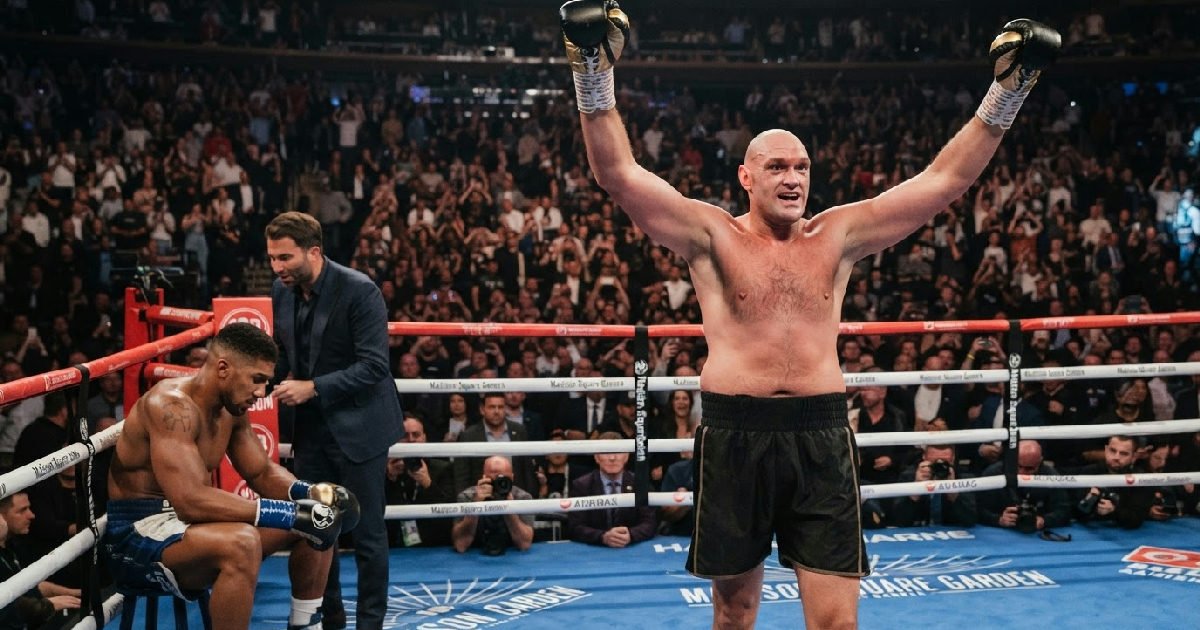
Tyson Fury has definitively announced that his long-anticipated showdown with Anthony Joshua is off, effectively shelving one of boxing’s most desired heavyweight matchups. Speaking on September 3, 2026, the “Gypsy King” expressed his frustration with prolonged negotiations and Joshua’s perceived reluctance to fight.
This declaration means Fury will now turn his attention to alternative challengers for a potential November bout, ending months of speculation surrounding the British super-fight.
Tyson Fury Anthony Joshua fight collapse
Fury’s candid remarks singled out Joshua’s promoter, Eddie Hearn, for allegedly “trying to twist the narrative” and accused Joshua himself of lacking the will to step into the ring. This dramatic pivot comes despite earlier reports of contracts being signed for a November 20 date, highlighting the deeply fractured state of negotiations that ultimately led to the fight’s collapse.
The highly anticipated clash between Tyson Fury and Anthony Joshua has repeatedly been marred by disagreements, primarily centering on the fight’s location. Both heavyweights had inked contracts earlier this year, setting the stage for a blockbuster event, but the finer details proved insurmountable.
Joshua’s camp, led by Eddie Hearn, consistently advocated for a United Kingdom venue. They cited concerns over the significant US tax implications on Joshua’s net earnings. They pushed for a UK staging, potentially at Wembley Stadium, as stipulated in Joshua’s original contract.
But Fury’s team, and influential promoters like Saudi Arabia’s Sela, alongside Netflix, were keen on taking the fight to New York’s Madison Square Garden.
The proposed November 20 date loomed large, putting immense pressure on both sides to find common ground. However, the ongoing deadlock over financial terms and the preferred location ultimately proved too large a hurdle. There’s a long history of venue disputes in high-stakes boxing, with negotiations often stalling over host cities and their associated economic benefits.
Fury’s Sharp Rebuke and Accusations
Tyson Fury didn’t mince words when explaining his decision to move on from the Anthony Joshua fight. He took to social media, delivering a scathing assessment of the situation and directly challenging Joshua’s commitment.
Fury stated emphatically, “One thing for sure is I won’t wait for a sausage who has been knocked spark out by Daniel Dubois for long.” This pointed barb referenced Joshua’s knockout loss to Daniel Dubois in September 2024. In that fight, Dubois dropped Joshua four times before the stoppage in the fifth round.
Fury’s frustrations stem from what he perceives as a decade-long wait for the fight.
The “Gypsy King,” who recently celebrated his 38th birthday, made it clear he won’t “be wasting my later years at 38 year old with a freak who doesn’t want to fight.”
He went on to accuse Eddie Hearn of “trying to twist the narrative” and squarely laid the blame on Hearn’s “ego” for the fight’s collapse. “I can’t make a coward fight, can I?” Fury remarked, suggesting Joshua lacked the agency to push the fight through.
New Heavyweight Prospects for The Gypsy King
With the Anthony Joshua fight seemingly off the table, Tyson Fury has swiftly shifted his focus to other prominent heavyweights. He explicitly named three current champions he’d be willing to face, indicating a clear contingency plan for a November ring return.
Among those mentioned are Agit Kabayel, the newly elevated World Boxing Council (WBC) heavyweight champion. Kabayel ascended to the full championship status after Oleksandr Usyk vacated his titles earlier in 2026. He boasts an undefeated record of 27 wins, with 19 knockouts, making him a compelling opponent for Fury.
Another name on Fury’s list is Filip Hrgovic, who recently claimed the International Boxing Federation (IBF) crown. Hrgovic defeated Moses Itauma via technical knockout in August 2026 to win the vacant title. However, Hrgovic is reportedly set for a mandatory defense against Frank Sanchez next, which could complicate a November clash with Fury. Fury is looking for new challengers in the heavyweight division.
Finally, Daniel Dubois, the World Boxing Organization (WBO) heavyweight champion, also received a mention. Dubois secured his title by overcoming Fabio Wardley in May 2026, with a rematch between the two scheduled for October. This prior engagement might make a November fight with Fury challenging for Dubois.
Given these circumstances, Kabayel emerges as the most likely candidate if Fury genuinely intends to fight another champion in November.
The Promoter’s Perspective: Hearn and Warren
The breakdown of the Fury-Joshua negotiations highlights the often-complex dynamics between fighters and their promoters. While Fury points fingers at Eddie Hearn, Hearn has offered his own side of the story, emphasizing the financial implications for Anthony Joshua.
Hearn admitted that Joshua’s camp was reluctant to fight in the United States. This was due to the substantial tax burden it would impose on his net purse. He indicated that while a US venue like Madison Square Garden was possible, it would require significant financial compensation from Saudi Arabia’s Sela to offset these losses.
“We will need to make a decision this week,” Hearn reportedly stated, suggesting the ball was in the other court.
Frank Warren, Tyson Fury’s promoter, has consistently maintained that Fury had signed his part of the contract, awaiting Joshua’s signature. Warren’s stance reinforces Fury’s narrative that Joshua’s side was the hold-up. This creates a familiar “blame game” often seen in high-stakes boxing negotiations. This ongoing tension between rival promoters often overshadows the athletes themselves.
Implications for the Heavyweight Landscape
The apparent demise of the Tyson Fury versus Anthony Joshua bout sends ripples throughout the heavyweight division. It leaves boxing fans without one of the most anticipated fights in recent memory. This also forces a recalibration of future matchups for both men. Fury, at 38, is eager to maximize his remaining years in the sport, as evidenced by his swift turn to other potential opponents.
His return to boxing in January 2026, after a brief retirement following two losses to Oleksandr Usyk in 2024, signaled his renewed ambition. With a professional record of 36 wins, 2 losses, and 1 draw, Fury remains a formidable force. His pursuit of other world champions ensures he stays in the title picture.
For Joshua, this means charting a new course forward, potentially against other contenders in the top ranks. He still holds a strong record, though some pundits have weighed in on his chances against top-tier opponents.
The fragmentation of heavyweight titles across various sanctioning bodies further complicates matters. With Agit Kabayel holding the WBC, Filip Hrgovic the IBF, and Daniel Dubois the WBO, unifying the division remains a significant challenge.
Fury’s willingness to fight any of these champions could inject new energy into the title landscape. However, it also means further delaying the singular, undisputed champion many fans crave.
What Lies Ahead for Fury and Joshua
As the November 20 target date for the proposed super-fight rapidly approaches, both Tyson Fury and Anthony Joshua face critical decisions. Fury’s public declaration means he is actively pursuing alternatives. A formal announcement regarding his next opponent could come swiftly.
For Anthony Joshua, the path forward is less clear. His camp will need to address the accusations of reluctance and decide whether to pursue a different high-profile opponent or regroup with a less demanding challenge.
The persistent failure to secure this fight inevitably raises questions about the future of both fighters and the appetite of boxing fans for a matchup that continually falls apart.
The coming weeks will undoubtedly provide more clarity on Fury’s immediate fighting plans, as well as Joshua’s response to the collapsed negotiations. The boxing world will be watching closely to see how the heavyweight landscape shifts in the wake of this latest development.