
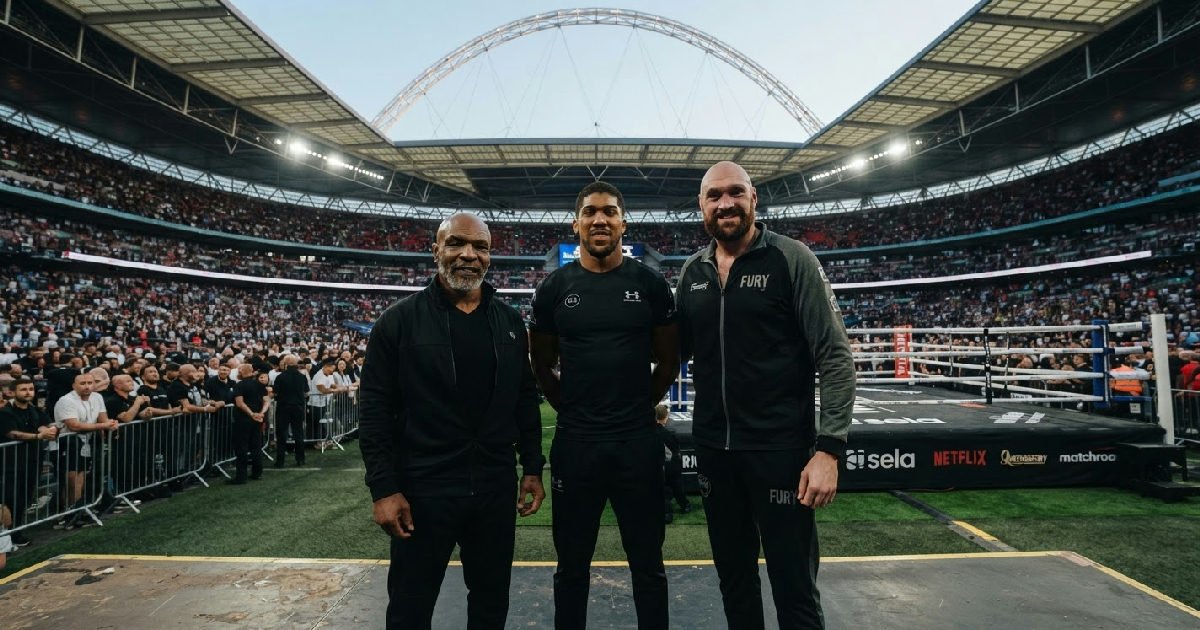
Legendary heavyweight Mike Tyson has firmly endorsed London as the unequivocal choice for the highly anticipated clash between Tyson Fury and Anthony Joshua. Speaking to The Daily Mail on August 25 and 26, 2026, the former undisputed champion argued that the fight, targeted for Friday, November 20, belongs in the United Kingdom, where passionate English fans would guarantee a sold-out arena.
Tyson’s intervention comes amidst a protracted dispute over the fight’s venue, with streaming giant Netflix and event partner Sela reportedly pushing for a United States location. This stance directly contradicts the preferences of Joshua and his promoter, Eddie Hearn, who have consistently advocated for the bout to take place on home soil.
Tyson backs London as the Tyson Fury Anthony Joshua location
Mike Tyson’s unwavering belief in London as the ideal setting for the Fury-Joshua fight stems from a deep understanding of boxing’s economic and emotional landscape. He insists that for an all-British super-fight of this magnitude, the loyalty and fervour of the UK fan base are paramount.
Despite his personal inability to attend any UK event due to a long-standing travel ban, Tyson stated, “They’re both English and if they come here, all the English people are going to come anyway. So, you’re home already, let’s do it there!” He views the choice as a logical nod to the fighters’ roots and their supporters.
Drawing parallels to his Frank Bruno encounters
To underscore his point, Tyson drew a compelling comparison to his own illustrious career, specifically his two heavyweight title fights against British challenger Frank Bruno in the 1990s. Even though both of those blockbuster bouts were staged in Las Vegas, Tyson distinctly recalled the overwhelming presence of UK supporters in the crowd.
“There ain’t going to be many Americans there because they’ll sell it out. All the English – very few Americans – sold it out when I fought Frank Bruno,” Tyson recounted. This historical precedent serves as a powerful argument for bringing the venue talks stalled back to the UK.
His experience highlights that the nationality of the competitors often dictates the demographic of the paying audience, overriding geographical considerations for hardcore fans. It’s a clear signal that the financial benefits of a US location might be overstated if the primary buying power remains British.
The protracted battle over fight venue location
The decision on the Tyson Fury Anthony Joshua location has become one of the most contentious elements in securing this long-awaited heavyweight showdown. Following both fighters’ victories in their respective “warm-up” bouts last month, an immediate announcement was widely expected, but negotiations have since stalled.
Anthony Joshua and his promoter, Eddie Hearn, have been adamant that the fight must happen in the United Kingdom, leveraging the massive draw the two British champions command domestically. Their vision involves a monumental stadium event, likely at Wembley, celebrating British boxing on an unprecedented scale.
Conversely, the commercial partners, particularly streaming giant Netflix and Saudi Arabian firm Sela, are reportedly pushing for the fight to be held in the United States. They maintain that a US staging makes better business sense, possibly due to broadcast windows or different sponsorship opportunities, although Tyson has publicly challenged this notion.
Initial reports had suggested a November 20 meeting in New York City, with Madison Square Garden even mooted as a potential site. However, those plans seem to have faltered. Further, Riyadh in the Middle East had also entered the conversation as a potential host, but ongoing regional instability has complicated that option, leaving the US and UK as the primary contenders.
Mike Tyson’s UK entry ban and its impact
One of the more poignant ironies of Tyson’s advocacy for a London fight is his own inability to witness it live. “Iron Mike” has been barred from entering the United Kingdom for over two decades due to his criminal record, a situation that hasn’t deterred his vocal support for a UK venue.
The ban stems from a 1992 rape conviction, which resulted in a six-year prison sentence. Under UK Home Office immigration rules enacted in 2012, individuals sentenced to more than four years in jail are refused entry. Tyson was previously turned away from a planned book promotion trip in 2013 and hasn’t set foot in the UK since 2000.
His history also includes other convictions for assault, cocaine possession, and driving under the influence. This personal sacrifice – campaigning for an event he cannot attend – lends significant weight to his argument, underscoring his genuine belief in the UK’s capacity to host such a spectacle.
It highlights a principled stance from a man who understands the cultural significance of boxing events, even if it means putting the sport’s best interests before his own attendance. The fact he still lends his voice, knowing he cannot partake, speaks volumes about his conviction.
Dismissing claims of decline for Fury and Joshua
Beyond the venue debate, Mike Tyson also weighed in on the fighting prowess of both Tyson Fury and Anthony Joshua. He vehemently dismissed suggestions that either heavyweight has significantly declined in recent years, despite some recent performances that have drawn criticism at Joshua.
Tyson, speaking from his vast experience at the highest level of the sport, believes that the sheer magnitude and personal rivalry of this particular contest will re-ignite their absolute best. “It’s going to be a great fight, it’s going to be great for boxing. And I think they both still have enough in them once they get the desire,” he affirmed.
He referenced Joshua’s recent bout where he was reportedly dropped but quickly recovered to secure the win, calling the performance “very exciting.” This nuanced perspective suggests that critics often underestimate the mental and emotional drivers that can elevate an athlete’s performance when the stakes are at their highest.
This insight from a boxing legend like Tyson offers a critical counterpoint to pundits who might judge fighters solely on their last outing. He understands that a fighter’s “desire,” especially for a legacy-defining bout like this, can be a powerful equalizer against any perceived physical dip, bringing out their true potential.
What’s next for the heavyweight blockbuster
With the targeted date of Friday, November 20, looming, pressure continues to mount for a definitive announcement regarding the Tyson Fury Anthony Joshua location. The prolonged negotiations have left fans eager for clarity on where and when this historic heavyweight showdown will finally unfold.
Tyson Fury himself had previously expressed doubts about the fight happening, directing criticism towards Joshua and his promoter, Eddie Hearn. However, Tyson’s recent comments inject fresh momentum into the discussion, albeit with a clear preference for a UK venue.
The decision will ultimately hinge on a complex interplay of commercial considerations, logistical challenges, and the strategic preferences of both fighters and their promotional teams. While money talks loudly in boxing, Tyson’s appeal to the spirit of the sport and the passion of the fans offers a compelling counter-argument.
Regardless of the eventual destination, the mere prospect of Fury and Joshua finally meeting in the ring remains one of boxing’s most anticipated events. Its staging in London, as Tyson suggests, would undoubtedly deliver an electrifying atmosphere, celebrating two of Britain’s greatest heavyweights on their home turf, reminiscent of the prime David Haye days.