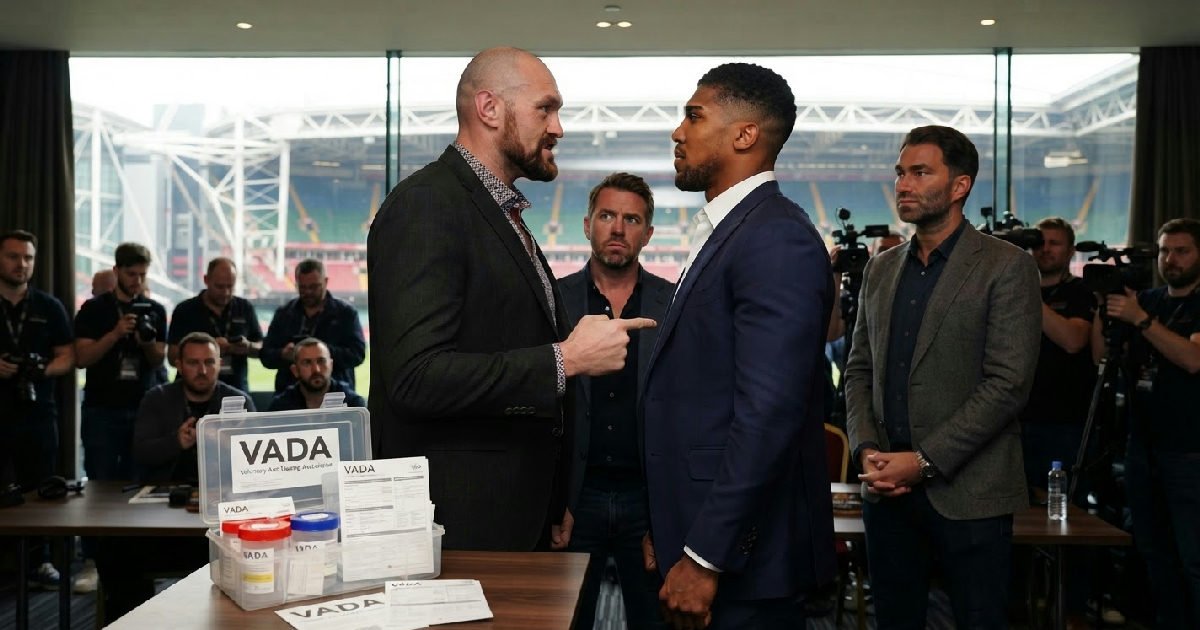
Tyson Fury’s manager, Spencer Brown, has confirmed that the heavyweight champion is now enrolled in Voluntary Anti-Doping Association (VADA) testing. This announcement, made on September 28, 2026, directly addresses the growing concerns raised by Anthony Joshua’s promoter, Eddie Hearn, regarding the integrity of the highly anticipated December 11 clash at Cardiff’s Principality Stadium.
The confirmation aims to remove a significant hurdle that threatened the crucial press conference and the fight itself. Hearn had publicly questioned Fury’s testing status, citing discrepancies between the contractual obligations of both fighters. This public dispute cast a shadow over what is arguably one of British boxing’s biggest showdowns.
Contractual Discord Over Drug Testing for Anthony Joshua
The controversy first surfaced when Eddie Hearn highlighted a notable difference in the fight contracts. Anthony Joshua’s agreement, signed more than three months prior to September 2026, stipulated that both heavyweights must commence drug testing immediately. Joshua, consequently, enrolled in testing without delay.
However, Tyson Fury’s contract reportedly did not contain the same immediate testing requirement, leading to an asymmetry that Hearn found problematic. He openly stated, “what’s in AJ’s contract is not necessarily in Tyson Fury’s contract.” This disparity created unease within Joshua’s camp and among boxing fans.
Hearn further clarified that while he didn’t believe Fury intentionally avoided testing, his contract simply didn’t obligate him to start at the same time. “I don’t think he had in his contract that it had to start then,” Hearn explained, emphasizing that Joshua’s deal explicitly mandated early enrollment. This distinction became a major point of contention.
The promoter for Anthony Joshua also hinted at other issues behind the scenes that Matchroom had chosen to overlook for the sake of the fight. Hearn admitted they had “let slip and ride” several contractual issues, prioritizing the fight’s realization. This included concerns about Eddie Hearn disputes Dana White Anthony Joshua role, alongside the primary disagreement over venue.
The Role of VADA and Public Scrutiny
The issue escalated when Anthony Joshua took to social media, sharing an email from VADA. The email openly questioned Fury’s enrollment, asking, “Is Mr. Fury going to enroll? Typically, we enroll opponents at the same time. We also need the whereabouts form to enroll either fighter.” This post intensified the public pressure on Fury’s team.
Initially, Fury’s camp responded with a statement indicating that VADA would be contacted once the fight was “officially finalised.” This implied a delay that concerned Joshua and his team, especially given the immediate testing clause in Joshua’s own contract. The back-and-forth highlighted the complexities of anti-doping protocols in high-stakes boxing.
Spencer Brown, Tyson Fury’s manager, later affirmed Fury’s compliance to Playbook Boxing, saying, “We are enrolled in VADA, just to confirm that.” He further countered suggestions that Fury had delayed, stating, “He’s done that earlier. In our contract we had more time but he’s enrolled. We’ve done everything we were asked to do, everything.” This direct confirmation sought to quell the swirling rumors and anxieties.
Fury’s Past Testing History
This isn’t Tyson Fury’s first encounter with anti-doping scrutiny. He served a backdated two-year ban from UK Anti-Doping (UKAD) after tests in 2015 revealed elevated levels of nandrolone. Fury famously attributed this to consuming uncastrated wild boar, a claim that generated significant public debate and skepticism.
Prior to his initial fight against Deontay Wilder in 2018, Fury also faced questions about his enrollment in the WBC’s VADA-administered Clean Boxing Program. While he eventually completed the process, these past instances contribute to heightened scrutiny whenever drug testing concerns arise involving him. Anthony Joshua, by contrast, has never failed a drug test.
Ramifications for the Cardiff Showdown
The dispute over Tyson Fury Anthony Joshua Cardiff clash drug testing had tangible consequences, particularly concerning the fight’s promotional activities. Reports suggested that Anthony Joshua was reluctant to attend a scheduled press conference in London unless Fury officially enrolled in VADA testing. This posed a significant threat to the event’s public launch.
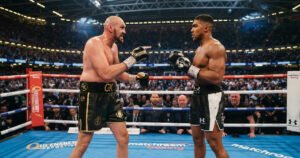
With Spencer Brown’s confirmation, the path is now clearer for the press conference and the fight itself to proceed as planned. The unified world champions are set to meet on December 11 at Principality Stadium in Cardiff, with the WBA strap confirmed to be on the line.
The boxing world eagerly anticipates a full official announcement, which was reportedly imminent even before the testing issue was resolved.
Ensuring both fighters adhere to stringent anti-doping measures is paramount for the sport’s credibility, especially in such a high-profile bout. This recent development reinforces the commitment to fair play, which is critical for securing fan trust and preventing further disruptions to major events. The boxing community expects a clean contest between two of the division’s biggest stars.
Broader Implications for Boxing Anti-Doping
The incident surrounding Tyson Fury’s drug testing highlights the persistent challenges in maintaining stringent anti-doping standards across professional boxing. It underscores the critical role organizations like VADA play in ensuring fairness and protecting athletes. VADA’s independent oversight is often considered the gold standard in combat sports, providing an impartial testing framework.
Contractual clarity remains a pivotal area for improvement. The discrepancies noted by Eddie Hearn reveal that even in mega-fights, testing protocols are not always uniformly established or understood by both parties. Standardizing these clauses could prevent similar disputes from emerging, fostering greater transparency from the outset of negotiations. Such clarity benefits everyone involved.
Furthermore, the public nature of this dispute, fueled by social media and promoter statements, indicates a growing demand for accountability from athletes and sanctioning bodies. Fans and stakeholders expect immediate and unambiguous adherence to anti-doping rules, especially given the significant financial and reputational stakes involved in heavyweight boxing. This transparent pressure helps to keep the sport honest.
Tyson Fury’s reported status of not holding a British Boxing Board of Control (BBBofC) license as of September 28, 2026, further complicates the anti-doping landscape. While VADA provides independent testing, a national licensing body also has a crucial role in regulating professional boxers within its jurisdiction.
This dual layer of oversight, or lack thereof, can sometimes create gaps or ambiguities in testing regimes. It’s a complex web of governance.
Ultimately, the resolution of Fury’s VADA enrollment is a positive step towards securing the integrity of the December 11 super-fight. It sends a message that anti-doping compliance remains non-negotiable for elite athletes. However, the episode also serves as a reminder that vigilance and consistent application of rules are continuously required to safeguard the sport’s future. The stakes are too high for complacency.
The boxing world will continue to monitor the lead-up to this monumental contest closely. All eyes will be on the Principality Stadium, where two of the sport’s giants are set to collide, now with the anti-doping protocols seemingly firmly in place. The confirmation brings a sense of relief to many who feared the fight might unravel over other disputes.