
Floyd Mayweather Jr. claims Larry Holmes is the only heavyweight who could beat a prime Muhammad Ali. has sparked considerable debate by asserting that Larry Holmes is the only heavyweight capable of defeating a prime Muhammad Ali. This contentious claim, made by the former five-weight world champion, reopens the perennial discussion surrounding hypothetical matchups between different eras of boxing’s elite.
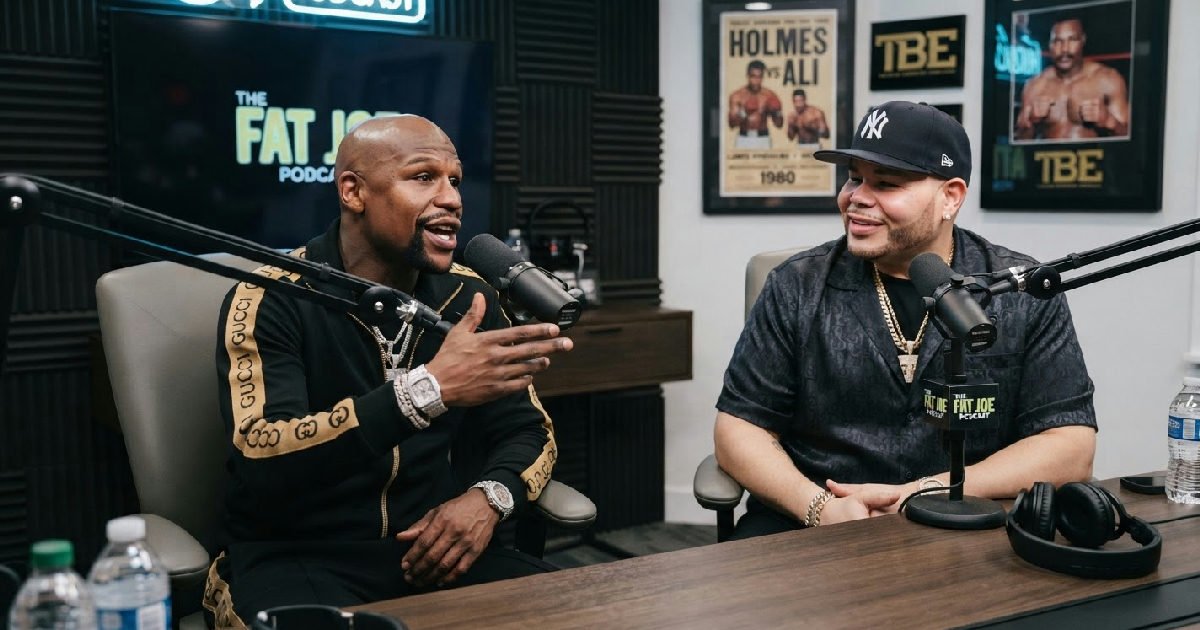
Mayweather delivered his provocative opinion during an interview on Fat Joe’s podcast in 2020, where he also ranked his personal top five fighters. This statement challenges the conventional wisdom that Ali, widely celebrated as “The Greatest,” was virtually unbeatable at his peak. It also highlights Mayweather’s tendency to court discussion, much like when he decided to drop a lawsuit against business partners.
Larry Holmes vs floyd mayweather technical prowess
Larry Holmes, often dubbed “The Easton Assassin,” carved out a formidable legacy in the heavyweight division. He compiled an impressive professional record of 69 wins and 6 losses, including 44 knockouts, showcasing his power and durability.
Mayweather’s selection of Holmes as the sole fighter capable of defeating a prime Ali stems from Holmes’s consistent and overwhelming dominance in his era. Mayweather explicitly stated that Holmes “beat everybody in his era,” highlighting his sustained excellence.
Holmes demonstrated remarkable consistency, defending his WBC and IBF world heavyweight titles against 19 different opponents. This achievement places him second only to the legendary Joe Louis in terms of successful title defenses, underscoring his championship pedigree.
Mayweather’s Rationale for Holmes
Mayweather elaborated on his reasoning, emphasizing Holmes’s “basic fundamentals” and his exceptionally strong jab. These attributes, according to Mayweather, were crucial elements that would pose significant problems for Ali in a hypothetical encounter.
He also pointed out that Holmes’s eventual loss to Mike Tyson came after a period of retirement, against a “young, hungry champion,” rather than during his undisputed prime. This nuanced view highlights Mayweather’s careful consideration of fighter’s career stages.
Beyond the ring, Mayweather also lauded Holmes’s financial acumen. He noted that Holmes is “still living a great life because he made smart investments,” drawing a parallel to his own business-savvy approach.
Mayweather’s History of Challenging Ali’s Supremacy
This isn’t the first time Floyd Mayweather Jr. has offered an unconventional perspective on Muhammad Ali’s place in boxing history. He has frequently positioned himself above Ali in all-time pound-for-pound rankings, a stance that has often drawn criticism from pundits and fans alike.
In 2015, Mayweather famously told ESPN, “No one can ever brainwash me to make me believe that Sugar Ray Robinson and Muhammad Ali were better than me.” He has also criticized aspects of Ali’s career, including his 1978 defeat to Leon Spinks, who had only seven professional fights at the time.
Mayweather scrutinized Ali’s tactical approach, including the renowned “rope-a-dope” strategy against George Foreman in their 1974 ‘Rumble In The Jungle’ bout. He justified Ali’s fifth-place ranking by stating Ali fought in “only one weight class” and “really lost to Ken Norton three times.” Mayweather did acknowledge Ali’s cultural significance, however.
During the same period, Mayweather also acknowledged Ali’s cultural significance and activism during a pivotal era for African Americans. This tendency to spark debate on different boxing legends is not unique to him; Canelo Alvarez named James Kirkland a surprising hardest puncher in a separate discussion.
Mayweather’s Personal Top Five Fighters
During the 2020 interview on Fat Joe’s podcast, where he named Larry Holmes, Mayweather also detailed his personal top five list of all-time fighters. This ranking offers further insight into his criteria for evaluating boxing greatness across eras.
His complete list positioned himself, Floyd Mayweather Jr., at number one. Following him were Pernell Whitaker, Roberto Duran, Larry Holmes, and Aaron Pryor, rounding out his highly selective group.
The Enduring Appeal of Fantasy Matchups
Debates about how boxing legends from different eras would perform against each other remain a staple of the sport’s conversation. These “fantasy fights” allow fans and experts to explore stylistic clashes and imagine technical advantages, keeping the legacies of past champions alive.
Mayweather’s recent comments, naming Larry Holmes as the fighter who could beat Ali, reignite these perennial discussions. It invites fans to consider Holmes’s disciplined jab and strategic approach against Ali’s unparalleled speed, footwork, and famous psychological warfare.
The inherent subjectivity of such comparisons means a definitive answer will likely never emerge, yet their appeal persists. It’s how the boxing community honors its rich history while engaging in spirited, hypothetical contests, bridging generations of fighters.
Expert Reactions and Broader Legacy Debate
Mayweather’s provocative statements routinely draw diverse reactions from across the boxing world. Mike Tyson, for instance, has previously labeled Mayweather “very delusional” for claiming superiority over Ali.
Conversely, George Foreman, one of Ali’s most famous opponents, surprisingly concurred with Mayweather in 2015. Foreman stated, “Pound for pound, Floyd is better than me and Muhammad Ali ever were. This is a better generation by far.”
These contrasting opinions underscore the deep divisions within boxing regarding how to compare fighters across eras. This is especially true given advancements in training, nutrition, and strategic approaches.
Ali’s impact transcended boxing, solidifying his status as a global cultural icon, which complicates purely technical comparisons. His bravery in standing up for a cause, as Mayweather himself acknowledged, adds an invaluable dimension to his legacy.
Regardless of who Mayweather champions as the hypothetical victor, his comments serve to keep the discussion of boxing’s greatest heavyweights vibrant. It ensures the legendary status of figures like Ali and Holmes continues to be debated and appreciated by new generations of fans.
The Evolving Narrative of Boxing Greatness
The continuous re-evaluation of boxing legends by modern figures like Floyd Mayweather Jr. forms a critical part of the sport’s ongoing narrative. It’s not solely about who would win a hypothetical fight, but about how different eras and fighting styles measure up, often fueling discussions around heavyweight rankings.
Mayweather, with his undefeated record and unparalleled financial success, holds a unique position to influence these discussions. His willingness to challenge popular consensus, whether it concerns Ali or other greats, often generates significant media attention.
This perpetuates the sport’s rich history and encourages deeper analysis of fighter attributes beyond simple win-loss records. Ultimately, these debates are a testament to the enduring allure of boxing and its capacity to produce athletes whose impact transcends their time in the ring.
Mayweather’s selection of Larry Holmes as the exclusive hypothetical triumph against Muhammad Ali will undoubtedly fuel countless arguments in gyms and online forums for months to come.