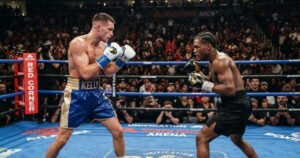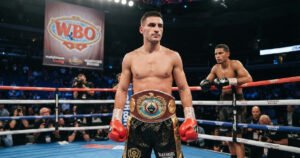
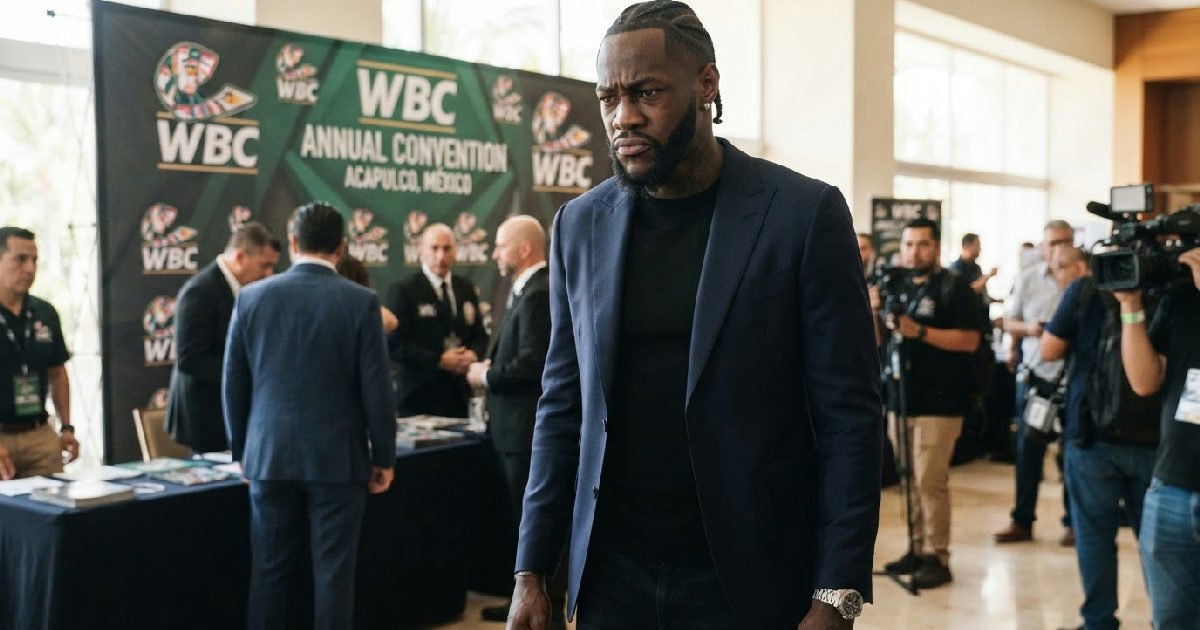
Deontay Wilder’s arduous journey to reclaim the top spot in the World Boxing Council (WBC) heavyweight rankings has hit an unexpected snag. After more than 1,000 days of rebuilding his career, the American powerhouse now finds himself at number two, displaced by the return of Lawrence Okolie to the number one position following the resolution of his own drug testing issue.
This development, confirmed during the WBC’s annual convention in Acapulco, Mexico, pits two prominent heavyweights at the summit of the rankings. For Wilder, known as “The Bronze Bomber,” it marks a frustrating delay in his bid for another world title shot, despite his own consistent climb up the ladder.
Deontay Wilder’s long road to redemption
Wilder’s ambitious comeback began after a significant setback in December 2023 when he lost to Joseph Parker. That defeat initiated a slide down the rankings and a challenging path to regain his standing among the elite.
His position worsened considerably after suffering a brutal knockout against Zhilei Zhang approximately six months later in June 2024. By March 2025, his ranking had fallen as low as number 12, a stark contrast to his previous dominance.
Early setbacks and a slow climb
The losses to Parker and Zhang were pivotal moments, forcing Wilder to re-evaluate his approach and embark on a focused rebuilding phase. He secured crucial victories over Tyrrell Herndon and Derek Chisora, which were instrumental in revitalizing his career and momentum.
These wins, coupled with strategic shifts within the heavyweight division, gradually strengthened his position. His determination through this period underscored his commitment to returning to championship contention.
An unfought ascent and divisional dynamics
Intriguingly, Wilder saw a significant leap in his ranking from eighth to fourth in September 2026 without stepping into the ring. This unexpected rise was partly due to WBA heavyweight championship contenders Tyson Fury and Anthony Joshua preparing for their December clash, which would remove them from WBC contention.
Frank Sanchez, another high-ranking contender, was also moved to an unavailable list as he pursued the International Boxing Federation (IBF) title. These external factors cleared a path that seemed destined to lead Wilder directly to the number one spot.
Lawrence Okolie’s drug test resolution
The unexpected twist in Wilder’s comeback narrative came with the reinstatement of Lawrence Okolie. Okolie, a former WBC Bridgerweight champion, had been sidelined following an adverse analytical finding from a sample collected on April 8, 2026.
The finding occurred ahead of his then-scheduled heavyweight bout against Tony Yoka. Okolie staunchly maintained his innocence throughout the investigative process, asserting no wrongdoing on his part.
The initial finding and comprehensive investigation
The sample collected on April 8, 2026, initiated a formal inquiry by the WBC. Such adverse findings trigger a rigorous process under the WBC’s Clean Boxing Program, designed to ensure fairness and athlete safety. The program mandates a thorough review of all circumstances surrounding the test result.
This investigation involved extensive cooperation from Okolie and a detailed examination of his case. It’s a process that underscores the strict anti-doping protocols in modern boxing, aiming to uphold the integrity of the sport.
WBC’s adjudication and Clean Boxing Program
On October 16, 2026, the WBC and Okolie reached an adjudication agreement, resolving the matter. The organization stated that Okolie provided compelling mitigating evidence, suggesting a prohibited substance entered his system inadvertently through the actions of a third party.
The WBC’s decision considered his prior clean testing history and full cooperation throughout the investigation. This resolution allowed for his immediate return to the rankings, directly impacting the WBC title contention landscape. While the specific details of the initial finding were not publicly overturned, the agreement cleared his path back into the top echelon.
Impact on Wilder’s immediate title route
The November 2026 WBC rankings now officially list Lawrence Okolie at number one, Deontay Wilder at number two, and Moses Itauma at number three. This configuration places Wilder in a strong position, but not the leading one he anticipated.
Agit Kabayel currently holds the WBC heavyweight championship. While Wilder remains firmly in contention for an opportunity to challenge for the prestigious green and gold belt, being number two doesn’t automatically guarantee him a mandatory challenger spot.
The number two position and mandatory status
For many fighters, the number two ranking would be a significant achievement and a clear indicator of an imminent title shot. However, the WBC’s rules for mandatory challengers are complex, often influenced by ongoing title fights and other divisional movements. This means Wilder still needs to strategically navigate his path forward.
The immediate consequence is that Okolie now holds the preferential position for any upcoming title eliminators or challenges. This shift can be frustrating for a fighter who has invested so much into their comeback.
Frustration for the Bronze Bomber
The timing of Okolie’s return couldn’t be more difficult for Wilder. After nearly three years spent meticulously rebuilding his career from a career-low number 15, he was on the cusp of reclaiming the top spot. To be thwarted by a drug-testing case entirely unrelated to him is a bitter pill to swallow.
Wilder is scheduled to face Jai Opetaia in December 2026, a bout that could further solidify his standing. But the road to the WBC’s number one ranking, and the direct path to a title shot, has become considerably more complicated due to circumstances beyond his control.
This turn of events highlights the unpredictable nature of professional boxing, where administrative decisions can be as impactful as in-ring performances.
Broader implications for the heavyweight division
The WBC’s latest ranking adjustments, particularly the return of Lawrence Okolie and the static position of Deontay Wilder at number two, will undoubtedly reshape the immediate future of the heavyweight division. This situation creates new dynamics for potential challengers and influences strategic decisions for promoters and fighters alike.
The competition at the top of the heavyweight class remains fierce, with several high-profile bouts on the horizon. These events could lead to further shifts in the rankings and offer new title shot opportunities for various contenders.
Shifting landscape and contender strategies
The movement of top contenders like Tyson Fury, Anthony Joshua, and Frank Sanchez into separate title pursuits has temporarily opened pathways within the WBC rankings. However, their eventual return or success in other organizations could trigger further re-evaluations.
For Wilder, the strategy now involves not only continuing his winning streak but also monitoring the outcomes of other major fights to anticipate how the divisional landscape will evolve. Every fight and every ranking adjustment can create a domino effect.
The WBC’s role in maintaining integrity
This incident also underscores the critical role of the WBC’s Clean Boxing Program. Its robust framework, in partnership with organizations like the Voluntary Anti-Doping Association (VADA), is designed to ensure fair play and protect athletes.
While Okolie’s situation was resolved, the very process demonstrates the WBC’s commitment to addressing adverse findings seriously. This dedication to clean sport is vital for maintaining credibility and ensuring that success in the ring is earned purely through skill and dedication.
Looking ahead for the heavyweight contenders
The heavyweight division continues to be one of boxing’s most compelling landscapes, characterized by powerful athletes and high stakes. Deontay Wilder’s journey, marked by both triumph and tribulation, mirrors the demanding nature of the sport.
As the December schedule unfolds with Wilder’s fight against Jai Opetaia and the WBA championship bout between Tyson Fury and Anthony Joshua, the path to the WBC heavyweight title will become clearer. The impact of these fights, combined with the resolved drug test ruling, sets the stage for an exciting period in heavyweight boxing.
Fans and analysts will be watching closely to see how Wilder navigates this new challenge and whether he can overcome this latest obstacle to finally secure another shot at the coveted green and gold belt. His resilience has been tested before, and his response in the coming months will be crucial to his legacy.