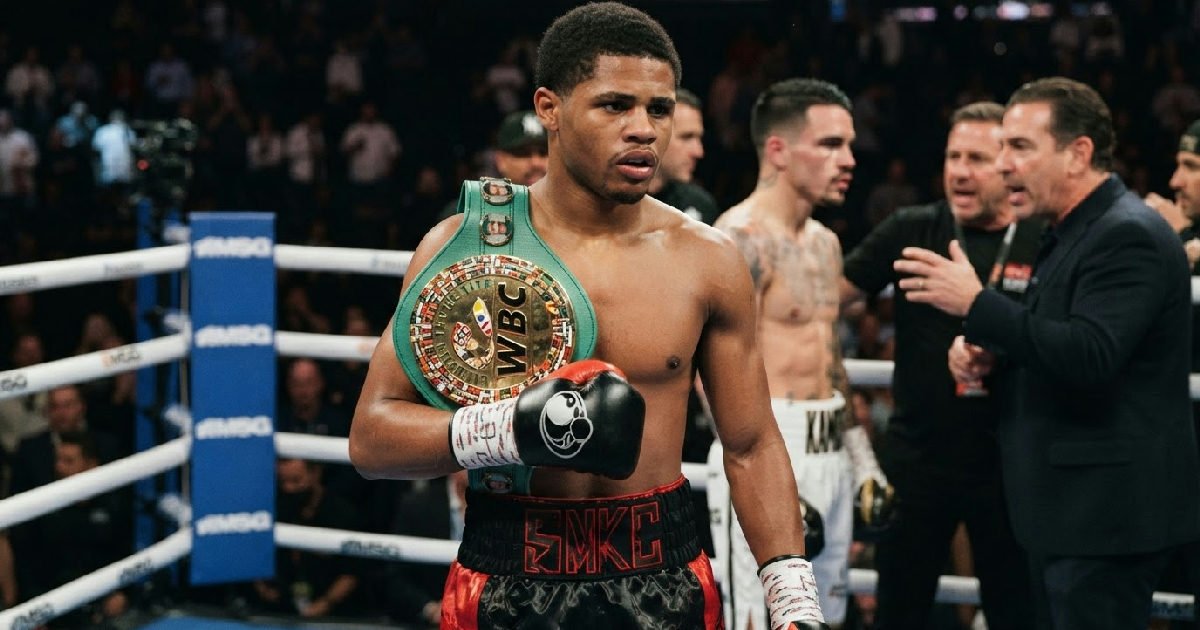
American boxing star Shakur Stevenson is currently embroiled in a significant drug-testing dispute that threatens to derail his highly anticipated WBC lightweight title fight against Australian challenger George Kambosos Jr. The controversy escalated rapidly on November 26, 2024, with reports detailing concerns from Kambosos Jr.’s team regarding Stevenson’s compliance with pre-fight testing protocols.
The high-stakes bout is slated for December 9, 2024, at Madison Square Garden in New York City, but its future now hangs in the balance.
Shakur Stevenson controversy engulfs WBC lightweight clash
The dispute stems from a disagreement over the specifics of drug-testing procedures and the timing of tests, prompting loud objections from Kambosos Jr.’s promoter Lou DiBella and manager Peter Kahn. They’ve voiced serious concerns, effectively putting immense pressure on Stevenson and the World Boxing Council (WBC) to ensure the integrity of the sport. This challenge highlights the constant vigilance required in professional boxing’s anti-doping efforts.
The boxing world watched closely as DiBella, a veteran promoter, issued stern warnings. He reportedly stated, “We are playing with fire here. This is a very serious situation.”
His remarks underscore the gravity of the allegations, suggesting that the very foundation of the WBC lightweight title fight could crumble if the drug-testing issues aren’t resolved to their satisfaction.
DiBella emphasized his team’s resolve, adding, “We are not going to allow this fight to happen unless we are 100 per cent satisfied with the drug testing.”
Kambosos Jr.’s manager, Peter Kahn, echoed these sentiments, highlighting the broader implications for the sport. “The integrity of the sport is at stake,” Kahn asserted, calling for greater transparency and accountability from all parties involved. Such strong declarations from the challenger’s camp signal a deep-seated apprehension that extends beyond typical pre-fight banter, touching on fundamental issues of fair play.
The World Boxing Council (WBC), led by President Mauricio Sulaiman, has reportedly engaged in discussions aimed at finding a resolution. However, the exact nature of these discussions and the proposed solutions remain under wraps, adding to the uncertainty surrounding the December 9 showdown. The organisation faces the delicate task of balancing athlete rights with the paramount need for a clean sport.
The stakes for Stevenson and Kambosos Jr.
For Shakur Stevenson, this controversy couldn’t come at a worse time. The American boxer captured the WBC lightweight championship in November 2023, solidifying his status as one of boxing’s brightest talents. A win against a reputable former unified champion like George Kambosos Jr.
would further cement his legacy and open doors to even bigger fights in the stacked lightweight division. Undefeated, Stevenson has meticulously built his career, making this title defense crucial for his trajectory.
Conversely, for George Kambosos Jr., this fight represents a crucial opportunity to reclaim championship glory. The Australian previously held the WBA (Super), IBF, and WBO lightweight titles, losing them in a unification bout. Re-entering the championship picture against Stevenson offers a path back to the top of the sport.
A potential cancellation or even a cloud of suspicion over the fight could severely impact his career trajectory and financial prospects, potentially stalling his comeback bid.
A champion’s contested compliance
The scrutiny over drug-testing protocols typically involves adherence to a strict schedule of random tests, sample collection procedures, and the analysis of those samples by accredited laboratories. Any deviation, perceived or real, can trigger significant concern, especially in high-profile bouts.
The specifics of the alleged non-compliance from Stevenson’s side haven’t been fully disclosed, but the mere hint of an issue is enough to cast a shadow over proceedings.
Promoters, fighters, and regulatory bodies often work with independent agencies like the Voluntary Anti-Doping Association (VADA) to ensure rigorous and unbiased testing. The exact role and involvement of such agencies in this specific dispute are critical to understanding the path forward. These third-party entities aim to safeguard the sport against performance-enhancing drugs and ensure a level playing field.
Navigating boxing’s anti-doping landscape
Boxing’s global nature and high stakes necessitate robust anti-doping measures. Organisations such as VADA operate independently, often implementing programs like the WBC’s Clean Boxing Program. These initiatives involve year-round, unannounced testing that can include blood and urine samples, designed to catch performance-enhancing drug use and deter athletes from cheating.
However, the implementation of these stringent protocols isn’t always seamless. Disagreements can arise over testing windows, notification procedures, or even the choice of testing agency. Such disputes, like the one involving Shakur Stevenson’s future fight, often become public when one camp feels the other isn’t adhering to agreed-upon terms, turning a technicality into a major controversy.
The WBC, as a sanctioning body, plays a pivotal role in mediating these conflicts. Its president, Mauricio Sulaiman, frequently emphasizes the council’s commitment to clean boxing. But balancing the procedural rights of fighters with the absolute requirement for a fair contest remains a constant challenge. The outcome of these negotiations can make or break a scheduled bout.
Precedent and the integrity of boxing
Boxing has a complicated history with drug testing controversies, and the current dispute around Shakur Stevenson is far from an isolated incident. These situations inevitably draw parallels with past high-profile cases, highlighting the ongoing battle to maintain clean competition. Such rows often damage the sport’s reputation and erode public trust among fans.
One notable case involved Australian heavyweight Lucas Browne. In 2016, Browne tested positive for Clenbuterol after winning a WBA world title, which was subsequently stripped. He maintained his innocence, attributing it to tainted meat. Later that year, Browne failed a second drug test for Ostarine, jeopardizing another significant fight and leading to a lengthy suspension.
His case underscores the severe consequences and persistent challenges associated with drug-testing failures.
The sport has seen numerous other instances where drug tests have cast a shadow over major events. Cuban boxer Luis Ortiz, for example, had an interim WBA heavyweight title stripped after testing positive for Nandrolone in 2014.
More recently, the boxing world has been abuzz with a “doping standoff” involving another Australian contender, Tim Tszyu, and American star Devin Haney, with calls for blood testing becoming a public issue. These recurring incidents highlight how crucial transparent and consistent testing remains.
Even outside of positive tests, controversies can erupt. Floyd Mayweather Jr. faced scrutiny in 2015 over receiving two banned IV treatments before his fight with Manny Pacquiao, though he received a retroactive therapeutic use exemption. These events, regardless of official outcomes, fuel public skepticism and raise questions about the fairness of high-stakes matchups.
The sport’s governing bodies are continually under pressure to enforce clear rules and ensure all athletes compete on an equal footing.
Broader implications for the boxing world
Beyond the immediate impact on Stevenson and Kambosos Jr., the drug-testing dispute carries significant ramifications for the wider boxing ecosystem. A cancellation or postponement of a major title fight incurs substantial financial losses for promoters, broadcasters, and the venue. Millions of dollars are often invested in promotion, logistics, and ticket sales, all of which hang in the balance when such controversies arise.
Moreover, these incidents can erode fan confidence. Spectators pay for a fair contest, and any hint of impropriety undermines their trust in the sport’s integrity. This can lead to decreased viewership and attendance for future events, ultimately impacting boxing’s commercial viability. Sanctioning bodies like the WBC also face reputational damage if they cannot effectively manage and resolve these disputes swiftly and transparently.
The ongoing dialogue between Kambosos’s team and the WBC is therefore not just about one fight; it’s about upholding the competitive standard of professional boxing. The resolution, whatever it may be, will likely set a precedent for how similar disputes are handled in the future. It underscores the constant vigilance needed to protect both the athletes and the authenticity of the contests they engage in.