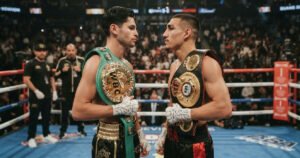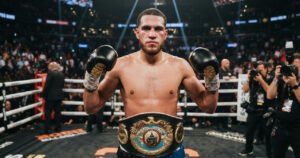
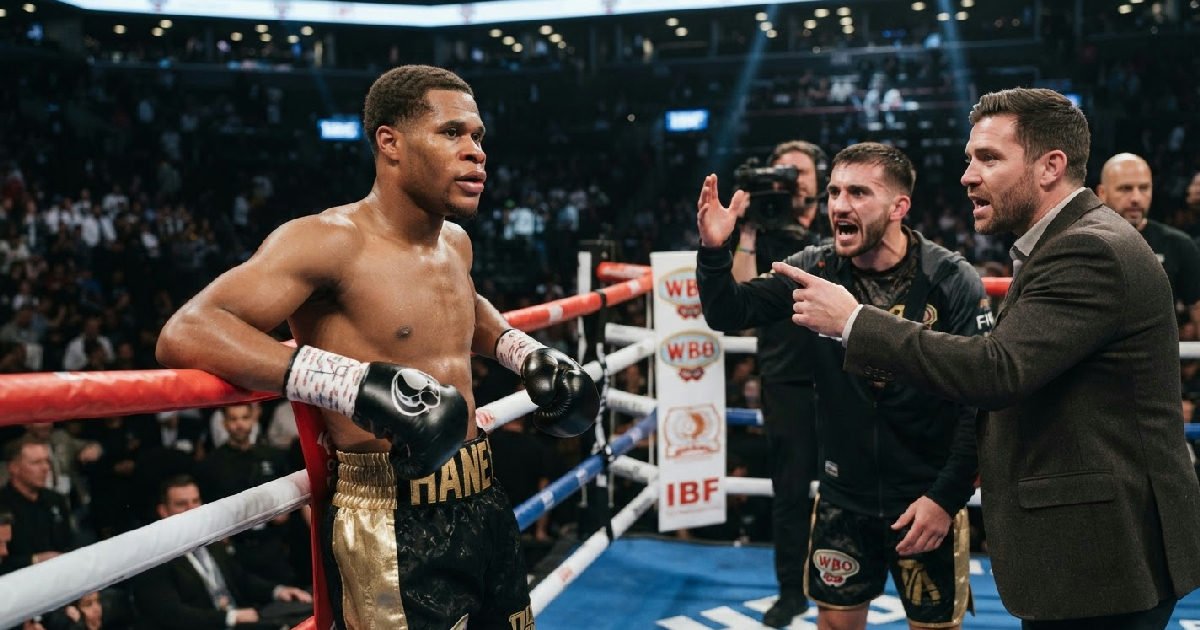
Devin Haney, the reigning WBO welterweight champion, now stands accused of using fellow fighter Jack Catterall as a strategic “decoy” in high-stakes negotiations for an alternative bout. This charge comes directly from Catterall and his manager, Sam Jones, following reports that Haney has since reached an agreement to fight IBF titleholder Liam Paro on Saturday, October 3.
The controversy emerged after a planned October clash between Devin Haney and Keyshawn Davis fell through, prompting Haney to explore other opponents. The welterweight division’s intricate dynamics are clearly at play, with leverage and strategic maneuvering dictating potential matchups.
Catterall and Jones allege ‘decoy’ tactics
Jack Catterall has publicly stated his belief that Devin Haney never truly intended to fight him, suggesting the overtures were a calculated ploy. “Devin was never going to fight me it was this [what Jones feared] all along,” Catterall shared on X, expressing his conviction that the Haney-Paro bout was always the ultimate objective.
His manager, Sam Jones, first voiced these concerns on X when news broke of Haney’s reported pivot to Catterall. Jones feared his fighter was being used to pressure Liam Paro into accepting less favorable terms for a unification match. This kind of tactical negotiation isn’t entirely new to boxing.
Sam Jones’s initial suspicions
Jones articulated his apprehension plainly: “What I hope isn’t the case is that Jack is been used as a decoy so that Paro is scared into taking the fight for less money than he’s wanting.” He made it clear that Catterall’s camp had accepted the fight’s terms, location, and date, shifting responsibility for any potential collapse squarely onto Haney.
This statement underscored a growing sentiment that Catterall, despite being a legitimate contender, might have become an unwitting pawn in a larger negotiation game. Such situations can leave fighters feeling exploited, even if the strategic objective is purely financial.
Jack Catterall’s direct accusation
Catterall’s subsequent comments confirmed Jones’s initial fears, indicating a sense of vindication for his manager’s early warnings. He directly accused Haney of never intending to step into the ring with him, viewing the public flirtation as a means to an end. This sentiment highlights the cutthroat nature of boxing negotiations.
The boxer’s strong words suggest a belief that he was leveraged as a bargaining chip rather than a genuine opponent. This public airing of grievances adds another layer of drama to the competitive landscape of the welterweight division.
The shifting welterweight landscape
The welterweight division has seen considerable movement and speculation throughout 2026, with Devin Haney at the center of much of it. His path to a significant unification bout has been anything but straightforward, marked by withdrawals and fluctuating negotiations.
Haney, who secured the WBO welterweight championship in November 2025 by defeating Brian Norman Jr., has been a prominent figure across multiple weight classes. His status as a unified lightweight champion from 2022 elevated his profile, making his next moves highly anticipated by fans and rivals alike.
Keyshawn Davis’s earlier withdrawal
Earlier in the year, Devin Haney had been slated to face Keyshawn Davis in October, a fight that had been building throughout 2026. The WBO had even mandated Davis for a shot at Haney’s welterweight title, setting the stage for a compelling matchup.
However, Keyshawn Davis ultimately withdrew from the contest after Top Rank won the purse bids. He reportedly felt his worth exceeded the $2 million purse offered for the title challenge. This opened the door for Haney to seek other opponents, leading to the current controversy.
Liam Paro’s negotiation hurdles
Following the collapse of the Davis fight, attention shifted to a potential unification bout between Devin Haney and newly-crowned IBF titleholder Liam Paro. The Australian boxer initially appeared to price himself out of the scrap, leading Haney to reportedly turn his attention to Jack Catterall.
This sequence of events lent credence to the idea that the threat of fighting Catterall might have brought Paro back to the negotiating table with revised expectations. Such back-and-forth is common in top-tier boxing, where every fighter and promoter seeks the best possible deal.
What this means for Jack Catterall’s immediate future
With the Devin Haney fight now seemingly off the table, Jack Catterall has recalibrated his plans, setting his sights on another significant opportunity. He announced his intention to attend the upcoming Rolando Romero versus Teofimo Lopez WBA (Super) title bout in Las Vegas.
Catterall views himself as next in line for the winner of that highly anticipated fight, positioning himself for a shot at the WBA crown later in the year. This move suggests a fighter determined to secure a world title, regardless of the opponent.
Lining up for the WBA title shot
Catterall’s decision to wait for the winner of the Rolando Romero and Teofimo Lopez clash is a calculated one, indicating his belief in his standing within the WBA rankings. Both Romero and Lopez are significant names in the division, promising a challenging but lucrative fight.
This strategic pivot underscores Catterall’s commitment to competing at the highest level. While the Haney situation proved frustrating, it hasn’t deterred his pursuit of a major championship. Advanced talks with other contenders often shape these strategic decisions.
The complex art of boxing negotiations
The accusations leveled against Devin Haney by Jack Catterall and Sam Jones highlight the often-opaque and fiercely competitive nature of boxing negotiations. These aren’t just about who fights whom; they’re about financial terms, leverage, and strategic positioning within a division. Every move can impact a fighter’s career trajectory and earning potential.
Promoters and managers constantly seek to maximize their fighters’ value, sometimes employing tactics that can be perceived as aggressive or even manipulative. The line between shrewd business and unsportsmanlike conduct can sometimes blur in this high-stakes environment. Big fights often involve complex negotiations that can test patience and resolve.
Fighter leverage and asking prices
Liam Paro’s reported initial “pricing himself out” of a fight with Haney speaks to the power dynamic at play. When a fighter believes their market value is higher than what’s being offered, they can hold out, hoping for better terms. Haney’s alleged use of Catterall as a