
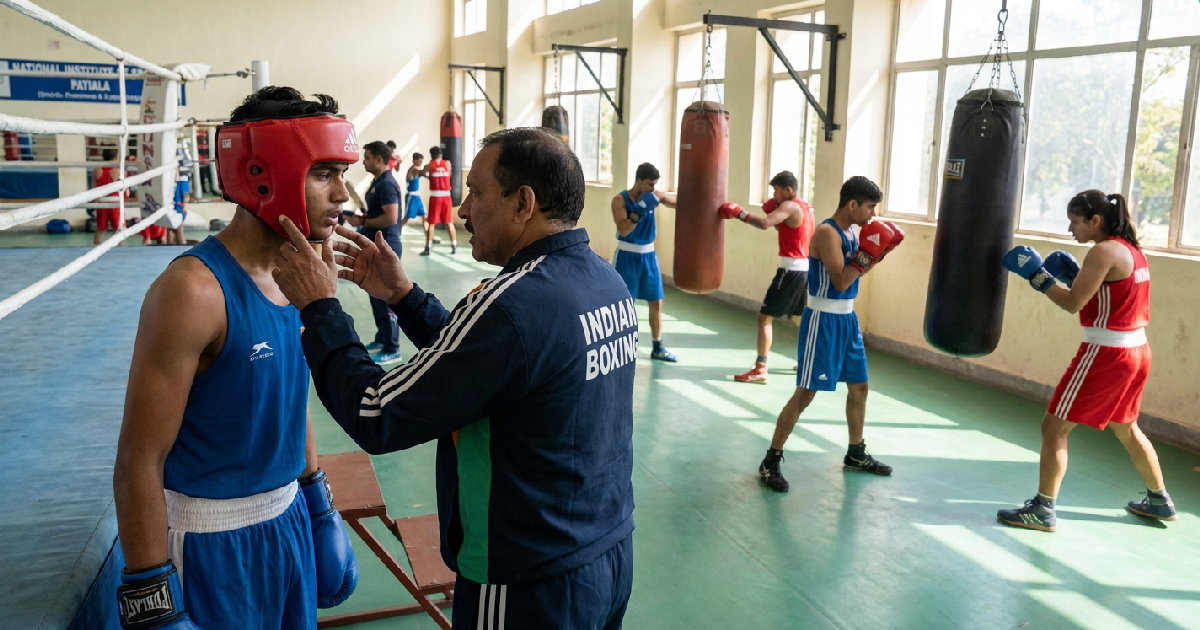
The Indian boxing team has entered a critical period of transition as the national governing body, Boxing Federation of India (BFI), continues to overhaul its coaching and selection frameworks. Following recent international performances that have sparked debate among fans and analysts alike, the program is shifting its focus toward a younger core of talent, aiming to secure more consistent results on the world stage.
For decades, Indian boxing relied on a handful of standout veterans to carry the weight of expectations. But the current setup suggests a departure from that model. The emphasis has moved toward centralized training camps and a more rigorous data-driven approach to athlete assessment. This shift follows reports that the BFI is looking to tighten its qualification criteria and improve the technical depth of the men’s and women’s squads.
Infrastructure and the High-Performance Model
The current strategy for the Indian boxing team revolves around the High-Performance Director’s vision, which prioritizes “volume over reputation.” Recent training cycles have seen several unheralded fighters from the domestic circuit being integrated into the national camp in Patiala. This has created a more competitive environment, though it has also led to friction with established names who used to be guaranteed spots in the starting lineup.
And while the infrastructure at the National Institute of Sports (NIS) remains the backbone of the operation, there are increasing calls for more frequent international exposure. Boxers often find themselves stuck in a cycle of domestic training with limited opportunities to spar against the contrasting styles found in Eastern Europe or Central Asia. Addressing this gap remains a primary hurdle for the coaching staff if they want to see Indian names atop the podium more frequently.
Shifting Weight Classes and Tactical Adjustments
One of the most significant challenges facing the Indian boxing team is the constant reclassification of Olympic weight categories. These changes have forced several marquee Indian fighters to either drop significant weight or move up into heavier, more physical brackets. Tactical adaptation has been slow, with many observers noting that Indian boxers often struggle against high-pressure “inside” fighters who can neutralize their traditional long-range amateur style.
The technical committee has reportedly been working on “Plan B” scenarios for their elite fighters—focusing on footwork and defensive head movement. In recent bouts, Indian pugilists have shown improved stamina, but the ability to win close rounds on the cards remains an area that needs refinement. The reliance on sheer work rate often fails against technically superior counter-punchers from nations like Uzbekistan or Cuba.
The Road Ahead for the National Squad
The upcoming calendar is packed with continental championships and invitational tournaments that will serve as the ultimate litmus test for this new direction. The BFI has made it clear that past achievements will hold little weight when it comes to final selections. This “perform or perish” mantra is intended to keep the athletes sharp, but it also places immense psychological pressure on the team.
Success in the coming months will largely depend on how quickly the younger cohort can adapt to the international pace. There is no shortage of raw talent in India, particularly in the flyweight and bantamweight divisions. If the federation can provide the necessary stability in the coaching ranks and maintain a transparent selection process, the Indian boxing team could find itself back among the world’s elite.
Indian Boxing Team FAQ
Where does the Indian boxing team primarily train?
Most of the national squad is based out of the National Institute of Sports (NIS) in Patiala. This facility serves as the primary hub for centralized training camps, providing athletes with access to specialized coaching, sports science, and recovery facilities.
How are boxers selected for the Indian national team?
Selection is generally based on a combination of performances at the National Championships and ongoing evaluations during national camps. The BFI has recently moved toward a more objective points-based system to reward consistency rather than just single-tournament wins.
What are the main weight classes where India is most competitive?
Historically, India has seen the most success in the lighter weight classes, specifically in the flyweight, bantamweight, and welterweight categories for both men and women. These divisions play to the natural speed and volume-punching style common in the Indian domestic circuit.