
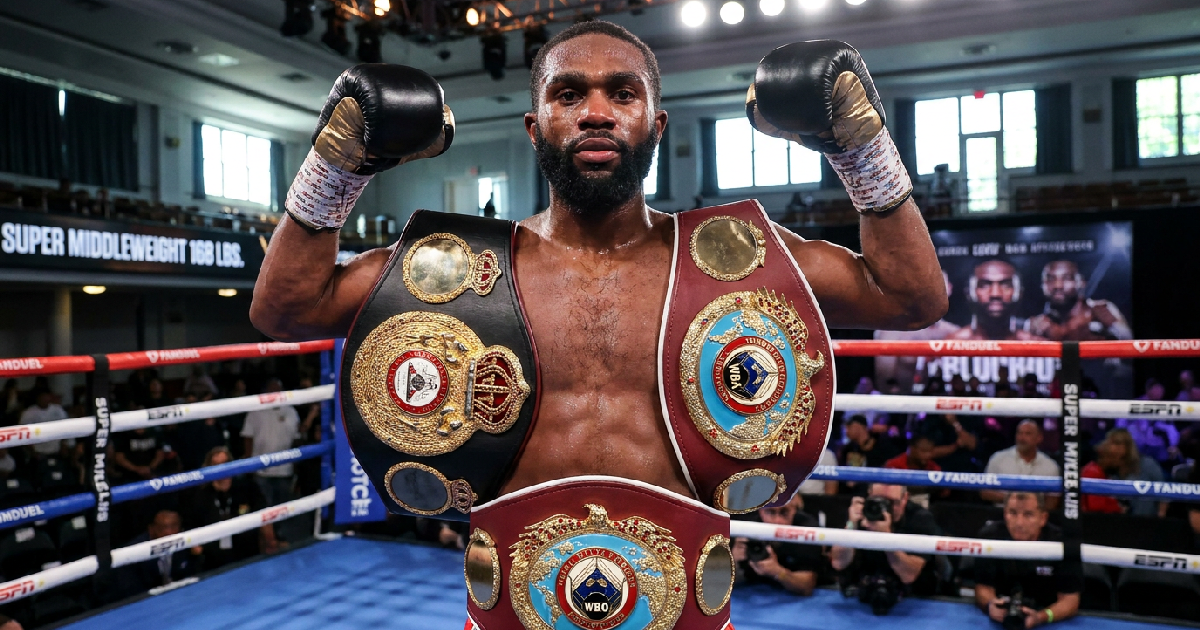
Jaron “Boots” Ennis, the undefeated American professional boxer from Philadelphia, Pennsylvania, is increasingly the subject of discussion regarding a potential move to the super middleweight (168-pound) division. This comes after the 29-year-old recently unified the World Boxing Association (WBA) and World Boxing Organization (WBO) light middleweight (154 pounds) titles in June 2.
Boxing analysts and promoters widely express the sentiment that Ennis has “bigger fish to fry,” aligning with his long-term goal of becoming a multi-division undisputed champion. The unbeaten fighter’s current success at junior middleweight has prompted a push for him to seek fresh challenges.
Ennis’s super middleweight move at a pivotal junction
The recent unification of the WBA and WBO light middleweight championships marks a significant milestone for Ennis. This accomplishment cements his status as a formidable talent within the sport, showcasing his abilities.
Despite his current success in the 154-pound division, a growing chorus of voices suggests that a move up in weight class is the logical next step. They argue that transitioning to 168 pounds could redefine his career trajectory, opening doors to new opportunities.
Past frustrations and the push for progress
Ennis has openly expressed frustrations over a career spent waiting for marquee opponents at welterweight, many of whom never materialised. He effectively lost valuable time chasing fights that remained out of reach, hindering his career progression.
This history of stalled negotiations and unfulfilled matchups at 147 pounds highlights a critical need for Ennis to take control of his destiny. He can’t afford to repeat the cycle of waiting, especially now that he’s entering his prime boxing years.
The call for new challenges at 168 pounds
The super middleweight division presents a fresh landscape for Ennis to explore. Observers believe that challenging himself against top contenders in this weight class would be crucial for building a Hall of Fame-worthy legacy.
As boxing analyst Dan Ambrose of Boxing News 24 notes, Ennis’s prime is too important to risk delays in finding significant bouts. Moving up offers a direct path to the high-profile opportunities needed to elevate his standing.
Among the potential opponents, names like Canelo Alvarez, Hamzah Sheeraz, and Osleys Iglesias stand out. These fighters offer the kind of high-profile matchups that would immediately boost Ennis’s reputation and provide lucrative opportunities.
Facing a pound-for-pound king like Canelo Alvarez would be a definitive test of Ennis’s elite status. Hamzah Sheeraz and Osleys Iglesias, meanwhile, represent top-tier challenges that could solidify his place as a force at 168 pounds.
Maximising a fighter’s prime years
At 29 years old, Jaron Ennis is firmly in his athletic prime, a critical period for any boxer aiming to cement their place in history. Every year spent deliberating a move is a year that could be dedicated to accumulating defining victories.
His talent is undeniable; many consider him among the sport’s most complete fighters. However, for his resume to truly reflect his prodigious ability, he needs to pursue the most challenging and impactful fights available.
Learning from other champions
Terence Crawford, a fighter Ennis has expressed a desire to fight someday, offers a clear blueprint for proactive career management. Crawford consistently sought out bigger challenges and moved between weight classes when opportunities arose, rather than staying in one division indefinitely.
Adopting this “Crawford mentality” would mean Ennis prioritises legacy-defining bouts over comfort or prolonged negotiations. It means actively seeking out the biggest names, regardless of the weight class.
Avoiding career stagnation
The urgency stems from a desire to avoid a scenario where valuable time is lost waiting for ideal matchups to materialise. Some fighters find their careers slow down during protracted negotiations, which can sometimes lead to fights being delayed or even falling through entirely. Contract disputes have often stalled major boxing matches, a pitfall Ennis’s supporters hope he avoids.
Embracing a proactive approach to climbing weight classes, rather than remaining in one division indefinitely, is seen as essential. This mindset allows a fighter to continually evolve and challenge themselves against diverse competition.
His impressive skills, including power, speed, and defensive acumen, suggest he has the tools to adapt to the super middleweight division. But raw talent alone isn’t enough; it must be consistently tested against the sport’s elite.
The path forward: action over anticipation
The prevailing sentiment from boxing insiders is clear: the time for discussing a move to 168 pounds should now translate into action. Ennis appears to possess the physical attributes and power necessary to compete effectively at super middleweight.
The only true way to gauge the full extent of his talent and potential is to make the leap and prove himself in a new division. Delaying this transition could potentially lead to missed opportunities during his peak years.
Physical readiness for 168 pounds
Ennis has demonstrated that he possesses the frame and power to comfortably move up to 168 pounds. This isn’t a speculative jump; it’s a natural progression for a fighter of his build and style.
The added weight often translates to more impactful punches and increased durability, attributes that would serve him well against the naturally larger opponents in the super middleweight division. His previous success at junior middleweight suggests he carries his power well.
Potential impact on the boxing divisions
A move by Jaron Ennis to the super middleweight division would create significant ripples across multiple weight classes. At junior middleweight, his departure would likely open up the WBA and WBO titles, generating new prospects for contenders.
For the super middleweight division, Ennis’s arrival would introduce a fresh, elite talent into an already competitive mix. This influx of skill could ignite new, exciting matchups and compel existing champions and top contenders to adjust their strategies, adding another layer of intrigue to the weight class.
While there are numerous challenges in boxing, Canelo Alvarez faces many such challenges; Ennis would undoubtedly be a major one if they were to meet. His presence would force a reshuffling of rankings and strategies among the division’s top names.
Forging a lasting legacy
Ultimately, a fighter’s legacy is often defined by the risks they undertake and the challenges they embrace. For Jaron “Boots” Ennis, the decision to move to super middleweight represents a crucial moment in shaping how his career will be remembered.
By actively pursuing the toughest fights in a new division, he would demonstrate the kind of ambition and self-belief that characterises boxing’s true greats. It’s about proving himself against the best, regardless of the weight class, and refusing to let his prime years be dictated by external factors.
The boxing world waits to see if Ennis will indeed heed the call to arms, taking the plunge into the deeper waters of 168 pounds. Such a bold step could see his career ascend to new heights, delivering the high-stakes matchups and definitive victories his talent has always promised. Many fighters, including Terence Crawford, continually seek out challenges to secure their legacy.
A Hall of Fame trajectory
To build a Hall of Fame record, a fighter needs more than just an undefeated streak; they need to overcome significant adversity and defeat other elite champions. Moving to 168 pounds offers Ennis precisely this kind of opportunity.
Victories against established names in a heavier division would enhance his narrative significantly. It would prove his versatility and willingness to push beyond comfort zones, crucial elements for a lasting impact on the sport.
The broader boxing landscape
Ennis’s potential move also speaks to a wider trend in boxing, where top talents are increasingly willing to chase challenges across weight classes. This trend helps keep the sport dynamic, offering fans more compelling and unpredictable matchups.
His decision could inspire other rising stars to similarly eschew prolonged waits for fights that might never happen. It underscores the importance of strategic career planning in an often-unpredictable sport.
The imperative to act now
The consensus among observers is that the window for Jaron Ennis to make this critical move is now. At 29, his physical peak aligns perfectly with the strategic need to elevate his competition and secure his place in boxing history.
Delaying this transition further risks diminishing the impact of his talent and could leave him with regrets later in his career. The boxing world is ready to see “Boots” Ennis test his mettle against bigger fish.