
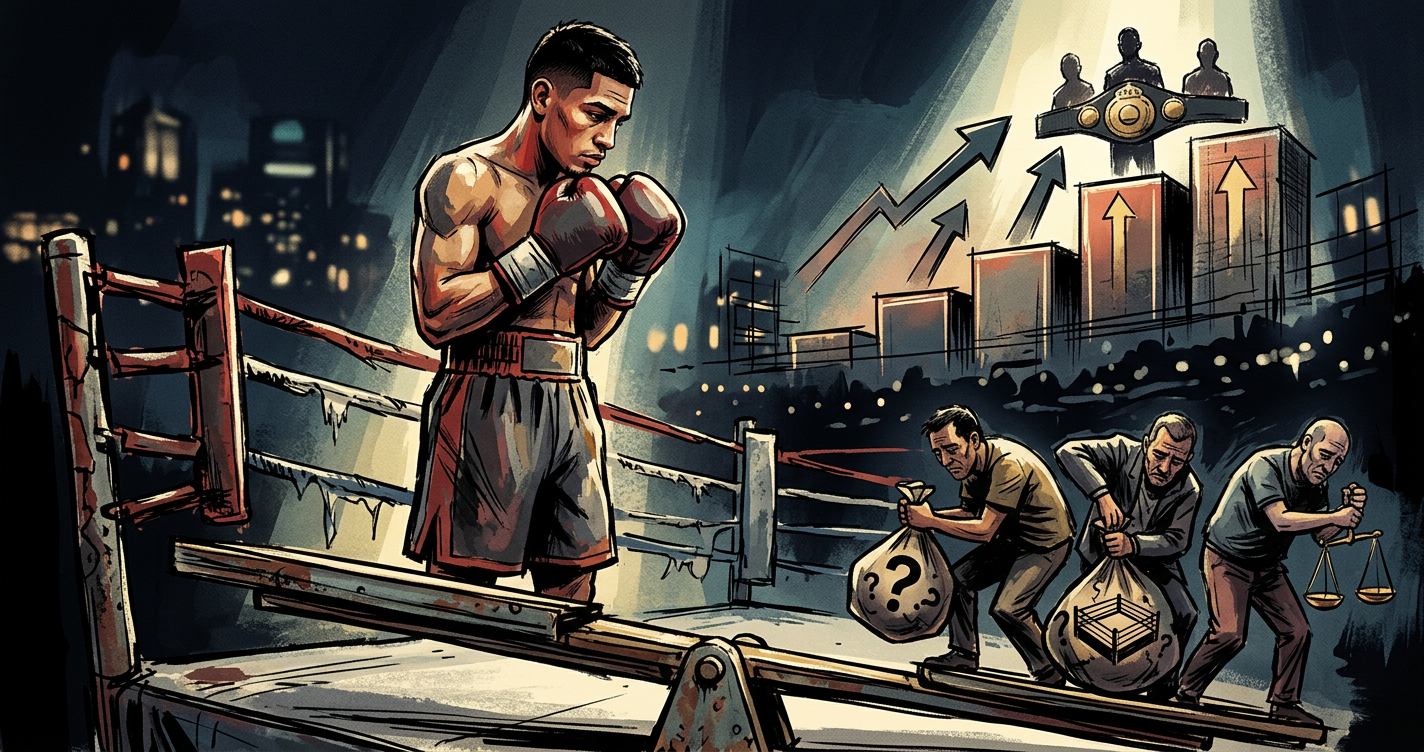
The lower weight classes often struggle for mainstream oxygen, but Jesse “Bam” Rodriguez has become the rarity: a sub-lightweight fighter who demands a main event slot. After a clinical run through the flyweight and super-flyweight divisions, the sport is waiting to see where the 26-year-old technician turns next. With the pound-for-pound rankings shifting, Rodriguez sits in a position where he can essentially dictate his own terms.
Following his recent dominant performances, the talk in boxing circles has shifted from who Rodriguez can beat to how many belts he can collect before his frame hits its limit. While he has cleaned out much of the immediate elite at 115 pounds, the lure of a massive unification or a jump in weight looms. However, as the top end of the sport thrives on these mega-fights, a quieter crisis is emerging beneath the surface of the promotional world.
Rodriguez and the quest for a defining rivalry
Rodriguez has already built a resume that most veterans would envy, having handled legends and undefeated champions with the same cold efficiency. The question now is one of legacy versus activity. There is a strong internal push within his camp to pursue the biggest names available, even if those names require moving up to bantamweight. The 118-pound division offers fresh blood and the chance to become a three-division champion, a feat that would solidify his standing in the top five of any credible pound-for-pound list.
And while fans are clamoring for a “super-fight” against fellow elite operators like Naoya Inoue, that remains a dream for the distant future given the weight disparity. In the immediate term, Rodriguez is looking at a landscape where he is the hunted. He’s become the “money fight” for the smaller divisions, a role usually reserved for much larger men. His ability to draw crowds and television ratings has given his promotional team significant leverage in negotiations with networks and rival champions alike.
The squeeze on independent promoters
While stars like “Bam” Rodriguez and heavyweight icons like Anthony Joshua and Oleksandr Usyk flourish, the grassroots level of the sport is feeling a distinct chill. The “small hall” promoter—the backbone of the boxing ecosystem—is finding it increasingly difficult to survive. Rising costs for venues, medical insurance, and security are outpacing the revenue generated from ticket sales and modest local sponsorships.
The shifting broadcast landscape has also played a role. As major streaming platforms and networks consolidate their budgets toward “tentpole” events, the secondary tier of televised boxing is evaporating. This leaves independent promoters without the broadcast fees necessary to pay competitive purses. We are seeing a trend where talent is being funneled toward a handful of powerhouse entities, leaving little room for the regional shows that historically acted as the sport’s primary developmental ground.
Consolidation and the future of the gym scene
The reality is that boxing is becoming a sport of “haves” and “have-nots.” Top-tier fighters are earning record-breaking purses, but the fighters on the building stage of their careers are often fighting for little more than experience. If the small promoters can’t find a sustainable model, the pipeline of talent for future stars could begin to dry up. Some industry insiders suggest a franchise-like model or more strategic partnerships between giants and independents might be the only way forward.
But for now, the eyes of the boxing world remain on the elite. Rodriguez is expected to announce his next move within the coming weeks. Whether he stays to defend his current throne or ventures into the shark-infested waters of bantamweight, he remains the most compelling story in the lighter divisions. The sport needs his star power, but it also needs a healthy ecosystem beneath him to ensure he isn’t the last of a dying breed of self-made champions.
Frequently Asked Questions
Who is Jesse Rodriguez likely to fight next?
While no official contract is signed, the consensus is that Rodriguez will either seek a unification bout at super-flyweight or vacate his titles to challenge a reigning champion at 118 pounds. His team has expressed interest in maximizing his activity while he is in his physical prime.
Why are smaller boxing promoters struggling right now?
It’s a combination of rising operational costs and a lack of mid-level television dates. Without the “site fees” or broadcast revenue that larger promoters enjoy, small hall shows rely almost entirely on ticket sales, which are tough to sustain in a crowded entertainment market.
Will Jesse Rodriguez ever fight Naoya Inoue?
It’s a popular topic for debate, but currently, they are several weight classes apart. Rodriguez would need to move up significantly, and Inoue is currently campaigning at super-bantamweight. It is a “dream fight” that would likely require another year or two of physical growth from Rodriguez to become a reality.