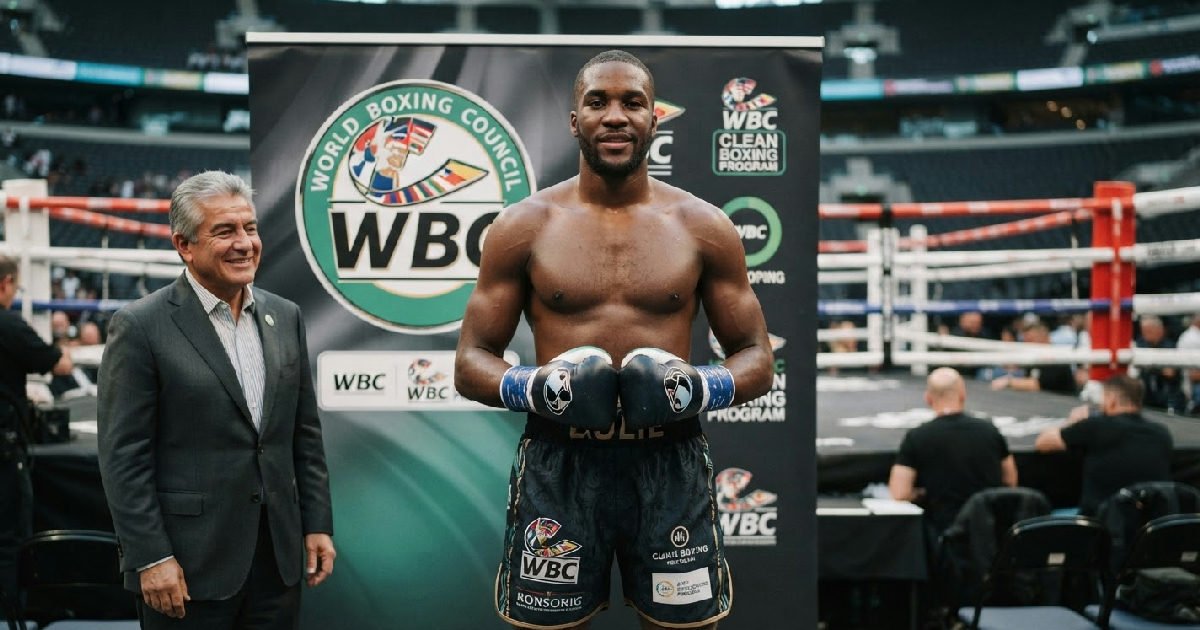
British boxer Lawrence Okolie and the World Boxing Council (WBC) have finalized an adjudication agreement, resolving an adverse analytical finding that stemmed from a drug test in April 2026. The joint statement, released on October 16, 2026, confirms that no disciplinary action will be taken against Mr. Okolie following a thorough review of the circumstances surrounding the positive test.
The agreement marks a significant development for the former cruiserweight and bridgerweight champion, allowing him to move forward with his career while also committing to future anti-doping initiatives. The adverse finding had previously led to the cancellation of his high-profile bout against Tony Yoka, originally slated for April 2026.
WBC resolves Okolie’s adverse finding
The World Boxing Council and Lawrence Okolie confirmed their arbitration agreement on October 16, 2026. This resolution addresses an adverse analytical finding discovered under the WBC Clean Boxing Program, specifically from a sample collected on April 8, 2026.
The substance in question was GHRP 2, identified by The Times of London and the New York Times as a synthetic growth hormone peptide. This compound is known for its ability to aid muscle recovery, enhance muscle mass, and facilitate fat loss, making its presence a serious issue under anti-doping regulations.
During its review, the WBC conducted an exhaustive examination into the nature of the substance and the specific details surrounding its discovery. The organization also considered extensive allegations and mitigating evidence presented on behalf of Mr. Okolie, leading to the agreed-upon resolution.
A look at the WBC Clean Boxing Program
The WBC Clean Boxing Program (CBP) stands as a cornerstone of the organization’s commitment to athlete safety and the integrity of boxing. Launched in 2016, this program is unique in its scope, implementing mandatory, year-round, and random drug testing for elite fighters.
The program operates in conjunction with the Voluntary Anti-Doping Association (VADA), a non-profit organization renowned for its stringent testing protocols. VADA manages the critical aspects of sample collection, chain of custody, and laboratory analysis, ensuring impartiality and scientific rigor throughout the process.
WBC President Mauricio Sulaimán emphasizes that the CBP exists primarily to safeguard athletes and the sport’s reputation. Mr. Sulaimán, who has led the WBC since February 11, 2014, inherited a legacy of prioritizing boxer welfare from his father, the late José Sulaimán.
Program mechanics and evolution
Enrollment in the Clean Boxing Program is mandatory for all WBC world champions, as well as the top 15 male fighters and top 5 female fighters in each division. This broad reach aims to create a level playing field and deter doping at the highest echelons of the sport.
The program adheres to a strict liability principle, meaning athletes are held accountable for any prohibited substances found within their system, regardless of intent. VADA’s prohibited list closely mirrors that of the World Anti-Doping Agency (WADA), encompassing a wide array of banned substances from anabolic agents to stimulants.
In a significant move in February 2026, the WBC announced the removal of the “contamination loophole,” signaling a stricter stance on positive tests. This change aimed to eliminate excuses related to accidental contamination or supplement mishaps, reinforcing the athlete’s ultimate responsibility for what enters their body.
Okolie’s defense and commitment to clean sport
Throughout the investigative process, Lawrence Okolie demonstrated full cooperation with the WBC’s review. He provided substantial mitigating evidence, asserting that the prohibited substance entered his system inadvertently due to the actions of a third party, without his knowledge or consent.
The WBC critically evaluated this evidence, weighing it alongside Okolie’s previously unblemished testing history and his complete cooperation. This comprehensive assessment ultimately informed the decision to reach an adjudication agreement rather than impose disciplinary sanctions.
Mr. Okolie expressed his unwavering commitment to fair competition. “Clean sport has always been extremely important to me,” he stated. “I have cooperated fully throughout the process and remain committed to the highest standards of integrity in boxing.”
WBC President Mauricio Sulaimán acknowledged Okolie’s conduct, saying, “We appreciate Mr. Okolie’s cooperation throughout this process and welcome his commitment to helping educate fighters about anti-doping compliance and athlete responsibility.” This mutual acknowledgment highlights a shared goal of upholding integrity within the sport.
Implications for Okolie’s boxing career
The resolution clears a significant hurdle for Lawrence Okolie, whose career trajectory had seen him rise through multiple weight classes. He is a former cruiserweight and bridgerweight champion, having notably clinched the WBC bridgerweight title on May 26, 2024, by knocking out Łukasz Różański in the first round.
Prior to the adverse finding, Okolie had relinquished his bridgerweight title to pursue challenges in the heavyweight division, even requesting a top-five ranking. His ambition to compete among the sport’s elite heavyweights remains a key focus, and this agreement removes the immediate threat of a suspension.
As part of the agreement, Okolie has committed to ongoing availability for additional testing by the WBC. Furthermore, he will collaborate with the organization to promote anti-doping education, awareness, and compliance among both professional and amateur boxers. He aims to use his personal experience to inform others.
This commitment aligns with the WBC’s broader educational objectives. It will also see Okolie actively involved in the sport beyond just competing, using his platform to champion clean practices. He stated his intention to “use this experience to help educate other athletes about the importance of understanding and monitoring everything that enters their bodies.”
Broader anti-doping challenges in boxing
Lawrence Okolie’s situation, while resolved through arbitration, underscores the persistent challenges of anti-doping efforts in professional boxing. The sport has grappled with numerous high-profile cases involving adverse analytical findings, with varying outcomes depending on the specific circumstances and mitigating factors.
Past instances, such as Canelo Alvarez’s positive test for clenbuterol in 2018—which his team attributed to contaminated meat—and Amir Khan’s two-year ban for ostarine in 2022, illustrate the complexities involved. While Khan’s tribunal found no intentional use due to a micro-dose, the principle of strict liability often dictates the consequences.
The WBC’s proactive stance with its Clean Boxing Program, administered with VADA, represents a concerted effort to enforce strict standards. However, as WBC title defenses continue to be organized, the need for vigilance remains paramount.
The emphasis on education, as seen in Okolie’s new role, reflects a recognition that prevention and athlete awareness are crucial components of a robust anti-doping strategy. Ensuring that fighters comprehend the nuances of prohibited substances and their responsibilities is vital for maintaining the integrity of competition and protecting athletes’ health.
While Okolie is not yet cleared to fight by UK Anti-Doping (UKAD) or the British Board of Boxing Control, the WBC’s agreement signals a path forward. His future contributions to anti-doping education will undoubtedly be watched closely by the boxing community, as will his return to the ring.
The focus now shifts to his upcoming fights and his continued role in advocating for fair competition in boxing.
This resolution showcases a collaborative approach between governing bodies and athletes to address complex doping issues. It highlights that while accountability is paramount, there is also room for understanding and rehabilitation when mitigating evidence is compelling and cooperation is extended.
The WBC’s commitment, along with athletes like Okolie, reinforces a collective push toward a cleaner, more credible sport. These efforts are crucial for boxing’s long-term health and the continued trust of its global fanbase. The program ensures that the spectacle of boxing remains untainted by performance-enhancing drugs.