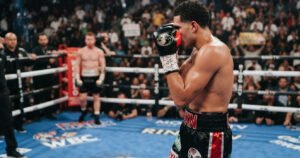
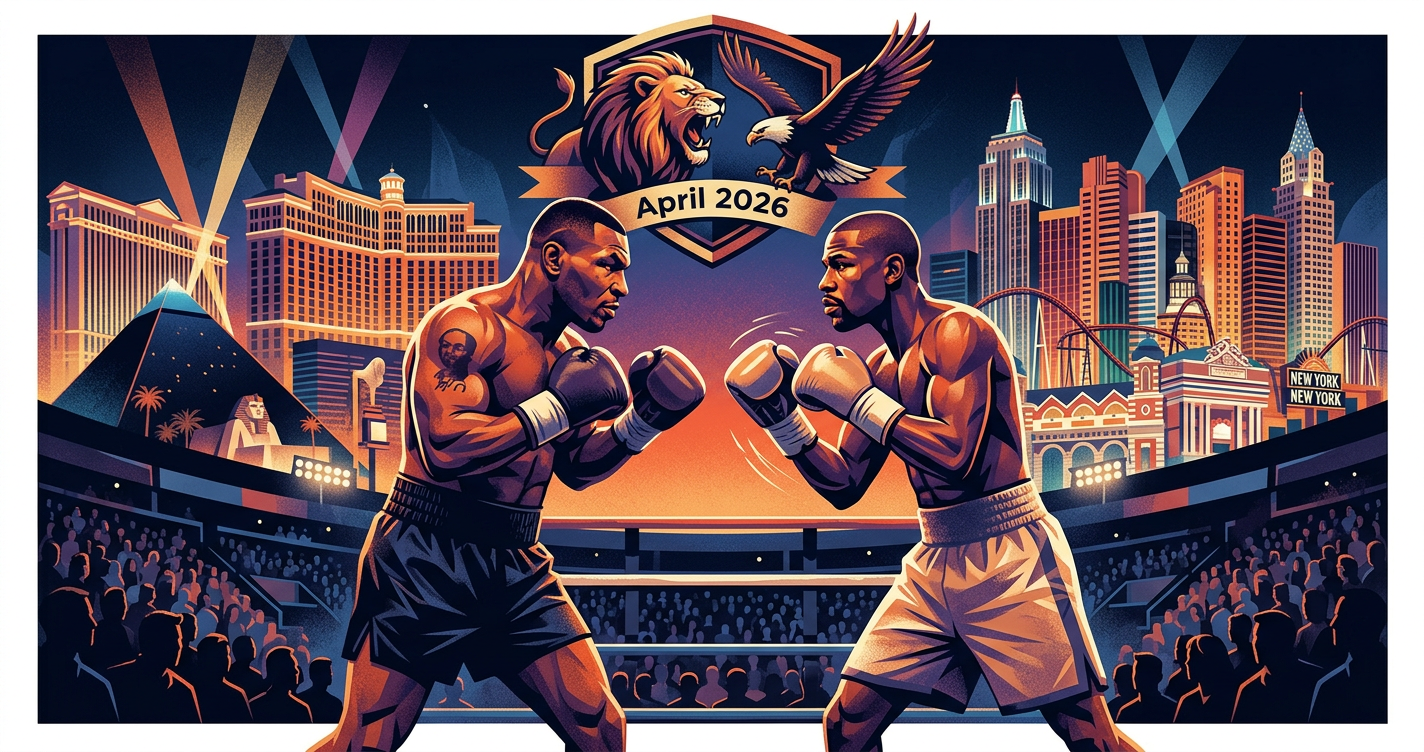
The murmurs that have circulated around Las Vegas gyms for the better part of a year have finally solidified into a date. On April 25, 2026, Mike Tyson and Floyd Mayweather Jr. will share a ring at the T-Mobile Arena, an exhibition bout that defies competitive logic but makes perfect financial sense in the current era of the sport.
This isn’t a world title fight. It isn’t a ranking eliminator. It is, quite simply, the largest commercial collision possible between two men who have long since retired from active professional competition. While the age gap remains the most glaring statistic—Tyson will be 59 and Mayweather 49—the event has already triggered a pre-sale frenzy that suggests the public’s appetite for nostalgia remains insatiable.
The rules of engagement in Las Vegas
Expectations for a sanctioned professional bout were extinguished early in the negotiations. The Nevada State Athletic Commission has reportedly approved this as an eight-round exhibition. Sources close to the camps indicate the rounds will be two minutes in length rather than the standard three, and the fighters will wear 12-ounce gloves to mitigate some of the impact.
Despite these concessions to safety, the competitive tension is real. Mayweather has spent the last five years touring the globe for exhibitions, looking largely untouched against YouTubers and kickboxers. Tyson, meanwhile, has been more selective. Since his 2020 draw with Roy Jones Jr., “Iron Mike” has focused on his business ventures, only returning to the gym with intensity once the Mayweather deal began to materialize in late 2025.
The contrast in styles is what keeps the purists from dismissing this entirely. You have the most prolific defensive wizard in history against a man who, even at 59, still possesses a frame built for explosive violence. Whether Mayweather can dance around a much heavier Tyson for 16 minutes is the question driving the early betting lines.
A shifting broadcast power dynamic
The timing of this fight coincides with a massive upheaval in how we watch the sport. As the boxing broadcast landscape shifts, this event is expected to be a joint venture between traditional PPV giants and newer streaming platforms hungry for a subscription spike. It’s the kind of “tentpole” event that legacy networks are desperate for as they fight to stay relevant against the rise of digital-first promoters.
There is also the “Zuffa factor” to consider. While Dana White has recently been focused on launching his own stable, his influence on the Las Vegas combat scene cannot be ignored. While Dana White’s Zuffa Boxing launch plans have focused on younger talent, the success of Tyson vs. Mayweather will likely dictate the price floor for any future high-profile boxing events in Nevada for the rest of the year.
Why this fight is happening now
Critics will call this a “cash grab,” and they wouldn’t be entirely wrong. But to view it strictly through a cynical lens misses the point of where boxing sits in 2026. The sport has become bifurcated: on one side, you have the tactical mastery of the undisputed champions, and on the other, you have the “mega-event” circuit that draws in casual fans who haven’t watched a fight since the mid-90s.
Mayweather has always been a master of timing. He knows that Tyson remains the biggest draw in the sport’s history. By waiting until both were comfortably into middle age, the risk of a devastating knockout is reduced, while the “what if” factor remains high enough to sell a $79.99 pay-per-view package. It’s a calculated risk for Mayweather’s “TBE” (The Best Ever) brand, which he guards more fiercely than his actual bank account.
And for Tyson? He has spoken openly about the “demons” that drive him back to the ring. For him, the training camp is often more important than the fight itself—a way to maintain the discipline that saved his life over a dozen years ago. But make no mistake: when the bell rings, Tyson only knows one way to fight, and that usually involves trying to put his opponent through the canvas.
What to expect on fight night
Don’t expect a 1988 version of Mike Tyson or the 2007 version of “Pretty Boy” Floyd. This will be a tactical chess match played at a significantly slower pace. Mayweather will likely use his jab to keep Tyson at bay, leaning on his superior cardio to tire the older man out. Tyson will hunt for that one hook, that one opening to prove that power is the last thing to leave a fighter.
The undercard is expected to feature a mix of legitimate prospects and cross-over athletes, a formula that has become the standard for these types of spectacles. It’s a far cry from the technical grit of a Michael Conlan homecoming, but in terms of global reach, it’s in a different stratosphere.
Frequently Asked Questions
Is this a real professional boxing match?
No. It is officially sanctioned as an exhibition by the Nevada State Athletic Commission. This means it won’t count toward their professional records, though both will likely treat it with the intensity of a real contest.
What happens if someone gets knocked out?
While the 12-ounce gloves and shorter rounds are designed to prevent serious injury, the referee has full authority to stop the fight if he feels a participant is in danger. There are no “no-knockout” clauses in the contracts—if Tyson lands a clean shot, the fight ends.
Where can I buy tickets for Tyson vs. Mayweather?
Tickets are slated to go on sale to the general public in early April via AXS and the T-Mobile Arena box office. Prices are expected to start at $500 for the nosebleeds, with ringside seats reportedly being offered to VIPs for upwards of $20,000.