
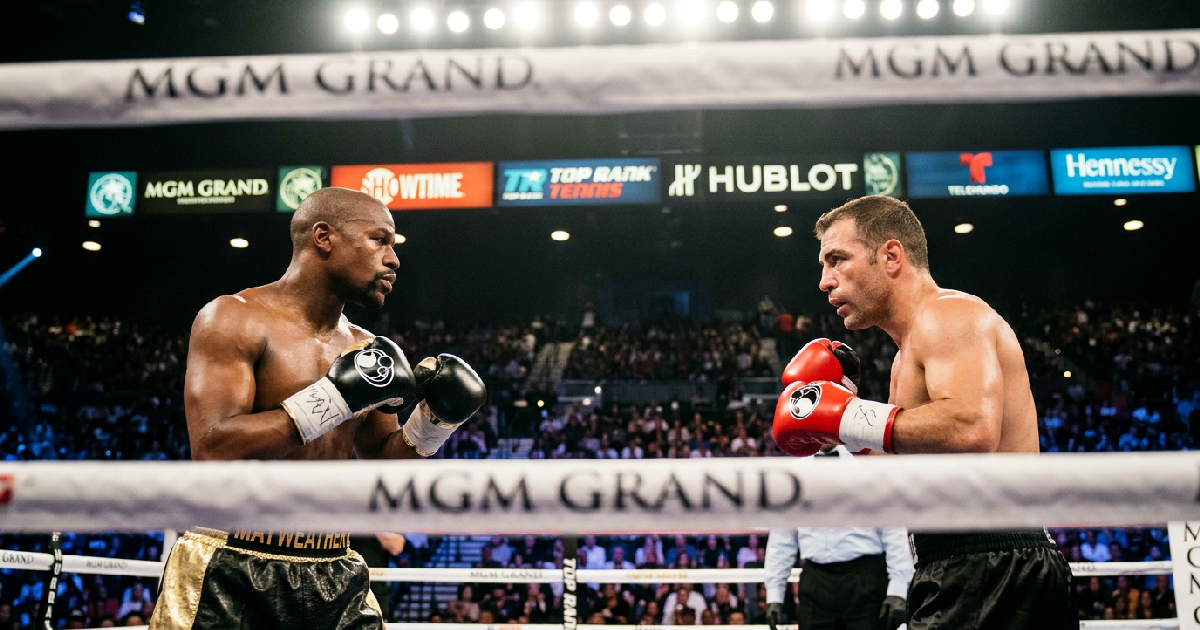
A federal judge recently denied CSI’s attempt to block a proposed crossover boxing match featuring boxing legend Floyd Mayweather against Mike Zambidis. The application for a temporary restraining order (TRO) failed because CSI couldn’t demonstrate “irreparable harm,” a crucial legal requirement.
This ruling clears a significant hurdle for the highly anticipated bout, which had faced uncertainty due to the underlying breach of contract lawsuit brought by CSI. The denial suggests the fight can proceed, at least for now, despite the ongoing legal dispute.
Federal court rejects temporary restraining order
The core of the recent court decision centred on CSI’s inability to convince the federal judge that immediate and irreversible damage would occur if the Mayweather-Zambidis fight went ahead. Legal injunctions, including TROs, are extraordinary remedies.
They are only granted when a plaintiff can show that monetary compensation would not adequately remedy the harm caused. In this instance, the judge determined CSI’s application did not meet that high threshold.
Understanding the ‘irreparable harm’ standard
For a court to issue a temporary restraining order, the party requesting it must prove several elements, with “irreparable harm” being paramount. This means the injury cannot be compensated by money damages alone.
Examples of irreparable harm often include damage to reputation, loss of trade secrets, or the destruction of a unique asset. Financial losses, while significant, are generally not considered irreparable if they can be calculated and awarded later.
The judge’s decision indicates that CSI’s arguments for blocking the fight on these grounds were insufficient. This doesn’t resolve the breach of contract lawsuit itself, but it does remove the immediate threat to the event’s staging.
Impact on the Floyd Mayweather-Mike Zambidis fight
With the TRO denied, the path appears open for the Mayweather-Zambidis crossover fight to move forward. Promoters can now proceed with confidence in finalizing logistical details, securing broadcasting rights, and launching marketing campaigns.
Such legal clarity is essential for major combat sports events, which involve substantial financial investments and intricate planning. The threat of a last-minute injunction can derail years of work and millions of dollars in commitments.
Who is Mike Zambidis?
Mike Zambidis, known as “Iron Mike” in kickboxing circles, is a highly respected figure in the world of combat sports. He’s celebrated for his aggressive style and knockout power, particularly in K-1 and other kickboxing promotions.
His transition, even for an exhibition, into a boxing match against a legend like Floyd Mayweather is a classic example of the crossover appeal drawing new audiences. Zambidis brings a different fan base and skillset to the ring.
This type of matchup offers an intriguing clash of styles and disciplines. It capitalizes on the public’s fascination with seeing how elite athletes from different combat backgrounds fare against one another under modified rules.
The enduring appeal of crossover events
The reported interest in a new crossover event involving Floyd Mayweather again highlights the immense draw of pitting athletes from different combat disciplines against each other. These matchups consistently capture widespread public attention.
Mayweather, celebrated for his undefeated professional boxing record and strategic defensive style, remains a significant draw for audiences globally. His involvement alone can elevate a fight’s profile dramatically.
Mayweather’s history with high-profile exhibitions
Floyd Mayweather has previously participated in high-profile exhibition contests since his retirement from professional boxing. These events have consistently demonstrated his ability to command significant viewership and generate considerable commercial interest.
His involvement in such spectacles reflects a broader trend in combat sports. The emphasis on entertainment and star power now often rivals traditional championship fights in terms of generating public engagement and revenue.
The concept of mixing combat disciplines has gained traction, with highly anticipated matchups continuing to emerge. For example, the upcoming Oleksandr Usyk versus Rico Verhoeven bout is generating considerable excitement, showcasing this appeal.
Navigating promotional hurdles and market dynamics
For promoters, clarity on any legal matters is paramount for the successful staging of a major event. Uncertainty can severely hinder the ability to finalise crucial broadcast deals, secure venues, and launch comprehensive marketing campaigns.
Large-scale fights demand substantial upfront investment, often spread across numerous logistical components. Delays or the threat of legal action can jeopardise these financial commitments and strain relationships with key partners.
This dynamic is familiar territory in combat sports, where contract disputes can stall negotiations and create significant obstacles. Efficient resolution of such issues is vital for maintaining momentum and capitalising on public interest.
The ongoing breach of contract lawsuit
While the temporary restraining order was denied, the underlying breach of contract lawsuit filed by CSI against the fight’s organizers remains active. This means that although the fight itself can proceed, the legal battle over alleged contractual violations continues.
A breach of contract claim typically seeks financial damages for losses incurred due to a party failing to uphold their end of an agreement. The eventual outcome of this lawsuit could still have financial implications for the parties involved.
However, the denial of the TRO signals that the court does not believe those alleged damages rise to a level that warrants preventing the event from happening. This is a crucial distinction in legal strategy and impact.
Evolving landscape of global combat sports
The discussions surrounding a potential Mayweather event highlight the dynamic evolution within combat sports. The sport is increasingly embracing hybrid models that blend traditional competition with spectacle and celebrity appeal.
This expansion attracts a more diverse audience, drawing in fans from various martial arts backgrounds and general sports enthusiasts. It represents a strategic shift towards broader entertainment offerings.
It’s a reflection of how the industry adapts to changing consumer demands for novel and engaging content. This approach helps to sustain interest beyond the confines of a single sport’s traditional fan base.
The growth of high-profile matchups, even those outside traditional championship structures, points to a robust future for combat sports. Events like these, alongside the emerging prime in women’s boxing, are expanding the sport’s reach and appeal.
This ruling reinforces the principle that while legal disputes are a common part of major events, they won’t automatically halt them. The burden of proof for extreme measures like TROs remains exceptionally high.
Outlook for future high-profile bouts
Should the reported legal hurdles be definitively addressed, promoters of any potential Floyd Mayweather crossover bout will likely move quickly to finalise event details. Announcements regarding specific dates, opponents, and venues would then be highly anticipated.
The success of such an event hinges on overcoming these foundational challenges. For now, the focus remains on navigating the preliminary stages that pave the way for a confirmed high-profile fight.
The combat sports world will be keenly observing any further developments. Clarity on the legal front is essential for transforming a reported potential matchup into a concrete reality for fans worldwide.