
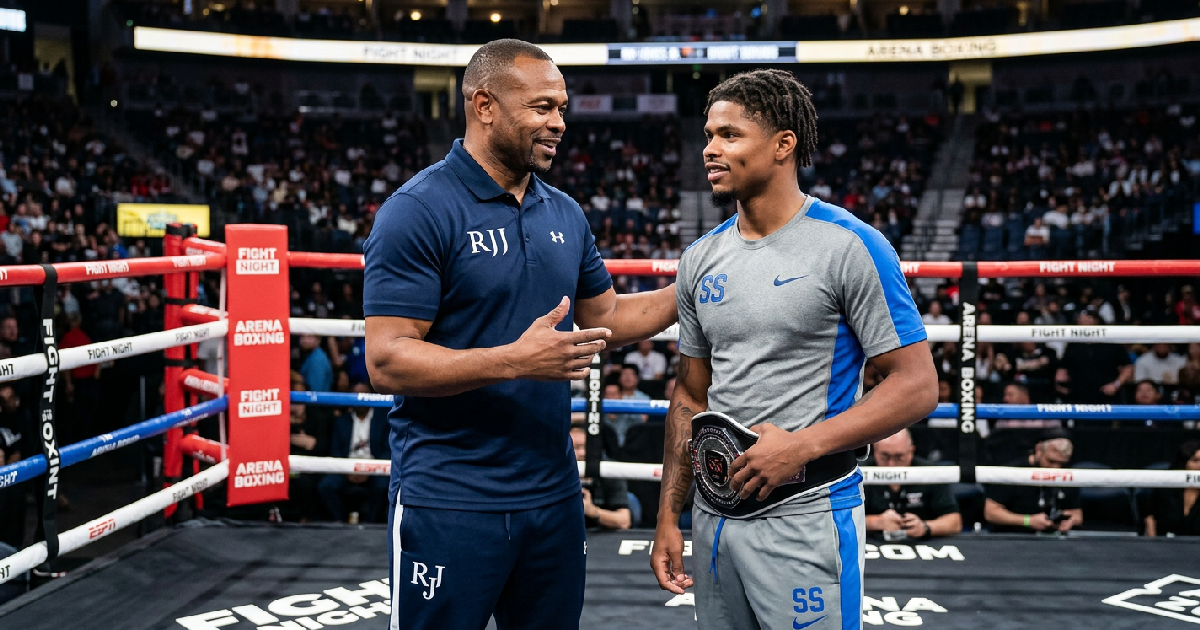
Few fighters in the history of the sport have been as difficult to replicate as Roy Jones Jr. In his prime, the four-division champion possessed a combination of athleticism, unorthodox reflexes, and timing that seemed to defy the traditional coaching manuals. While many prospects have tried to mimic his hands-down style, most have found themselves looking more like cautionary tales than heirs to the throne.
However, Jones has recently identified one modern active fighter who he believes truly captures the essence of his unique approach to the ring. In a move that has sparked debate among boxing purists, the Hall of Famer pointed toward a specific champion who relies on the same “un-teachable” instincts that Jones used to dominate through the 1990s and early 2000s.
Establishing the Roy Jones Jr Comparison
The name Jones singled out is none other than the multi-weight titlist known for his speed and defensive wizardry. Jones noted that this fighter does not rely on the textbook high guard or the standard one-two combinations favored by most trainers. Instead, he operates on a level of intuition that allows him to take risks other fighters wouldn’t dare to attempt.
Jones explained that what makes this particular boxer different is the ability to punch from angles that shouldn’t be possible. Most fighters are taught to keep their feet set to generate power, but just as Jones did at middleweight and light heavyweight, his chosen successor can find explosive power while moving backwards or sitting on the ropes. It is a style rooted in confidence—a trait Jones has always said is the hardest thing to teach a young athlete.
Physical Gifts and the Risk of Imitation
The difficulty with the “Roy Jones style” has always been its reliance on elite physical attributes. When Jones’s reflexes eventually slowed with age, the risks he took began to result in heavy knockout losses. This is the danger inherent in the current fighter Jones has praised; the style is highly effective but leaves very little margin for error.
Critics of this modern champion often argue that he plays with fire by keeping his lead hand low and leaning away from punches. But Jones sees it as a calculated tactical advantage. According to Jones, if a fighter has the speed to beat his opponent to the punch every time, defensive fundamentals become secondary to offensive creativity. He sees that same spark in the current landscape of the pound-for-pound rankings.
The Evolution of the Unorthodox Style
Boxing is currently experiencing a shift where traditional “Eastern European” amateur styles—focused on footwork and volume—are clashing with more individualistic, “flashy” styles. Jones’s endorsement carries weight because it validates a method of fighting that many veteran trainers still discourage as “bad habits.”
And yet, the fighter Jones mentioned continues to rack up wins against top-tier opposition, proving that athleticism can occasionally override the rulebook. For Jones, seeing his influence live on in the current generation isn’t just about ego; it’s about the preservation of a specific type of artistry that was once thought to be extinct after his retirement.
Looking Ahead to Upcoming Challenges
The test for any fighter compared to a legend like Roy Jones Jr. is longevity. Jones was nearly untouchable for over a decade. Whether this current star can maintain that high-wire act as the years pile up remains the biggest question mark in his career. For now, he has the ultimate seal of approval from the man who perfected the blueprint.
Boxing Style FAQ
Who did Roy Jones Jr. name as his closest stylistic match?
Jones has pointed to fighters who prioritize speed and unorthodox movement over traditional defense. While he has praised several athletes, his recent comments suggest he sees his own “DNA” most clearly in champions who rely on reflexes and elite athletic intuition rather than a stationary high guard.
Is the “hands-down” style dangerous for modern boxers?
Yes, it is considered extremely high-risk. While it allows for better offensive angles and faster counters, it offers essentially no protection if a fighter’s timing is off by a fraction of a second. Most trainers advise against it unless the boxer possesses world-class speed.
How did Roy Jones Jr. influence the current generation?
Jones changed the perception of what was possible in the higher weight classes. Before him, light heavyweights were rarely seen as “speed” fighters. Today, you see his influence in every fighter who uses lead hook-uppercut hybrid punches or those who use psychological “showboating” to disrupt an opponent’s rhythm.