
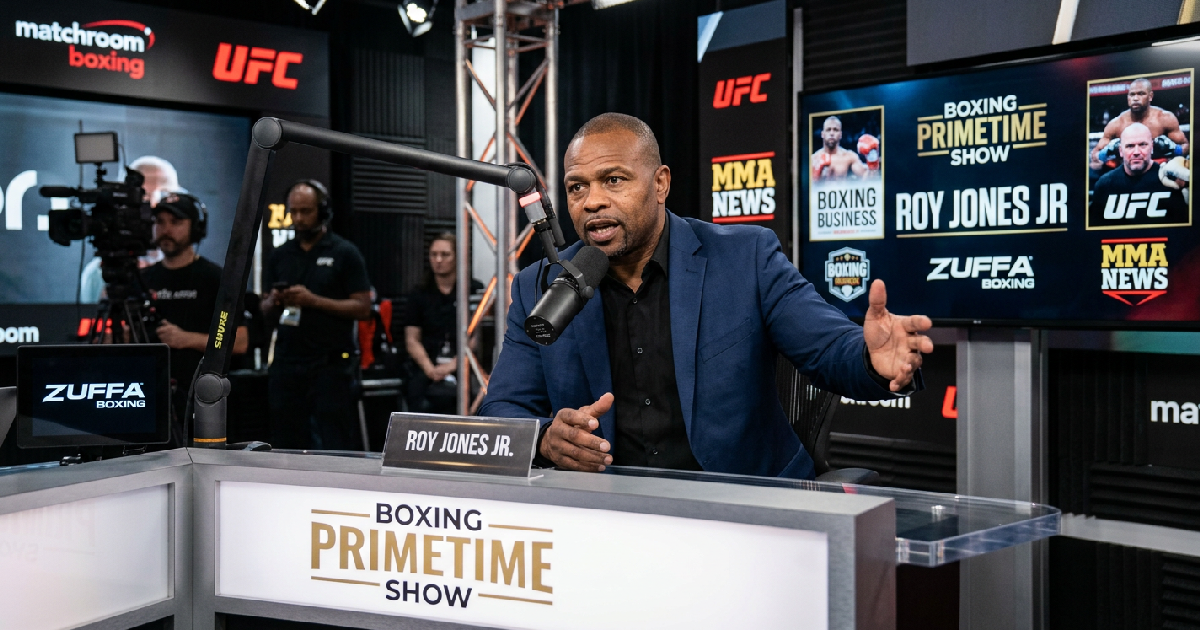
Former multi-division world champion Roy Jones Jr. has reportedly voiced strong reservations regarding the potential entry of Dana White and Zuffa into the professional boxing market. During a broadcast appearance, the Hall of Famer questioned whether the leadership behind the Ultimate Fighting Championship (UFC) possesses the necessary understanding to manage a sport with a regulatory history that differs significantly from mixed martial arts.
The veteran fighter’s comments come as rumors persist regarding the CEO of the UFC, Dana White, and the long-discussed Zuffa Boxing project. While the MMA executive has frequently expressed frustration with the current state of boxing—citing matchmaking delays and a lack of centralized control—Roy Jones Jr. argues that the structures the UFC aims to change are often linked to the preservation of athlete value and legacy.
The tension between established promoters and the looming Zuffa presence has become a recurring theme in the industry. Some observers have noted how Matchroom Boxing’s leadership has worked to protect assets against potential competition from White’s organization. Jones’s perspective adds a veteran fighter’s voice to that sentiment, suggesting that a rigid corporate model might alienate the very talent it seeks to attract.
Jones Questions Compatibility of MMA Business Models
In his discussion of the industry, Roy Jones Jr. expressed skepticism about the “top-down” organizational style favored by Zuffa. In the UFC, the promotion typically holds significant leverage over fighter contracts and matchmaking, a model that contrasts with the fragmented nature of top-tier boxing. He suggested that forcing a rigid structure on a sport defined by independent stars might not yield the desired results for the UFC brass.
The sport already faces significant internal challenges, ranging from the fallout of the David Kinahan business era to ongoing disputes over sanctioning body fees. Adding a powerhouse like Zuffa into this mix, Jones argued, could complicate an already fractured landscape rather than fixing it. He remained firm that boxing requires a specialty of knowledge that does not necessarily translate from the octagon.
The Historical Balance of Promotional Power
One of the primary points raised by Roy Jones Jr. was the difference in how historical legacies are constructed. He noted that in boxing, the fighter is often the primary brand, whereas in the UFC, the brand is frequently the promotion itself. He cautioned that a shift toward the latter could dilute the prestige of individual world titles and the autonomy of the athletes who compete in the ring.
This debate comes at a time when the heavyweight division is experiencing a notable increase in global attention. While veterans like David Price have spent time evaluating the form of Tyson Fury and other top contenders, the entrance of a promotional juggernaut like Zuffa could disrupt how these major bouts are brokered. Jones believes the current system, while imperfect, allows for a level of fighter independence that a Zuffa-led league would likely eliminate.
Dana White’s Vision for a Transformed Boxing Landscape
Despite the criticism, Dana White has remained vocal about his intent to eventually launch a boxing league. His vision reportedly involves a more streamlined schedule and a ranking system intended to ensure certain matchups happen with greater frequency. To many fans, this sounds like a solution to boxing’s often slow matchmaking, but athletes like Roy Jones Jr. see it as a potential threat to the financial upside of elite champions.
For Roy Jones Jr., the resistance to Zuffa is not just about business, but about the unique nature of the sport. He emphasized that the personal path a fighter takes—navigating various promotional hurdles—is part of what makes the theater of the ring compelling. He remains unconvinced that a corporate approach can capture that same atmosphere.
Whether or not Dana White eventually makes a full-scale move into the boxing world, the discourse surrounding Zuffa’s involvement has forced the boxing establishment to reflect on its current practices. Jones’s comments serve as a reminder that while the sport may be viewed as needing modernization, the figures who have spent decades in the ring are not yet ready to let outside forces dictate the terms of its evolution.
Frequently Asked Questions
What is Zuffa Boxing and who is behind the project?
Zuffa Boxing is a proposed promotional venture led by UFC CEO Dana White. The project aims to apply the centralized business model and production standards synonymous with the Ultimate Fighting Championship to the world of professional boxing, although a full-scale launch has not yet materialized.
Why is Roy Jones Jr. skeptical of Dana White’s potential move into boxing?
Roy Jones Jr. argues that the UFC’s business model, which often prioritizes the promotional brand over individual athlete autonomy, is not a natural fit for boxing. He believes that boxers require a higher level of independence and that the boxing industry requires specific expertise that differs from mixed martial arts.
Has Zuffa Boxing officially promoted any major events?
While Dana White has provided promotional support for crossover combat sports events in the past, Zuffa Boxing has not yet established a recurring series or a full roster of active fighters in the same manner as traditional boxing promotions like Top Rank or Matchroom.